

Our sun damage guide already covered the basics — darker skin still needs sunscreen, UVA passes through clouds, SPF number doesn’t change how often you reapply. This one goes deeper into the mechanics: what’s actually in your sunscreen, why most people get far less protection than the label promises, and honest answers on two questions that generate a lot of fear-based content — bloodstream absorption and vitamin D.
👉 Sunscreen belongs at the very end of your routine — see Glass Skin Routine Order for exactly where it fits and why that position matters.
Chemical vs. Mineral: The Actual Mechanism
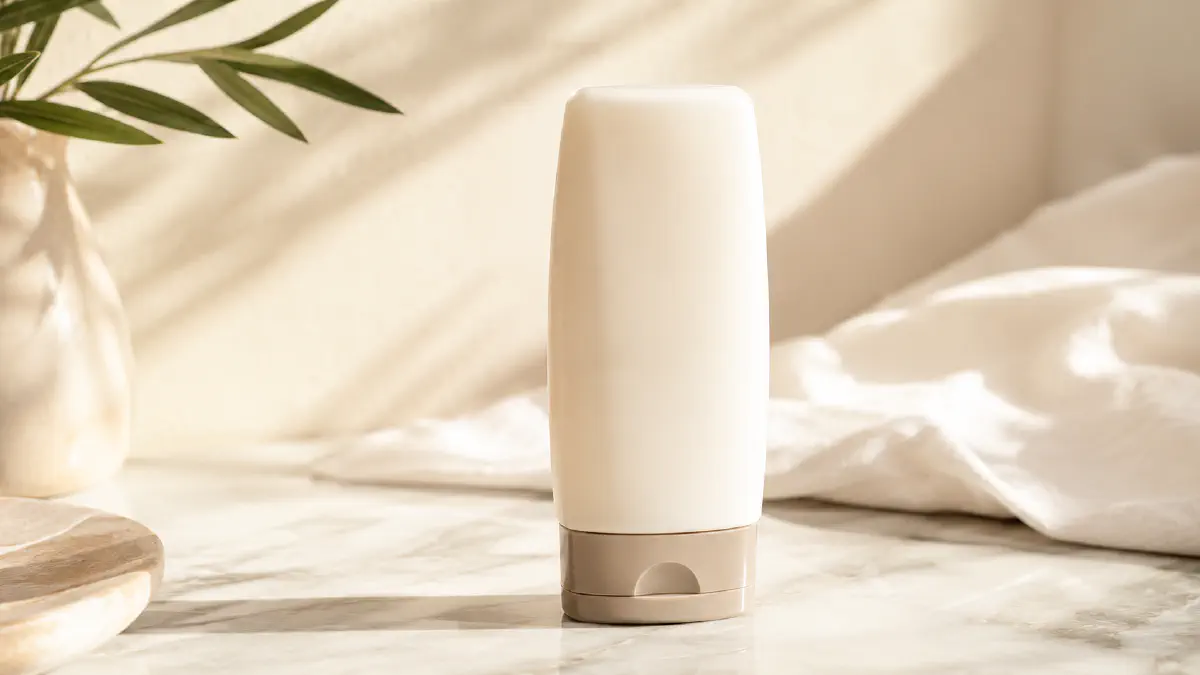
- Mineral (physical) sunscreens — zinc oxide and/or titanium dioxide sit on the skin’s surface and reflect/scatter UV radiation
- Chemical sunscreens — organic compounds (avobenzone, octocrylene, oxybenzone, and others) absorb UV radiation and convert it to a small amount of heat, which is then released
Neither is inherently “better” — mineral formulas tend to sit more on the surface (sometimes leaving a visible cast, especially on deeper skin tones), while chemical formulas tend to be more cosmetically elegant but require about 15-20 minutes to become effective after application, since they need to be absorbed first.
SPF vs. PA Rating: You’re Only Reading Half the Label
SPF measures protection against UVB specifically — the rays primarily responsible for sunburn. It says nothing direct about UVA protection, which is the deeper-penetrating, collagen-damaging wavelength covered in our sun damage guide. US labeling relies on the vaguer “broad spectrum” designation for UVA coverage, while many Korean and Japanese sunscreens include a separate PA rating (PA+ to PA++++) that specifically quantifies UVA protection strength. If you’re comparing sunscreens, “broad spectrum” plus a PA rating (where available) gives you a more complete picture than SPF number alone.
The Real Reason Sunscreen Underperforms: You’re Probably Under-Applying It
This is arguably the single most impactful thing in this entire article. Sunscreen SPF ratings are tested in labs at a standardized 2 mg per square centimeter of skin. Real-world studies consistently find that most people apply only 25-50% of that amount — meaning a lot of people wearing “SPF 30” are realistically getting protection closer to SPF 8-15.
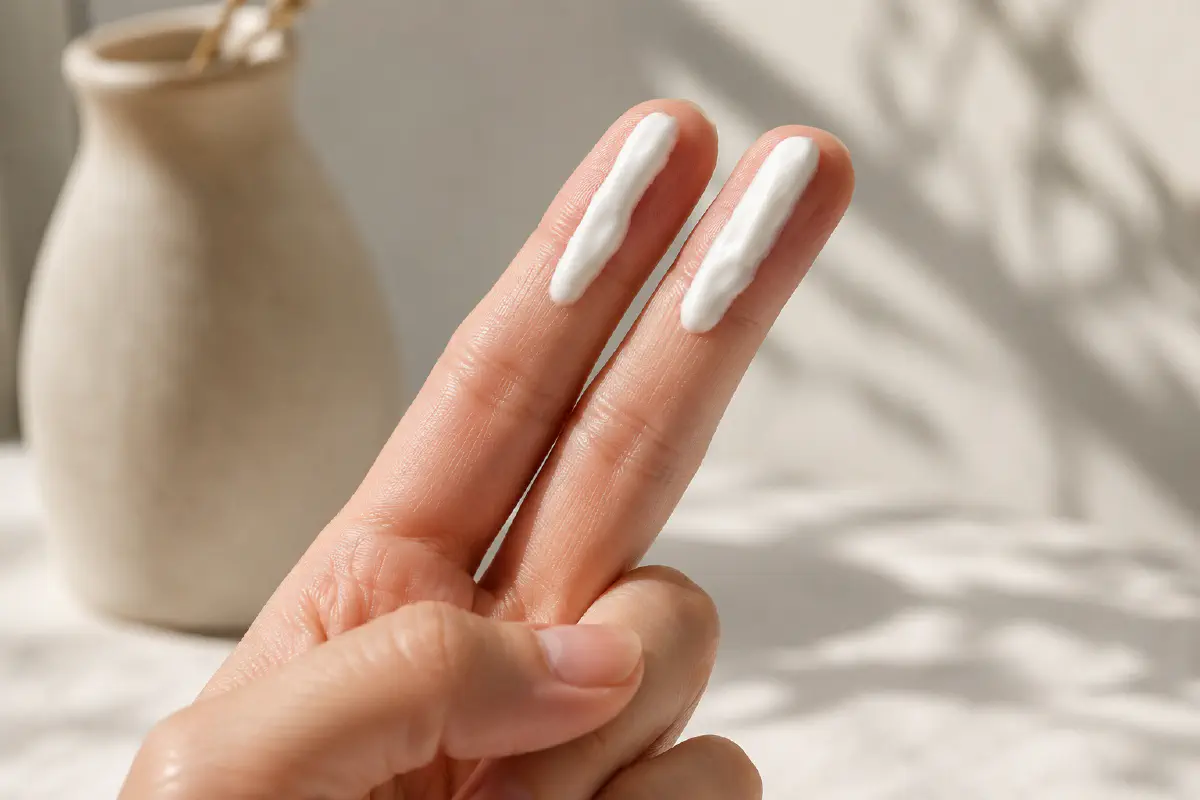
The two-finger rule, developed by Dr. Steve Taylor and Prof. Brian Diffey (published in the British Medical Journal, 2002), gives a practical fix: squeeze two full finger-lengths of sunscreen (from palm crease to fingertip, across the index and middle finger) for each major section of the body, using the standard medical “rule of nines” to divide the body into 11 zones. For the face alone, this generally works out to roughly a full teaspoon-sized amount — more than most people instinctively use.
Does Sunscreen Actually Get Absorbed Into Your Bloodstream?
Yes — and it’s worth being accurate about this rather than either dismissing it or treating it as proof of danger. FDA-commissioned studies published in JAMA (2019 and a 2020 follow-up) found that several common chemical UV filters (avobenzone, oxybenzone, octocrylene, homosalate, octisalate, octinoxate) are absorbed into the bloodstream at levels exceeding the FDA’s own threshold for requiring further safety testing.
The important context: absorption is not the same as harm. As the FDA’s own Center for Drug Evaluation and Research director put it at the time, an ingredient being absorbed doesn’t mean it’s unsafe — it means it warrants more testing, especially for chronic long-term use, which hadn’t been rigorously studied before. No study has demonstrated actual adverse health effects from typical sunscreen use, and the established, well-documented benefits of sun protection (preventing skin cancer and the collagen damage covered in our sun damage guide) are considered to outweigh this open, still-being-researched question. If it’s a concern for you specifically, mineral sunscreens (zinc oxide, titanium dioxide) aren’t part of this absorption finding, since they work by sitting on the surface rather than being absorbed.
Does Sunscreen Cause Vitamin D Deficiency?
This deserves a genuinely two-sided, honest answer rather than a flat yes or no:
- For typical, real-world use — most research finds little to no meaningful effect on vitamin D levels, largely because of the under-application problem described above: most people simply aren’t blocking enough UV to meaningfully affect vitamin D synthesis.
- For near-perfect, diligent daily use of high-SPF sunscreen — a rigorous 2025 randomized controlled trial (the Sun-D Trial) found that a full year of consistent, correctly-applied high-SPF sunscreen use did measurably increase the rate of vitamin D deficiency compared to more casual, discretionary use.
The practical takeaway: if you’re genuinely diligent about correct sunscreen application (which, per the section above, most people aren’t), it’s reasonable to monitor your vitamin D levels or discuss supplementation with a doctor — not to skip sunscreen, given how well-established the skin cancer and photoaging prevention benefits are.
Quick-Fire Myths
| Claim | Reality |
|---|---|
| "Waterproof sunscreen" | Not a real claim — the FDA doesn't allow "waterproof" labeling since no sunscreen is fully water-immune; only "water-resistant" for a specified time (typically 40 or 80 minutes) is accurate |
| "Sunscreen causes breakouts" | Certain heavy, comedogenic formulas can for some people, but this isn't universal — lightweight, gel-based, or specifically labeled non-comedogenic formulas are widely available |
| "Sunscreen doesn't expire" | It does — most formulas are rated for about 3 years unopened, and effectiveness genuinely degrades past that; check the printed expiration or period-after-opening symbol |
What Actually Matters When Choosing SPF
- Broad-spectrum labeling (and a PA rating, if available) over SPF number alone
- A texture/formula you’ll actually reapply — the “best” sunscreen on paper is worthless if it’s unpleasant enough that you skip reapplication
- Correct application amount — a full teaspoon for the face, following the two-finger rule for the body
- Reapplication every 2 hours during direct exposure, regardless of SPF number
👉 If you deal with melasma specifically, one more factor matters: a tinted, iron-oxide-containing formula, since ordinary UV-filter sunscreen doesn’t block the visible light that also triggers melasma pigmentation. See Melasma: Why It Happens, Why It’s So Stubborn, and What Actually Helps for the full explanation.
Frequently Asked Questions
Is mineral sunscreen automatically safer than chemical sunscreen?
Not necessarily “safer” in a proven-harm sense — chemical sunscreens haven’t been shown to cause harm at typical use levels — but mineral sunscreen sidesteps the bloodstream absorption question entirely, since it doesn’t get absorbed the same way.
How much sunscreen should I actually be using on my face?
Roughly a quarter-teaspoon to a full teaspoon for the face and neck alone, depending on the source — noticeably more than the thin layer most people apply.
Should I be worried about the FDA absorption studies?
The honest answer is that it’s a legitimate area of ongoing research, not a settled safety concern — no adverse health outcomes have been demonstrated, and skipping sunscreen carries a much better-established risk (skin cancer, photoaging) than the open question the absorption studies raised.
Does a higher SPF number matter if I’m already under-applying?
Yes, somewhat — a higher labeled SPF gives you more of a buffer even at a lower real-world application amount, which is part of why dermatologists commonly recommend SPF 30 or higher as a practical minimum rather than the technically-adequate SPF 15.
Final Thoughts
The gap between a sunscreen’s labeled SPF and the protection you’re actually getting usually comes down to application amount, not product quality — most people are simply applying too little to get anywhere near the number on the bottle. Beyond that, the more nuanced questions (bloodstream absorption, vitamin D) deserve honest, two-sided answers rather than either dismissal or alarm — and in both cases, the evidence still comes down clearly in favor of consistent daily sunscreen use.