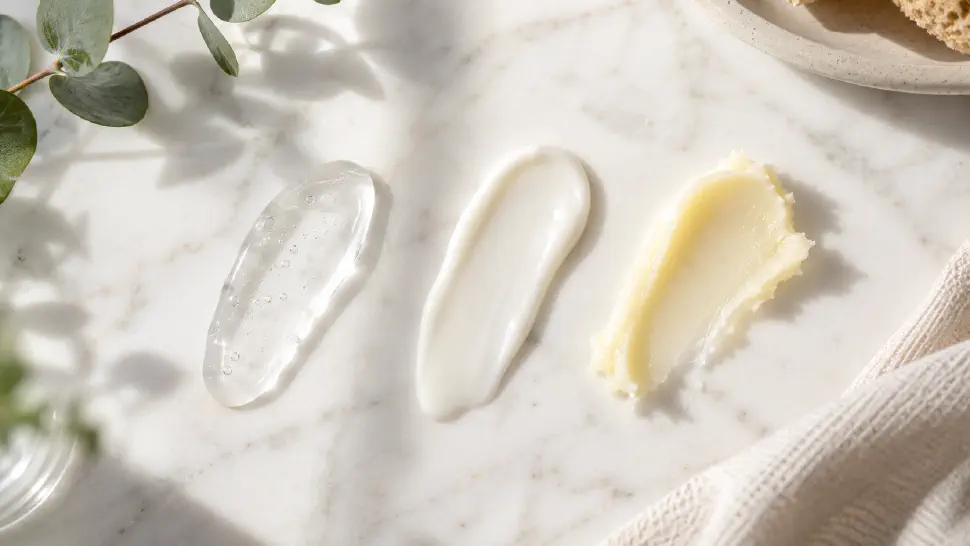

“Hydrating” and “moisturizing” get used as if they’re the same thing, but skincare ingredients actually work through three genuinely different mechanisms — and using only one of them, especially a humectant alone, can leave skin drier than when you started. Our skin barrier guide mentioned this briefly as part of a repair routine; this is the full breakdown of what each category actually does and why the combination matters more than any single ingredient.
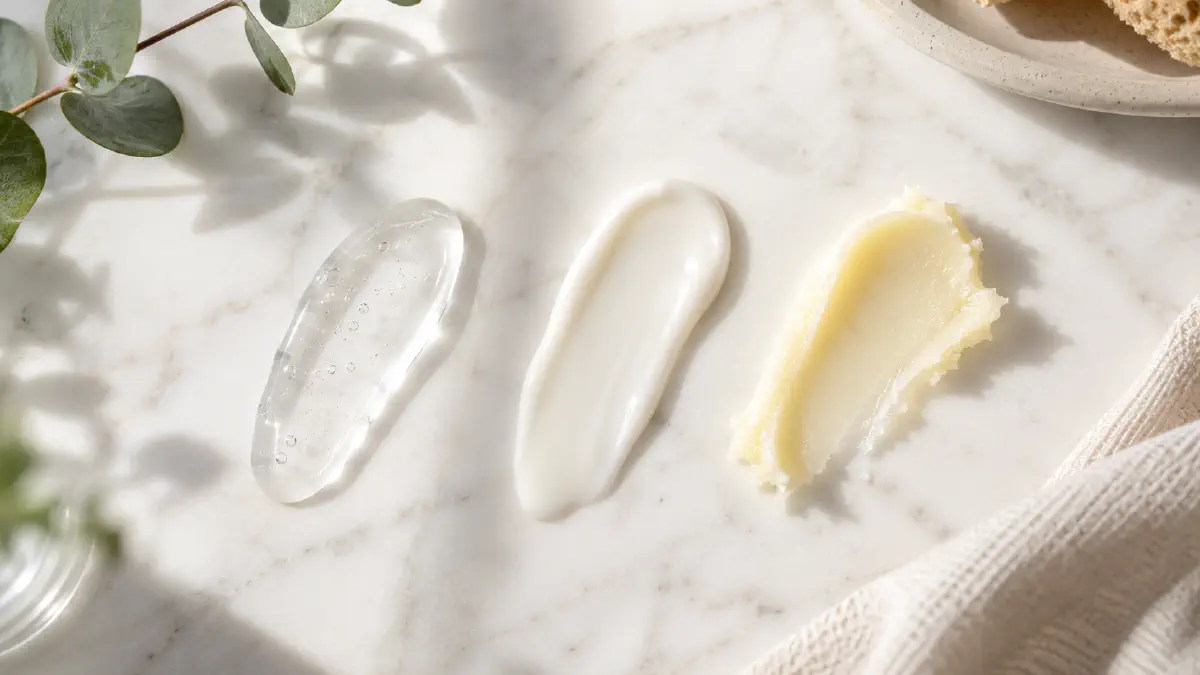
The 3 Categories
| Category | Mechanism | Common Ingredients |
|---|---|---|
| Humectant | Hygroscopic — draws water in from the air, or from deeper skin layers | Hyaluronic acid, glycerin, urea, honey |
| Emollient | Fills in gaps between skin cells, smoothing texture and improving flexibility | Ceramides, fatty acids, squalane, plant oils |
| Occlusive | Forms a physical film on the surface that blocks water from evaporating out | Petrolatum, dimethicone, beeswax, shea butter |
Source: Moisturizers, NCBI StatPearls.
None of these do the same job. A humectant draws water in; an emollient smooths what’s already there; an occlusive seals it all in place. Using just one is like turning on a faucet without ever putting in a stopper — the water runs, but nothing stays.
“Dry” and “Dehydrated” Are Not the Same Thing
This distinction gets flattened constantly in casual skincare talk, but it matters for which category you actually need:
- Dry skin is a skin type — a longer-term, often genetic lack of natural oil production. Dry skin specifically needs more emollients and occlusives.
- Dehydrated skin is a skin condition — a temporary lack of water that can affect any skin type, including oily skin. Dehydrated skin specifically needs more humectants, alongside whatever else your actual skin type requires.
This is why oily skin can genuinely be dehydrated at the same time (tight, flaky in patches, yet still shiny with oil) — oil production and water content are two separate systems, addressed by two different categories of ingredient.
A quick self-test: gently pinch a small area of skin on your cheek. If it snaps back instantly, water content is likely fine. If it takes a moment to bounce back or shows fine lines while pinched, that’s a common informal sign of dehydration specifically, regardless of your underlying skin type.
The Catch: Why Humectants Alone Can Make Skin Drier
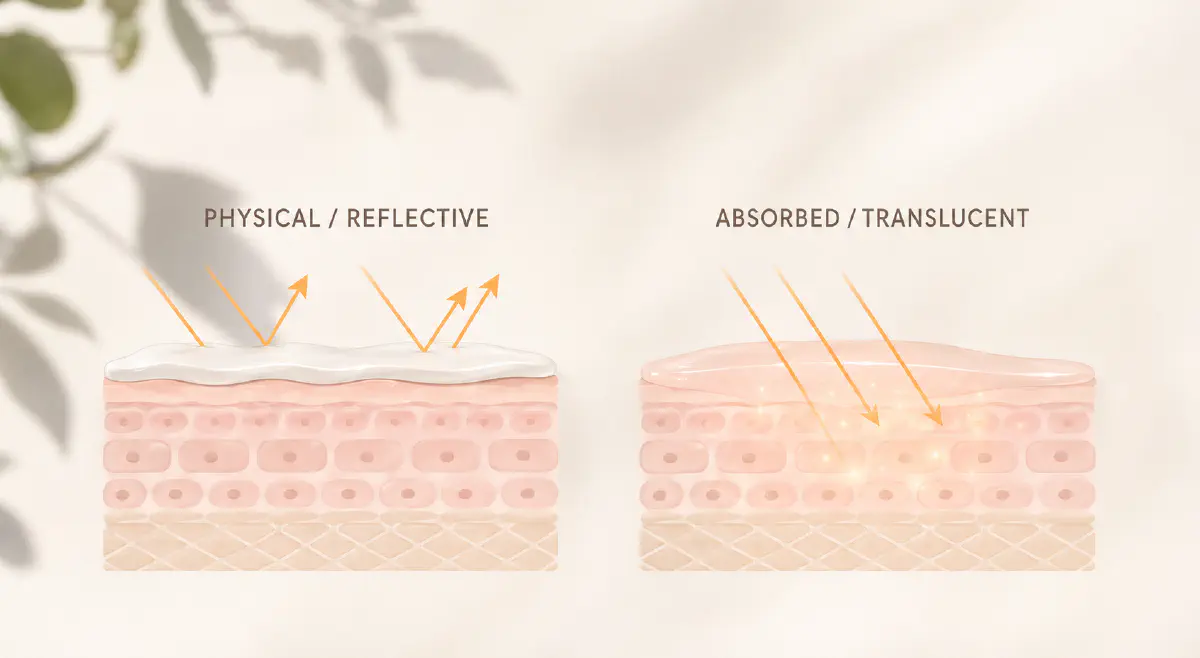
This is the single most important, most commonly missed point in hydration skincare. Humectants are hygroscopic — they pull water toward themselves from wherever water is available. In humid conditions, that means pulling moisture from the air into your skin, which is the desired effect. But in low-humidity conditions (winter, air conditioning, dry climates), there isn’t enough moisture in the air for the humectant to draw from — so it pulls water from the deeper layers of your own skin instead, toward the surface, where it then evaporates. Used without a sealing layer on top, a humectant in dry air can genuinely leave skin more dehydrated than before you applied it.
This is exactly why a hyaluronic acid serum that works beautifully in summer can leave your skin feeling tight and dry in winter if it’s the only step in your routine.
The Correct Layering Order
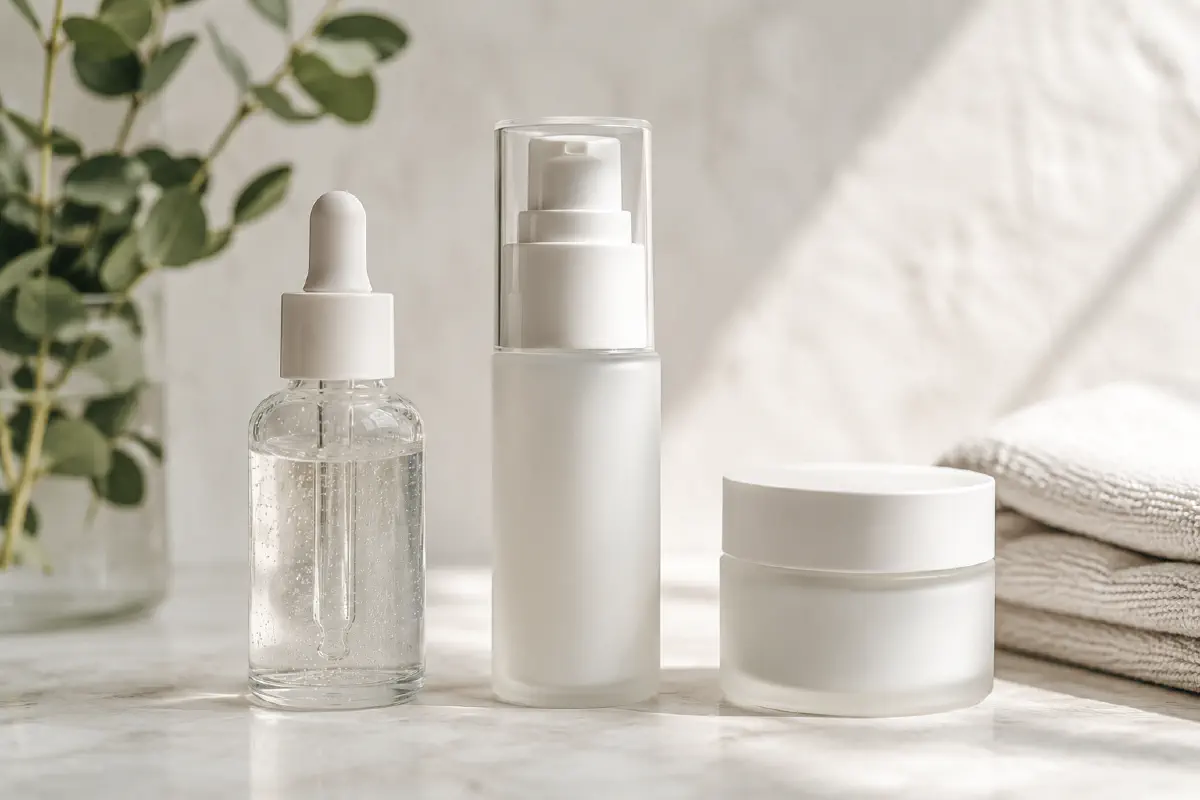
Humectant → Emollient → Occlusive, applied in that order:
- Humectant first, ideally on slightly damp skin, so it has water nearby to draw in immediately rather than pulling from deeper layers
- Emollient next, to smooth texture and fill in surface gaps
- Occlusive last, to seal everything in and prevent the water the humectant drew in from evaporating back out
👉 This slots directly into the broader routine sequencing covered in our glass skin routine order guide.
Petrolatum: The Occlusive Benchmark
Worth knowing specifically: petrolatum (the active ingredient in plain petroleum jelly) is one of the most thoroughly studied occlusives in dermatology and reduces transepidermal water loss by more than 98% under controlled conditions — making it the benchmark other occlusives are typically measured against, despite its unglamorous reputation compared to newer, more cosmetically elegant ingredients.
Choosing By Climate and Skin Type
| Situation | What to Prioritize |
|---|---|
| Humid climate | Humectants can work well even with a lighter occlusive layer, since ambient moisture supports them |
| Dry/cold climate | Don't skip the occlusive step — a humectant alone is more likely to backfire here specifically |
| Oily/combination skin | Lighter occlusives (dimethicone, squalane) over heavier ones (petrolatum, shea butter), especially on the T-zone |
| Very dry/eczema-prone skin | All three categories, with a heavier occlusive layer as the final step |
👉 For zone-specific product weight recommendations, see our combination skin routine guide, and for how this whole equation shifts with the seasons, see our seasonal changes guide.
Common Mistakes
- Using only a humectant serum with nothing on top — especially risky in winter or air-conditioned environments, per the mechanism above
- Avoiding all occlusives because “my skin is oily” — lightweight occlusives exist and don’t have to mean a heavy, greasy layer
- Applying humectants to completely dry skin — they work better applied to slightly damp skin, where there’s already some water nearby to draw from
- Assuming “hydrating” and “moisturizing” products do the same job — check which category (or combination) a product actually falls into rather than trusting the marketing word on the label
Frequently Asked Questions
Is hyaluronic acid a humectant or a moisturizer?
Specifically a humectant — it draws water in but doesn’t seal anything in on its own, which is why it’s most effective layered under an emollient or occlusive rather than used alone.
Do I need all three categories every day?
Not necessarily all three every single day, but for genuinely dry or compromised skin, using at least a humectant plus an occlusive (with or without a separate emollient step) is the more reliable combination than relying on just one.
Why does my moisturizer feel great in summer but not enough in winter?
Many “all-in-one” moisturizers lean humectant-heavy, which performs well when ambient humidity is higher; in winter’s drier air, that same product may need a dedicated occlusive layered on top to actually seal in what it’s drawing.
Are natural oils occlusives or emollients?
Most plant oils function primarily as emollients (filling gaps, smoothing texture) with only mild occlusive properties — they’re generally less effective at blocking water loss than dedicated occlusives like petrolatum or dimethicone.
Can dehydrated skin become dry skin over time if untreated?
Not directly — they’re separate systems (water content vs. oil production) — but chronic dehydration can make skin more prone to irritation and barrier issues, which can compound with an existing dry skin type to make things feel worse overall.
Final Thoughts
“Hydrating” isn’t one thing — it’s a three-part system, and skipping any one part explains most of the “why isn’t this working” frustration with skincare. A humectant without something to seal it in isn’t a hydration routine; it’s just a temporary illusion of one.