
For a lot of women, PCOS (polycystic ovary syndrome) or PCOD (polycystic ovarian disease) doesn’t announce itself with irregular periods first — it shows up on the skin and hair, one symptom at a time, often years before anyone connects them to a single underlying cause. A chin breakout here, a bit of extra hair on the jawline there, a dark patch on the neck that seems unrelated. Individually, each looks like its own minor issue. Together, they’re a pattern.
This guide walks through the five most common skin and hair signs of PCOS/PCOD, why they’re connected, and what to actually ask a doctor for — plus links to our deeper treatment guides for each individual symptom.
Why PCOS Shows Up on Skin and Hair at All
PCOS is driven by two overlapping issues: hyperandrogenism (higher-than-typical levels of androgens, like testosterone) and insulin resistance (cells responding less efficiently to insulin, which pushes the body to produce more of it). Both of these directly affect skin and hair, which is why dermatological signs are so common — research reviewing the condition’s skin effects found that acne and hirsutism are the most frequent signs, followed by hair thinning and acanthosis nigricans, affecting a large majority of women with PCOS (source: cutaneous manifestations of PCOS, PMC narrative review).
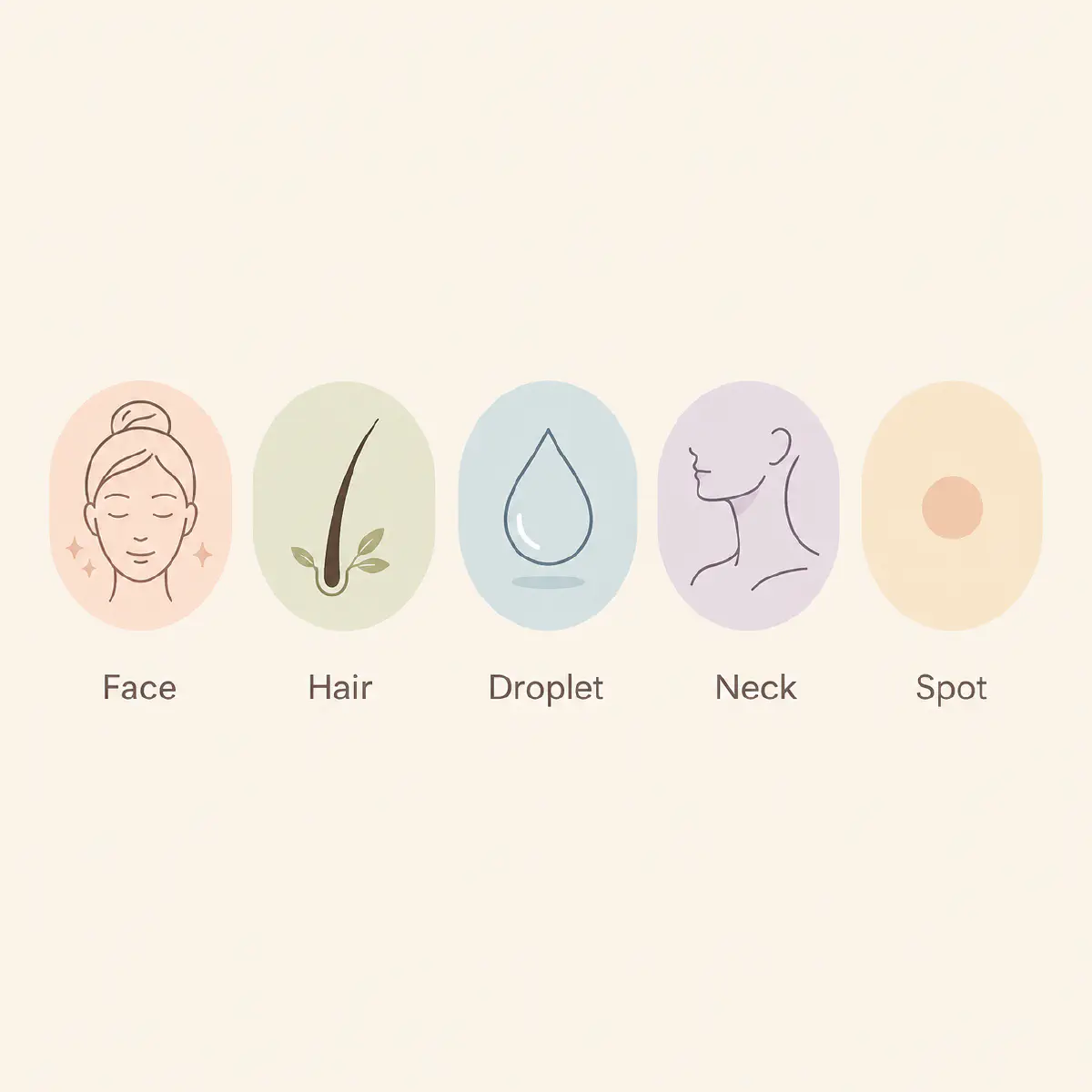
| Sign | What It Looks Like | Where It Shows Up | Underlying Driver |
|---|---|---|---|
| Hirsutism | Coarse, dark hair growth | Chin, upper lip, chest, back, inner thighs | Excess androgens stimulating dormant follicles |
| Androgenic Alopecia | Thinning at the crown/part line | Scalp | Androgens shrinking scalp follicles (miniaturization) |
| Hormonal Acne | Deep, cystic breakouts | Jawline, chin | Androgens increasing sebum production |
| Acanthosis Nigricans | Dark, velvety, thickened patches | Neck, armpits, groin, under breasts | High insulin levels stimulating skin cell growth |
| Skin Tags | Small, soft, benign growths | Neck, armpits, body folds | Linked to insulin resistance and friction |
Hirsutism: Excess Hair in Androgen-Sensitive Areas
Hirsutism affects a majority of women with PCOS and shows up as coarse, dark hair in areas that typically grow only fine, light “peach fuzz” — the chin, upper lip, chest, and inner thighs. This happens because elevated androgens stimulate follicles in these zones to behave like scalp/beard follicles instead.
👉 For natural approaches to reducing visible hair growth, see How to Naturally Reduce Facial Hair Growth Over Time — which also covers when to get bloodwork done before assuming a home remedy will be enough.
Androgenic Alopecia: Scalp Thinning, Not Just Facial Hair Growth
It can feel contradictory — excess hair on the face and chest, but thinning hair on the scalp — but both come from the same hormonal mechanism playing out in opposite ways depending on which follicles are androgen-sensitive. Scalp follicles miniaturize under androgen exposure the same way they do in male-pattern baldness; facial/body follicles are stimulated to grow more instead.
👉 For a full breakdown of PCOS-related hair thinning and a recovery plan, see How to Stop Hormonal Hair Fall Naturally: The Complete Ayurvedic Guide.
Hormonal Acne: Jawline and Chin Breakouts
Persistent, deep breakouts concentrated on the jawline and chin — especially ones that don’t respond well to typical over-the-counter acne treatment — are one of the more recognizable PCOS skin signs, driven by androgens increasing oil production in that zone specifically.
👉 We cover this in depth, including where the traditional and dermatological explanations for jawline acne actually agree, in Secrets of Chinese Face Mapping: Holistic Approaches to Acne Treatment, and the full androgen mechanism plus treatments ranked by evidence in Hormonal Acne: Why It Happens and What Actually Helps.
Acanthosis Nigricans: The Sign Almost Nobody Talks About
This is the symptom most likely to go unrecognized. Acanthosis nigricans presents as darkened, thickened, velvety patches of skin — most often on the back of the neck, armpits, groin, or under the breasts. It’s caused by high circulating insulin levels stimulating skin cell overgrowth, and it’s considered one of the more reliable early visual markers of insulin resistance (source: PMC review, cutaneous manifestations of PCOS).
Because it’s often mistaken for “just dark skin” or poor hygiene (it isn’t — scrubbing doesn’t remove it), it frequently goes unmentioned to a doctor for years. If you notice this pattern, it’s worth raising directly, since it’s a visible clue about insulin resistance that bloodwork alone might not prompt anyone to check for otherwise.
Skin Tags: A Small but Real Clue
Skin tags, especially when they appear in clusters around the neck or armpits, are also linked to insulin resistance — the same underlying mechanism behind acanthosis nigricans, just expressed differently.
👉 For how to safely manage existing skin tags, see Remove Skin Tags Effectively.
What to Actually Ask a Doctor For
Recognizing the pattern is useful, but it isn’t a diagnosis. PCOS is typically assessed using a combination of:
- Blood tests for androgen levels (total and free testosterone, DHEA-S)
- Fasting insulin and glucose to assess insulin resistance
- A pelvic ultrasound to check for the follicle pattern PCOS is named for
- A thyroid panel, since thyroid conditions can produce overlapping symptoms and need to be ruled out separately
No single symptom on this list — not even all five together — is a substitute for this kind of workup. If you recognize two or more of these signs together, it’s a good reason to bring them up specifically at your next appointment, rather than treating each one in isolation.
The Common Thread: Insulin Resistance
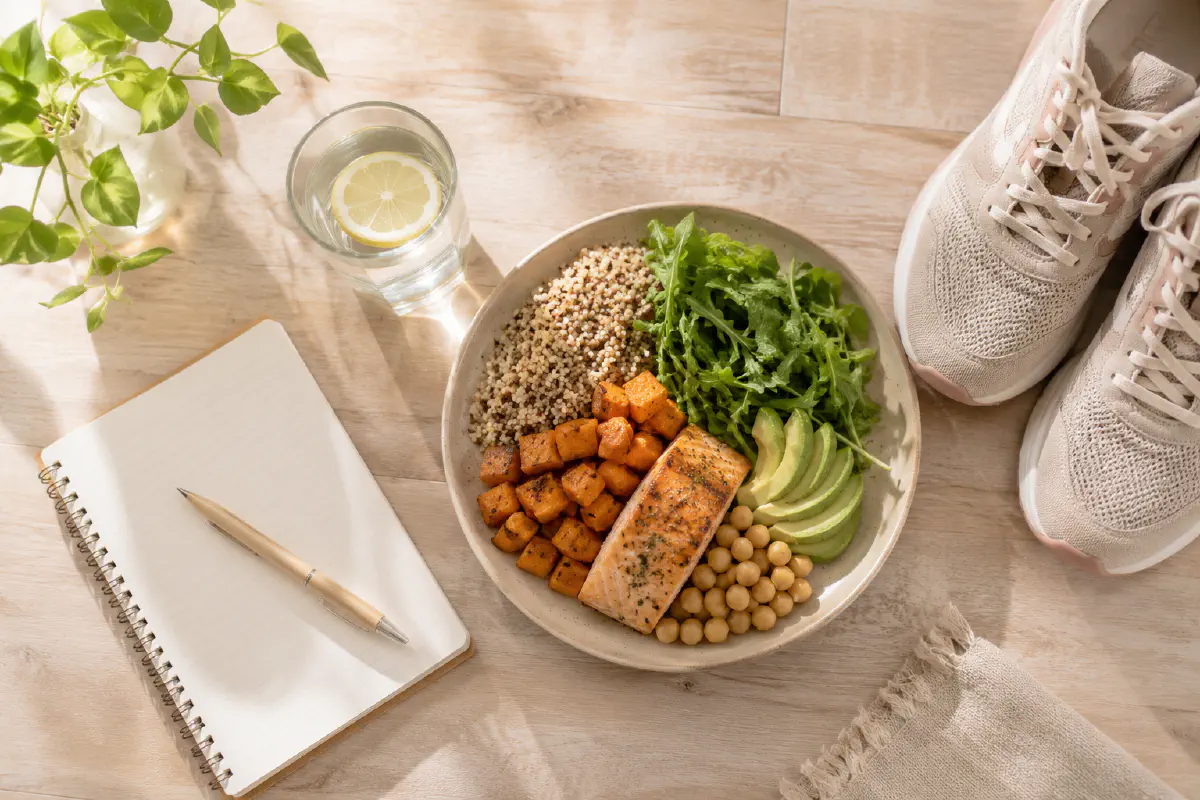
Because insulin resistance sits underneath so many of these symptoms, lifestyle approaches that improve insulin sensitivity — consistent movement, reducing refined sugar and processed carbohydrates, adequate sleep, and stress management — tend to have knock-on effects across multiple symptoms at once, rather than needing five separate interventions. This doesn’t replace medical treatment, but it’s often recommended alongside it.
Conditions That Can Look Similar
A few other conditions overlap enough with PCOS/PCOD’s skin and hair signs that they’re worth ruling out rather than assumed:
- Thyroid disorders — both hypothyroidism and hyperthyroidism can cause hair thinning and skin changes independent of PCOS, and thyroid dysfunction can also occur alongside it. This is exactly why a thyroid panel is part of a proper workup, not an optional extra.
- Idiopathic hirsutism — some women have hirsutism with normal androgen levels and no other PCOS features; the cause isn’t fully understood, but it’s treated differently from PCOS-driven hirsutism.
- Cushing’s syndrome and other rarer hormonal conditions — much less common, but can produce a similar combination of acne, hirsutism, and skin changes, which is part of why a doctor working from bloodwork (not just visible symptoms) matters for an accurate diagnosis.
This is the practical reason to treat this list as “worth getting checked,” not “worth self-diagnosing” — several different underlying causes can produce overlapping symptoms, and they’re managed differently.
Frequently Asked Questions
Can you have PCOS with regular periods?
Yes — PCOS is diagnosed using a combination of criteria (irregular ovulation, elevated androgens, and/or the characteristic ovarian follicle pattern on ultrasound), and not everyone with the condition has irregular cycles. This is part of why skin and hair signs are often the first noticeable clue.
Is PCOD the same as PCOS?
They’re closely related and often used interchangeably in casual conversation, though PCOD is a term used more commonly in some regions (including India) and is sometimes considered a milder or distinct classification. If you’re being evaluated, your doctor’s specific diagnostic criteria matter more than which term is used.
Will treating one symptom (like acne) improve the others?
Not reliably on its own, since topical treatment addresses the visible symptom, not the underlying hormonal or insulin driver. That’s why a proper diagnostic workup matters if you’re seeing multiple signs together.
Do all women with PCOS get all five of these symptoms?
No — presentation varies significantly. Some women have prominent hirsutism with no acanthosis nigricans; others have acne and skin tags with minimal hair changes. That variability is part of why PCOS can be under-recognized for years.
Final Thoughts
None of these five signs is dangerous on its own, but together they’re a pattern worth paying attention to — especially acanthosis nigricans and skin tags, which are the two most likely to be dismissed as unrelated cosmetic issues rather than a visible clue about insulin resistance. If you’re noticing two or more of these together, that’s a genuinely useful thing to bring to a doctor, not just a skincare routine to fix on your own.