
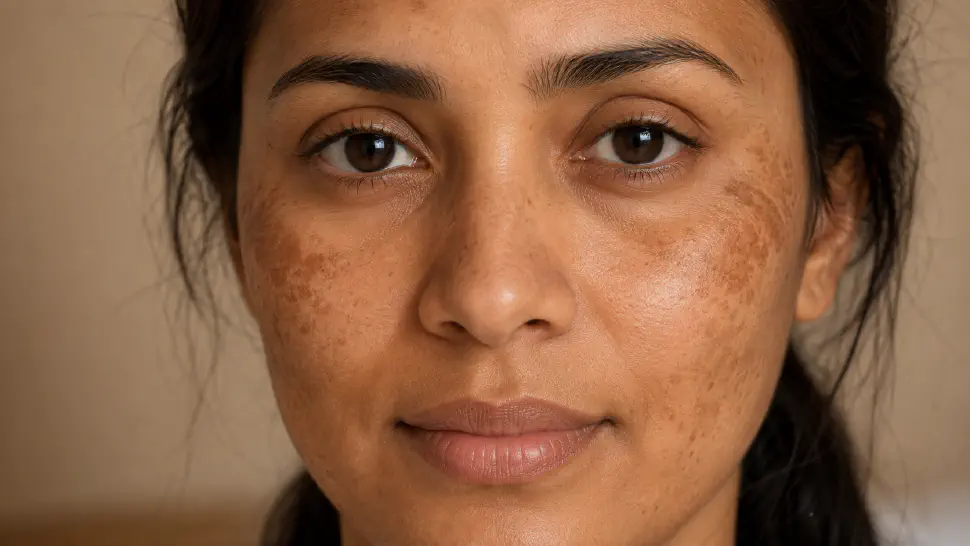

Melasma gets lumped in with “dark spots” and “hyperpigmentation” constantly, but it behaves differently from both the sun-triggered spots covered in our sun damage guide and the post-acne marks covered elsewhere on this site — and treating it like an ordinary dark spot is a common reason people don’t see results. Here’s what melasma actually is, why it’s notoriously resistant to fading, and what genuinely helps versus what just risks making it worse.
What Melasma Actually Is
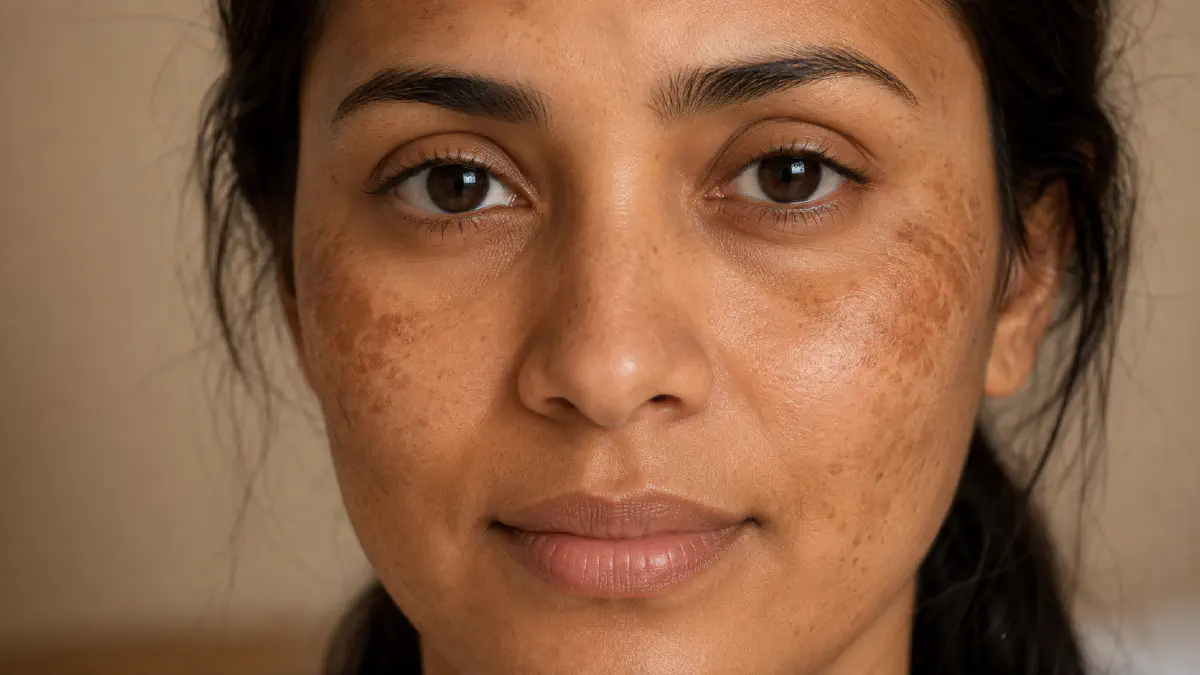
Melasma is a chronic pigmentation condition that shows up as symmetrical brown-to-gray-brown patches, typically on the cheeks, forehead, upper lip, nose, and chin — a distinctive “centrofacial” pattern that’s usually recognizable on sight. It was historically called chloasma, or the “mask of pregnancy,” though melasma is the medically preferred term today since it also affects people who’ve never been pregnant.
- Who it affects most: women far more often than men, typically with onset between ages 20-40
- Skin tone risk: more common and often more severe in medium-to-deeper skin tones (Fitzpatrick types III-VI)
- Pregnancy connection: genuinely common — estimates range from roughly 15% to as high as 50-75% of pregnant women, depending on the population studied and skin tone
The Real Cause: A “Convergence Disorder”
This is the central thing that separates melasma from an ordinary sunspot or post-acne mark: melasma isn’t triggered by one thing. Dermatology research increasingly describes it as a convergence disorder — it emerges when multiple triggers overlap in someone already genetically predisposed:
- UV exposure — the same driver behind ordinary sun-triggered hyperpigmentation, but melasma-prone skin appears to overreact to it more than average
- Hormonal shifts — pregnancy, birth control pills, and hormone therapy are all well-documented triggers, which is why melasma clusters so heavily around reproductive-age women
- Genetics — a family history of melasma is common among people who develop it
- Visible light — not just UV, covered separately below because it’s the most commonly missed piece
- Vascular and dermal factors — melasma-affected skin shows increased blood vessel activity beneath the pigmented patches, which is part of why it behaves differently from a purely surface-level mark
Because it’s several overlapping triggers rather than one, addressing only one piece (sunscreen alone, or a lightening cream alone) tends to produce partial, easily-reversed improvement rather than lasting change.
The Non-Obvious Fact: Visible Light Matters as Much as UV
This is the single most useful, least-known fact about melasma specifically. Standard sunscreens block UV rays effectively, but visible light — the light you can actually see, including from screens and indoor lighting, not just direct sun — also triggers pigment production in melasma-prone skin, and ordinary UV-filter sunscreen doesn’t block it.
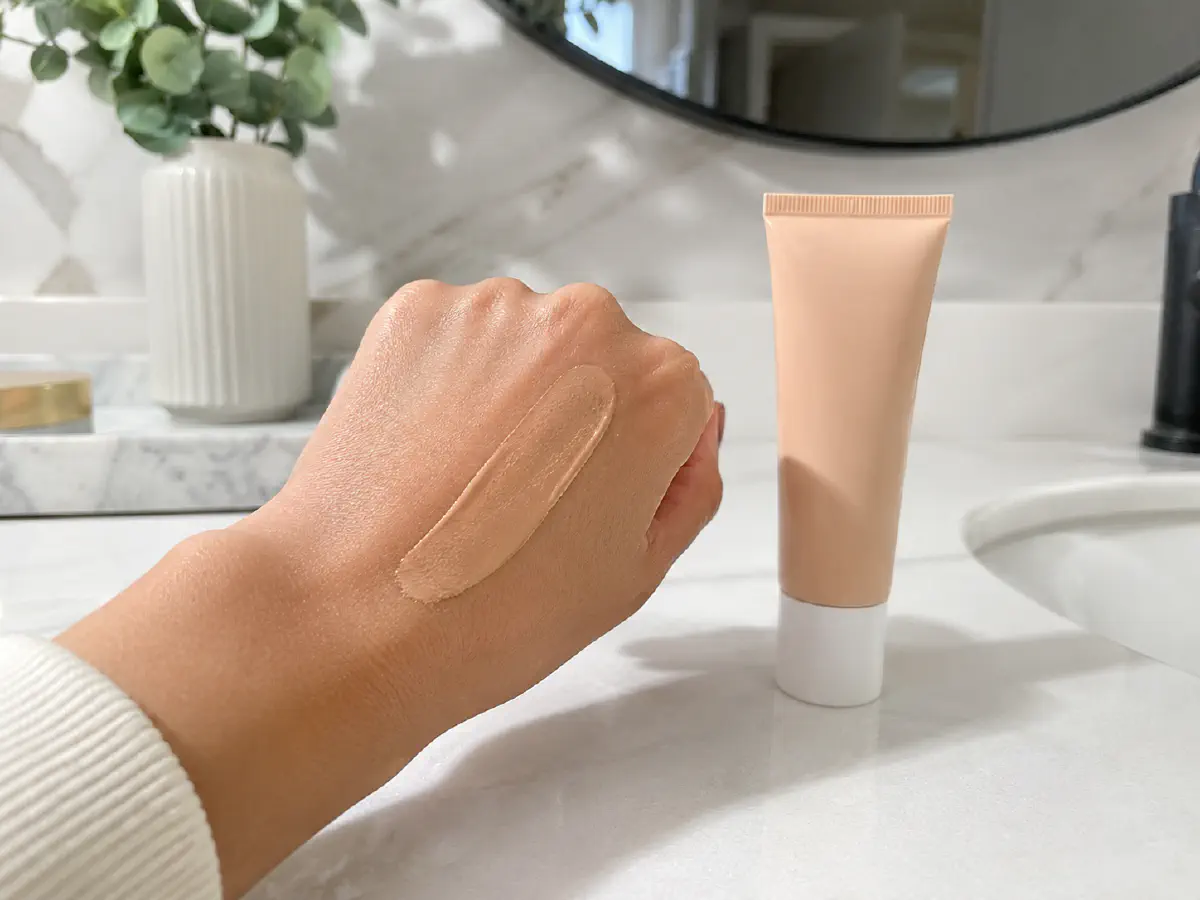
The practical fix: tinted sunscreens containing iron oxide (or colored titanium dioxide) block visible light in addition to UV, and research specifically on melasma patients has found they measurably reduce relapse compared to standard, untinted sunscreen. An international dermatology consensus has described a broad-spectrum SPF 50 sunscreen with a visible-light filter, applied daily and reapplied roughly every two hours, as the non-negotiable foundation of any melasma routine — more consistently emphasized than any single treatment ingredient.
👉 See our sunscreen guide for the basics of application and reapplication that apply here too — melasma just adds the tinted, iron-oxide-specific requirement on top.
What Actually Helps
| Approach | Access | What It Does |
|---|---|---|
| Tinted (iron oxide) SPF 50 sunscreen | Over-the-counter | Foundational — blocks UV and visible light triggers; without this, other steps underperform |
| Azelaic acid, vitamin C, niacinamide | Over-the-counter | Gentler pigment-regulating actives, reasonable lower-risk starting point |
| Hydroquinone, tretinoin, triple combination cream | Prescription | Strongest evidence for fading existing pigment, but needs dermatologist supervision (see caution below) |
| Oral tranexamic acid | Prescription | Growing evidence base; works through a different pathway (interrupting the signal linking sun, heat, and estrogen to pigment production) than the tyrosinase-blocking ingredients above |
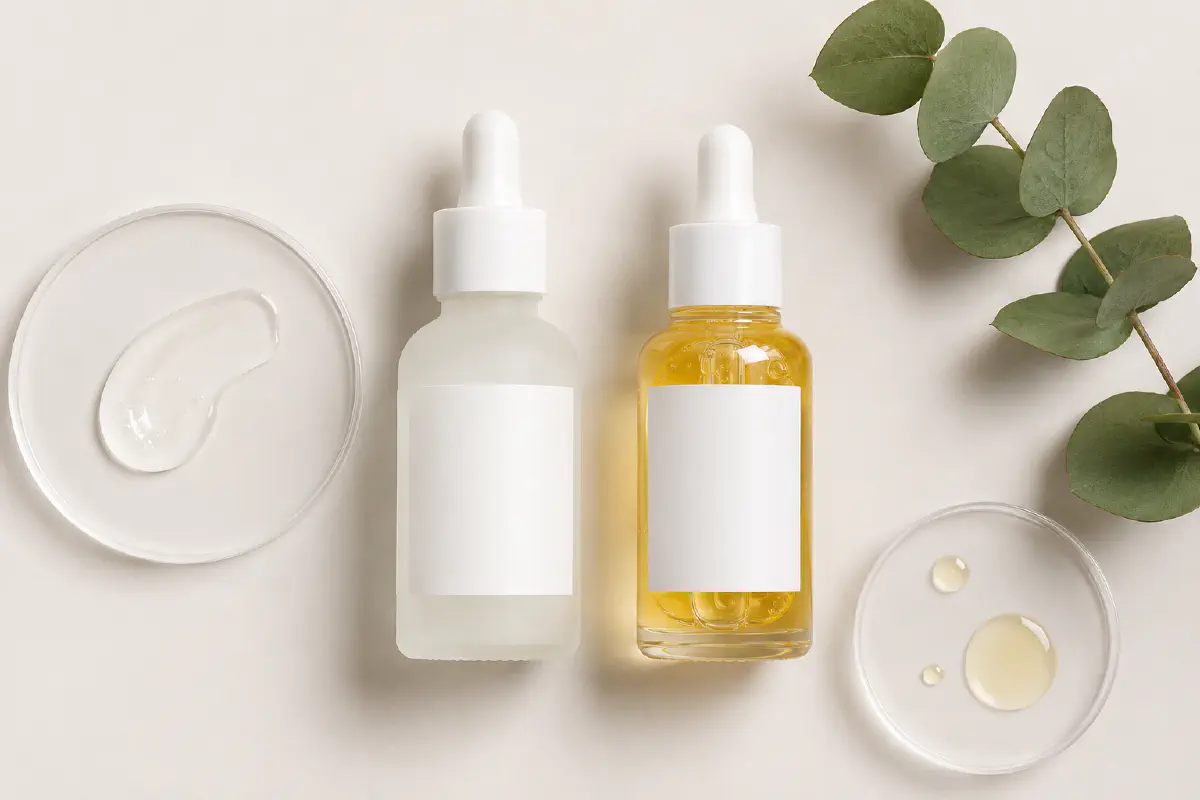
The over-the-counter tier is reasonable to start on your own. The prescription tier genuinely works better for established melasma, but belongs in a dermatologist’s hands — partly for the right formulation and concentration, and partly because of the safety issue below.
The Hydroquinone Caution: Ochronosis
This is worth being direct about, especially since melasma treatment overlaps so much with “skin lightening” marketing that skips this entirely. Hydroquinone is genuinely effective and remains a first-line prescription option, but prolonged, unsupervised use carries a real risk of exogenous ochronosis — a paradoxical, often permanent, blue-gray darkening of the treated skin. Documented cases have occurred at concentrations as low as 2% (the over-the-counter strength in some markets) with regular use over as little as a few months, and the risk is disproportionately higher in Fitzpatrick types V-VI — the exact skin tones most likely to have melasma in the first place.
This isn’t a reason to avoid hydroquinone entirely — it’s a reason to use it under a dermatologist’s guidance, with defined treatment breaks, rather than as an indefinite daily habit picked up from a product label alone.
Why It Keeps Coming Back
Melasma is a chronic, relapsing condition, not something that gets permanently “cured” by a single treatment course. Even with effective treatment, pigment commonly returns once treatment stops — largely because the underlying triggers (genetic susceptibility, hormonal sensitivity, UV and visible light exposure) don’t go away just because the visible patches faded. This is why dermatology guidance consistently frames sun protection as indefinite, not something to taper off once skin looks clear — the relapse, when it happens, is often directly traceable to a lapse in consistent, visible-light-inclusive sun protection.
Realistic framing matters here: the goal with melasma is usually sustained management and significant fading, not a permanent, one-time fix — an important expectation to set before starting any treatment plan.
What Melasma Isn’t
Worth distinguishing clearly, since these get confused constantly and respond to different approaches:
- Not the same as post-inflammatory hyperpigmentation — PIH follows a specific inflammatory event (like a acne breakout) in one spot and typically fades on its own over 6-12 months; melasma is broader, hormonally-influenced, chronic, and doesn’t reliably self-resolve the same way
- Not the same as solar lentigines (ordinary sunspots) — sunspots are smaller, more defined, purely UV-driven marks that accumulate with cumulative sun exposure over years, without melasma’s hormonal component or centrofacial symmetry
- Not related to under-eye pigmentation specifically, though the pigmented type of dark circles shares the same general UV-melanin mechanism as ordinary sunspots, not melasma’s more complex trigger profile
Frequently Asked Questions
Can melasma go away permanently?
For some people, especially pregnancy-related melasma, it can fade substantially or resolve after the hormonal trigger passes (like after childbirth). For others, especially with ongoing hormonal or genetic factors, it’s more accurately managed long-term than permanently cured — consistent sun protection matters either way.
Is regular sunscreen enough, or do I really need the tinted kind?
Regular UV-filter sunscreen is necessary but often not sufficient for melasma specifically, since it doesn’t block the visible light that also triggers pigment in melasma-prone skin. A tinted, iron-oxide-containing sunscreen is the more melasma-appropriate choice.
Should I see a dermatologist, or can I treat melasma at home?
Over-the-counter steps (tinted sunscreen, azelaic acid, vitamin C) are reasonable to start alone. Given the ochronosis risk with unsupervised hydroquinone use and how much better prescription options tend to work for established melasma, a dermatologist is worth involving rather than self-escalating treatment strength on your own.
Does melasma only happen during pregnancy?
No — pregnancy is a major and well-known trigger, but melasma also occurs from birth control, hormone therapy, sun exposure, and genetic predisposition alone, in people who’ve never been pregnant.
Final Thoughts
Melasma’s defining feature isn’t how dark it looks — it’s how many different triggers have to converge to cause it, which is exactly why single-ingredient fixes so often disappoint. Consistent, visible-light-inclusive sun protection is the one non-negotiable piece regardless of what else is added, prescription options genuinely outperform over-the-counter ones for established melasma but need supervision (the ochronosis risk is real, not theoretical), and the realistic goal is sustained management rather than a one-time permanent fix.