
Our Chinese face mapping guide touched on jawline acne’s hormonal link in a couple of sentences; this is the full picture — the actual mechanism, why it follows a predictable monthly pattern, and which treatments have real evidence behind them versus which are more theoretical than proven.
The Actual Mechanism
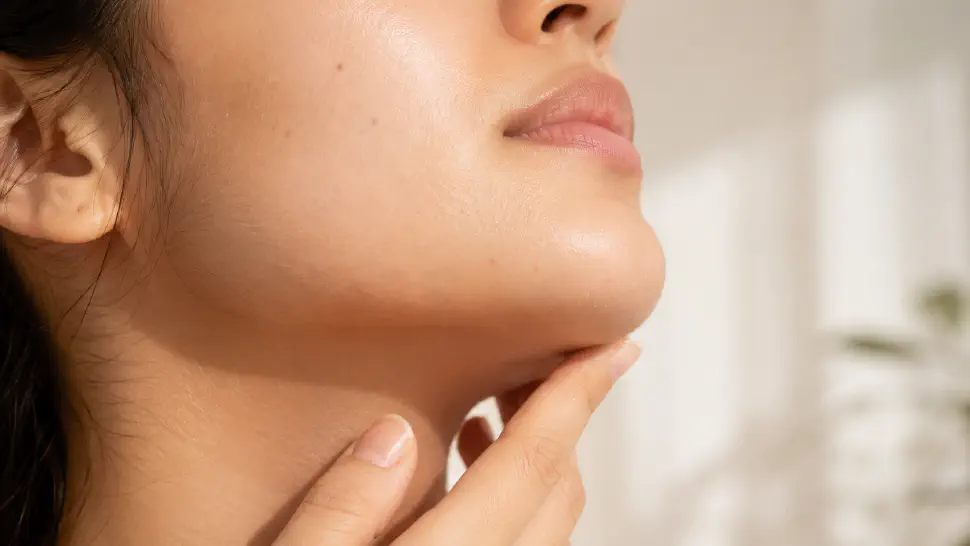
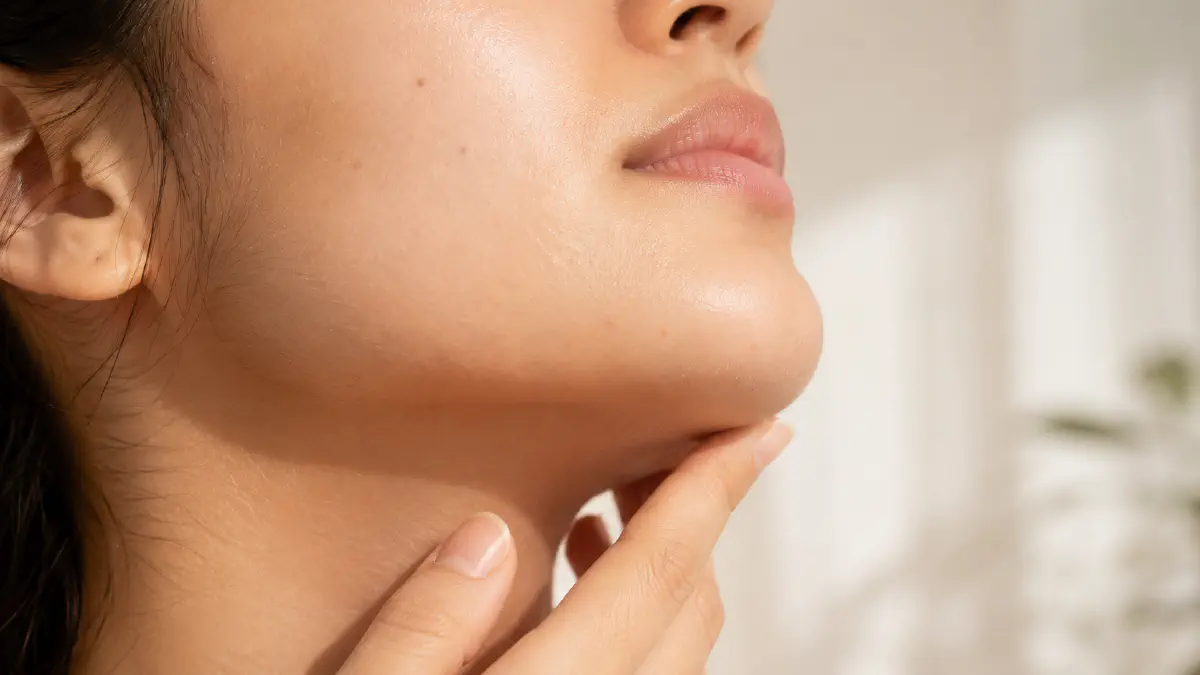
Androgens (a hormone class that includes testosterone) bind to receptors in sebaceous glands, stimulating them to produce more oil. Excess oil, combined with skin cell turnover and bacteria, is what forms the deep, often cystic breakouts characteristic of hormonal acne. The jawline and chin have a notably higher density of androgen receptors than other facial zones, which is exactly why hormonal acne clusters there specifically rather than appearing evenly across the face.
The Cyclical Pattern
Hormonal acne commonly follows the menstrual cycle: in the days leading up to a period, progesterone drops while androgen activity becomes relatively more dominant, which is why breakouts often appear predictably in the same window each month — typically the week before menstruation. Tracking your own breakout timing against your cycle is a genuinely useful, low-effort way to confirm a hormonal pattern before assuming any other cause.
How to Actually Track This
A simple 2-3 cycle log is enough to confirm or rule out a hormonal pattern: note the date breakouts appear, their location, and where you are in your cycle. A pattern that reliably clusters in the same pre-menstrual window across multiple cycles is a much stronger signal than a single month’s observation, since stress, diet, or product changes in any given month can create a false impression of a pattern that isn’t actually cyclical.
It’s Not Just a Teenage Thing
Adult-onset hormonal acne — appearing for the first time or worsening in your late 20s, 30s, or beyond — follows this same mechanism and is common enough that it shouldn’t be dismissed as unusual. It’s often driven by the same cyclical androgen pattern, sometimes compounded by conditions like PCOS.
👉 See PCOS & PCOD: The Skin and Hair Symptoms Nobody Warns You About if jawline acne is showing up alongside irregular periods, excess hair growth, or other symptoms.
Treatments Ranked by Actual Evidence
| Option | Evidence Level | What It Does |
|---|---|---|
| Spironolactone (prescription) | Strong — well-established, commonly used off-label by dermatologists specifically for hormonal acne | Blocks androgen receptors directly, reducing sebum production at the source |
| Combined oral contraceptives | Strong for certain formulations, FDA-recognized for acne specifically | Reduces circulating androgen levels |
| DIM supplement | Early/limited — one 12-week study found a 30% reduction in inflammatory lesions | Theorized to shift estrogen metabolism toward a less androgen-dominant profile |
| Spearmint tea | Real for testosterone reduction, unproven specifically for acne | A randomized trial found meaningful (though more modest than spironolactone) reductions in free/total testosterone — but no trial has directly measured acne as an outcome |
| Standard topicals (benzoyl peroxide, retinoids, salicylic acid) | Strong, well-established | Address the downstream effects (oil, dead skin, bacteria) regardless of the hormonal trigger |

The important honest caveat on spearmint tea specifically: the landmark 2010 randomized controlled trial (in women with PCOS-related hirsutism) measured testosterone levels and hair growth — not acne. Its testosterone-lowering effect is real and reasonably well-documented, and it’s biologically plausible that this could help hormonal acne too, but that specific link hasn’t actually been tested in a clinical trial. Worth trying if you’re curious, not worth treating as a proven acne treatment.
Don’t Abandon Standard Topicals
A common mistake once “hormonal” enters the picture: assuming only hormone-targeting treatments matter and dropping topical care entirely. Benzoyl peroxide, salicylic acid, and retinoids still address the downstream mechanics of acne (excess oil, dead skin cell buildup, bacteria) regardless of what triggered the excess oil production in the first place — they work alongside hormonal approaches, not instead of them.
👉 Diet plays a smaller but related role through a similar hormonal pathway — see our diet-skin connection guide for the dairy/IGF-1 mechanism specifically.
Ruling Out Other Jawline Breakout Causes
Not every jawline breakout is hormonal — a persistent, itchy, uniform-looking rash in this area (or one that got worse on standard acne treatment) is worth checking against a different cause entirely before assuming it’s hormonal.
👉 See Acne vs. Fungal Acne: How to Tell the Difference in Monsoon/Humid Weather for how to distinguish the two.
When to See a Doctor
- Breakouts that reliably cluster in the same pre-menstrual window month after month
- Jawline acne combined with irregular periods, excess hair growth, or unexplained weight changes
- Cystic, painful breakouts that scar and haven’t responded to consistent topical treatment
- Considering spironolactone or hormonal contraceptives — both require a prescription and medical guidance
Frequently Asked Questions
How do I know if my acne is actually hormonal?
The clearest signal is location (jawline/chin) combined with timing (a consistent flare in the week before your period) — if both patterns hold up over a few cycles, hormonal acne is the likely driver.
Is spironolactone safe long-term?
It’s a well-established, commonly prescribed option for hormonal acne, but like any prescription medication it requires medical supervision and isn’t appropriate for everyone (including during pregnancy) — a doctor’s evaluation is necessary, not optional.
Can birth control make acne worse instead of better?
Yes, for some formulations — it depends on the specific hormones in the pill, which is why acne-related birth control choices are usually made with a doctor rather than any one formulation being universally “the acne pill.”
Should I take spearmint tea and DIM together?
There’s no direct research on combining them specifically, and both act on hormone-related pathways, so it’s reasonable to introduce one at a time and monitor your own response rather than starting several new things simultaneously.
How long does it take to see results from hormone-targeting treatments?
Slower than topical acne treatment generally — spironolactone and hormonal contraceptives typically take 2-3 months to show meaningful improvement, since they’re working through a hormonal cycle rather than directly on the skin surface.
Final Thoughts
Hormonal acne has a genuine, specific mechanism — not just a vague “stress breakout” — which is exactly why treatments aimed at the actual androgen pathway (spironolactone, hormonal contraceptives, and to a more modest degree DIM or spearmint tea) tend to outperform topical treatment alone for this particular pattern. Just keep the evidence tiers honest: a well-documented testosterone effect isn’t the same as a proven acne treatment, even when the underlying logic is reasonable.