
Hibiscus shows up in our own 3-Ingredient Glow Mask as the “Nature’s Botox” Firming Mask — a nickname repeated across skincare content everywhere, rarely with a citation attached. This is the dedicated evidence check: what does published research actually show about hibiscus and skin elasticity specifically, and how much of that evidence applies to the kind of topical mask most people are actually using it for.
The Actual Evidence: Stronger Than Most “Natural Botox” Claims, With One Key Gap
Hibiscus has more real research behind it than most trending “natural firming” ingredients — but the type of evidence matters, and it’s worth being precise about what’s actually been tested:
- Human dermal fibroblast (cell culture) study — Wang et al., Molecules, 2022 (PMC9504376) found that hibiscus acid and hibiscus extract significantly promoted collagen and hyaluronic acid synthesis in human skin cells, alongside a measurable antioxidant effect and reduced inflammatory signaling. This is real, human-cell-based evidence of a plausible mechanism — but it’s a lab dish, not a living person’s face.
- Human clinical trial — but oral, not topical — a randomized, double-blind, placebo-controlled 12-week trial of 98 adults tested VC-H1, a proprietary oral hibiscus extract supplement (PMC12347160), and found real improvements in skin hydration, reduced wrinkle depth, and improved elasticity. This is genuine human clinical evidence — the strongest tier hibiscus has — but it tested a swallowed supplement, not a face mask.
The honest gap: there isn’t yet a published, independently peer-reviewed human trial testing a topical hibiscus application — the kind covered in our own DIY mask recipe — for skin elasticity specifically. What exists is a plausible cell-level mechanism plus a positive human trial using an oral route. That’s genuinely more than most “natural Botox” ingredients can claim, but it’s not the same as proof that rubbing hibiscus paste on your face measurably firms skin.
The Mechanism: Hibiscus Acid as a Natural AHA
Separate from the collagen/elasticity research above, hibiscus is also a documented natural source of alpha-hydroxy acids (AHAs) — specifically hibiscus acid, along with citric and malic acid. In lab testing, hibiscus acid extract outperformed both lactic acid and glycolic acid at comparable concentrations for supporting skin renewal markers. AHAs work by loosening the bonds between dead surface skin cells, which shows up cosmetically as smoother texture and — over consistent use — can support the skin’s ability to hold moisture, an indirect contributor to how “firm” skin looks and feels.
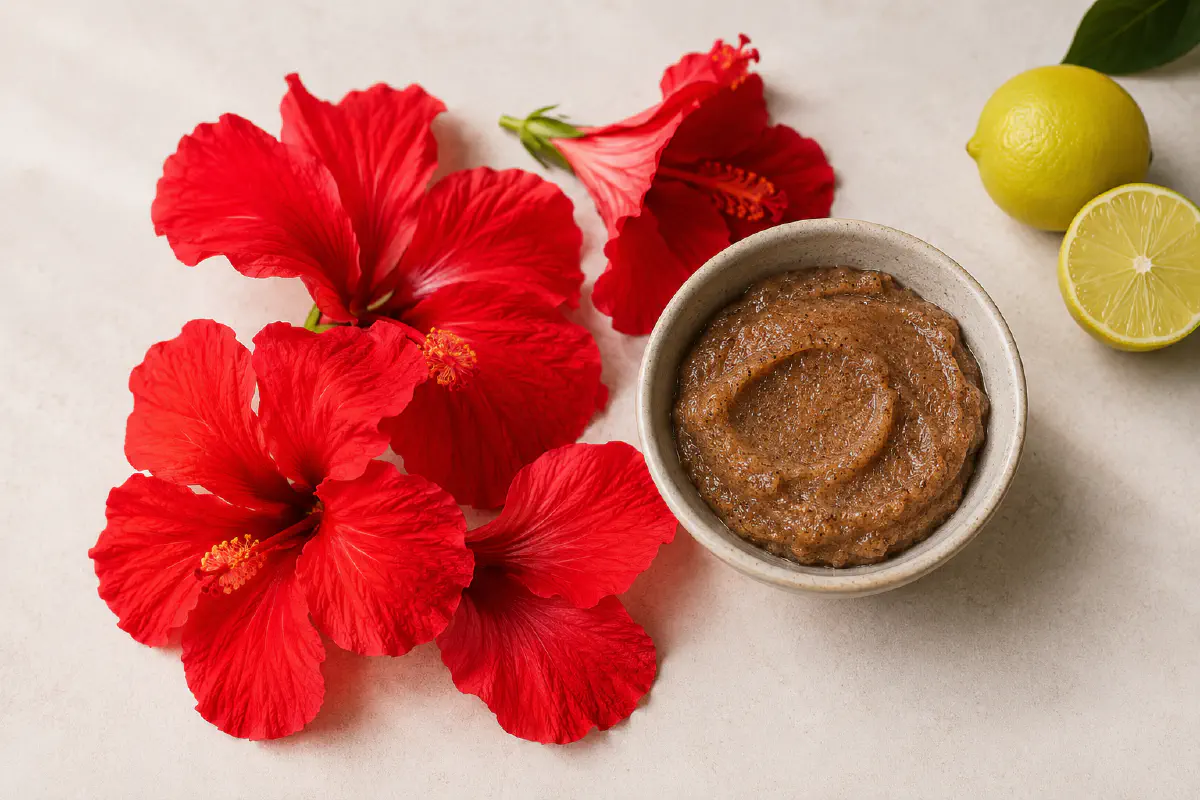
This AHA mechanism is genuinely distinct from the collagen-synthesis mechanism above — one is about exfoliation and surface renewal, the other about the skin’s structural support proteins. Both are real, both are plausible contributors to a “firming” effect, and both are still evidenced mostly at the cell/lab level rather than in a topical human trial.
Hibiscus vs. Retinol vs. Ingestible Collagen: An Honest Comparison
| Approach | Evidence Level | What It's Actually Shown to Do |
|---|---|---|
| Retinoids | Extensive human RCTs, decades of data | Clinically proven to increase collagen production and improve fine lines |
| Oral hibiscus extract (VC-H1) | One human RCT (98 participants, 12 weeks) | Improved hydration, wrinkle depth, and elasticity via a swallowed supplement |
| Topical hibiscus (mask/extract) | Human cell culture + AHA lab testing only | Plausible collagen/hyaluronic acid stimulation and exfoliation; no topical human trial yet |
👉 For the ingestible route to firmer skin — a different delivery method with more established evidence — see Collagen-Boosting Soups for Glowing Skin.
How to Actually Use It
Rather than duplicating a full recipe already on this site, the “Nature’s Botox” Hibiscus Firming Mask in our 3-Ingredient Glow Mask guide covers the DIY application. Given the AHA content specifically, a few practical additions worth knowing before using it:
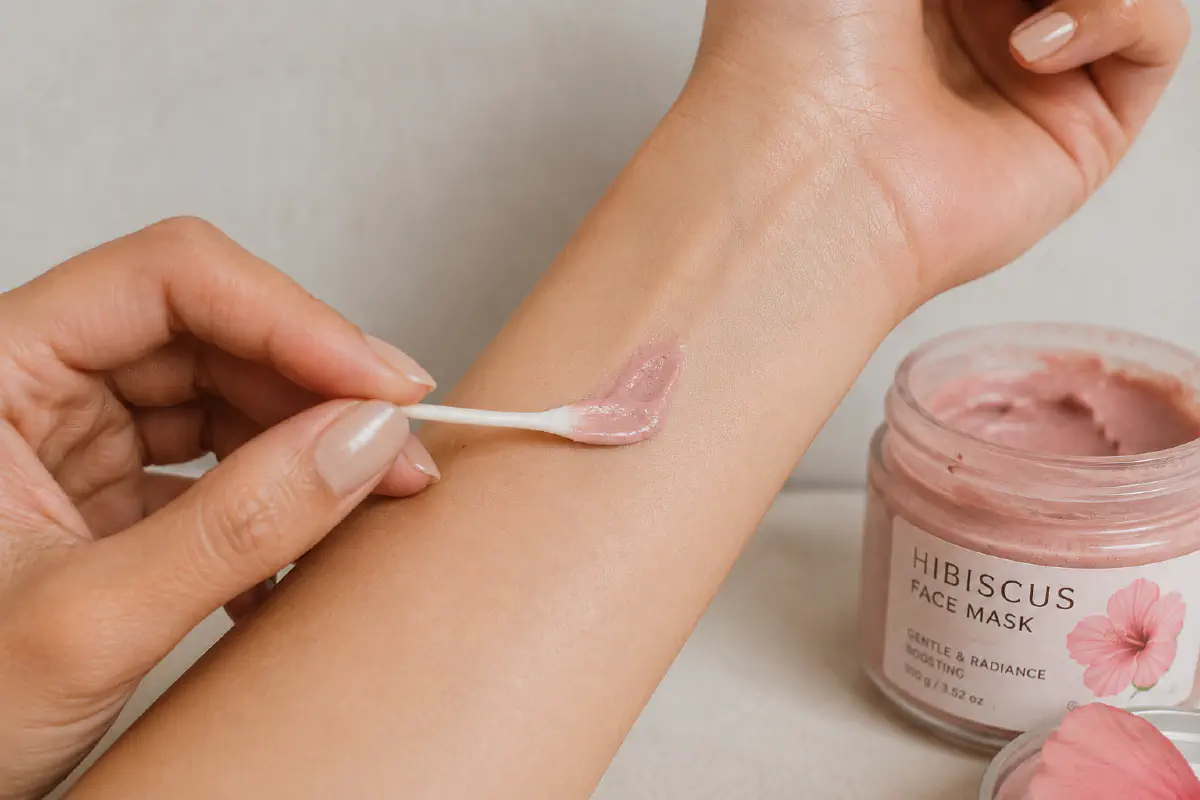
- Patch test first, the same way you would with any new AHA-containing product — hibiscus acid is mild, but individual sensitivity varies
- Start with shorter contact time (5-10 minutes) rather than leaving a hibiscus mask on for extended periods, since AHA exposure is cumulative
- Follow with sunscreen the next day — AHAs, hibiscus acid included, can increase sun sensitivity; see our sunscreen myths guide for what actually matters in choosing one
Safety Notes Worth Knowing
- Malvaceae family allergy: hibiscus is related to okra, cotton, and marshmallow root — anyone with a known sensitivity to related plants should patch test first, the same caution covered in our hibiscus for hair growth article
- AHA sun sensitivity: as noted above, increased photosensitivity is a real, documented effect of AHA use generally, not specific to hibiscus, but worth building sunscreen into the routine regardless
- Staining risk: hibiscus is pigment-rich and can temporarily tint very fair skin pink — this fades, but is worth expecting rather than being surprised by
What Hibiscus Doesn’t Do
Consistent with every natural ingredient covered on this site: hibiscus is a plausible, low-risk supportive addition, not a replacement for the interventions with the strongest evidence behind them. It doesn’t replace retinoids for established fine lines and structural collagen loss — if you’re combining the two, see our skin barrier guide for why introducing actives one at a time matters. Topical hibiscus use also won’t necessarily replicate the results seen in the oral supplement trial above — those are two different delivery routes with two different evidence bases, not interchangeable claims about the same product.
Frequently Asked Questions
Is “Nature’s Botox” an accurate nickname for hibiscus?
Not literally — Botox works by temporarily paralyzing muscles, which is an entirely different mechanism from anything hibiscus does. The nickname is marketing shorthand for “has a firming effect,” which has some real evidence behind it (cell-level collagen stimulation, a positive oral supplement trial) but isn’t the same claim as Botox’s actual mechanism.
Does a hibiscus face mask actually firm skin?
The honest answer is “plausibly, but not proven in a topical human trial yet.” The mechanism is real at the cell level, and a related oral supplement showed real elasticity improvements in a human trial — but no independent study has specifically tested a topical hibiscus mask on human skin for elasticity.
Is hibiscus a good retinol alternative?
Not a direct substitute — retinoids have decades of human trial evidence behind them for collagen stimulation specifically, while hibiscus’s evidence is earlier-stage. Hibiscus is more reasonably positioned as a gentle, low-risk complementary step than a retinol replacement.
Can I use a hibiscus mask and vitamin C together?
Yes, there’s no known interaction risk, and both work through overlapping antioxidant and collagen-supportive mechanisms — see Collagen-Boosting Soups for the vitamin C and collagen connection specifically.
Final Thoughts
Hibiscus has genuinely more research behind it than most “natural Botox” ingredients — a real human-cell study showing collagen and hyaluronic acid stimulation, a real human clinical trial showing elasticity improvements, and documented natural AHA content that outperformed comparison acids in lab testing. The honest asterisk is that the strongest human evidence (the 12-week trial) tested an oral supplement, not a topical mask, so anyone using a hibiscus face mask is working from a plausible mechanism and adjacent evidence, not a study of that exact product. That’s still a reasonable, low-risk case for keeping hibiscus in a routine — just not the same thing as “clinically proven to firm skin” the way retinoids are.