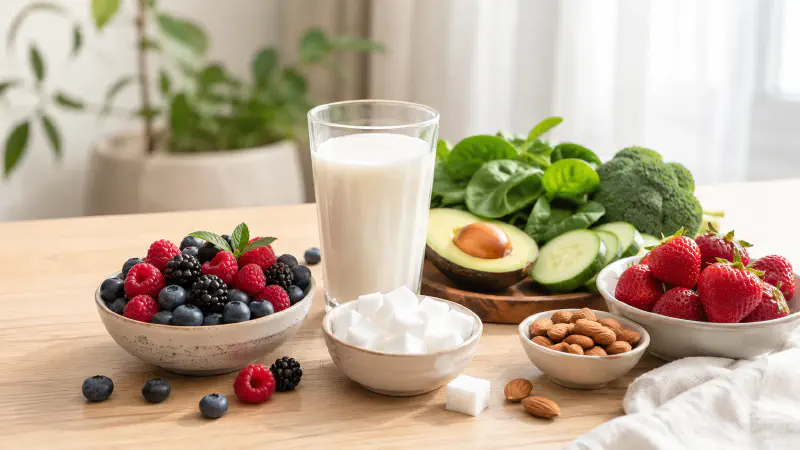


“Gut health” gets blamed for almost everything in wellness content, which makes it easy to dismiss — but the gut-skin axis is a real, actively researched area, not just a trend. The honest version is more modest than the marketing: gut health can meaningfully influence certain skin conditions, but it’s one contributing factor among several, not a replacement for treating skin directly.
👉 Quick scoping note before we start: this is about your internal gut microbiome, not the bacteria living on your skin’s surface. For the topical/skin-surface microbiome side, see DIY Fermented Skincare: The Aloe, Green Tea & Honey “Glass Skin” Routine — related concept, different mechanism.

What the Gut-Skin Axis Actually Is
The gut-skin axis describes a bidirectional relationship between your gastrointestinal system and your skin, mediated through the immune system, systemic inflammation, and the gut microbiome. Research reviews describe this as a genuine two-way communication system, not just an association (source: Unraveling the Gut-Skin Axis: The Role of Microbiota in Skin Health and Disease, MDPI).
The mechanism, in plain terms:
- Dysbiosis — an imbalance in gut bacteria (reduced diversity, fewer beneficial short-chain-fatty-acid-producing bacteria) develops.
- Increased intestinal permeability — sometimes called “leaky gut,” this means the gut lining lets more microbial byproducts pass into the bloodstream than it should. Your gut has its own version of a barrier, similar in concept to your skin’s barrier — when it’s compromised, more gets through than it should.
- Systemic immune activation — those byproducts trigger low-grade, body-wide inflammation.
- Skin manifestation — that inflammation can show up as acne, eczema flares, psoriasis flares, or rosacea, depending on individual susceptibility.
Which Skin Conditions Are Actually Linked
| Condition | Strength of Gut-Skin Link |
|---|---|
| Acne | Actively researched, several clinical trials on probiotics specifically |
| Atopic dermatitis (eczema) | Well-established association with gut microbiome diversity |
| Psoriasis | Documented association, mechanism still being clarified |
| Rosacea | Linked, though less studied than the other three |
👉 For the deep dive on acne specifically, including a jawline/hormonal-acne breakdown, see Secrets of Chinese Face Mapping: Holistic Approaches to Acne Treatment.
A Third Pathway: The Gut-Brain-Skin Connection
Diet and microbiome composition aren’t the only way the gut influences skin — stress adds a second, parallel route into the same system. Chronic stress measurably affects gut permeability on its own, independent of what you eat, which means a stressful period can worsen skin even with an otherwise solid diet. This is sometimes called the “gut-brain-skin axis,” and it’s part of why skin flares so often cluster around stressful life events rather than tracking diet changes alone. Practically, this means stress management belongs in the same conversation as diet when gut-linked skin issues are on the table — not as an afterthought.
Does Fixing Gut Health Actually Improve Skin? The Real Evidence
This is where it’s worth being precise instead of just repeating “gut health = clear skin.”
A 12-week randomized, double-blind, placebo-controlled trial tested an oral probiotic (Lacticaseibacillus rhamnosus CECT 30031, combined with the cyanobacterium Arthrospira platensis) in patients with acne vulgaris. Results: 50% of the probiotic group showed improvement on a standard acne severity scale, compared to 29.4% in the placebo group, with a significant reduction specifically in non-inflammatory lesions (source: Randomized Clinical Trial to Evaluate the Efficacy of an Oral Probiotic in Acne Vulgaris, Acta Dermato-Venereologica).
That’s a real, meaningful effect — but a broader meta-analysis across 15 studies and 811 participants found a more mixed picture: oral probiotics significantly reduced overall acne severity scores, especially in mild-to-moderate cases treated for at least 12 weeks, but did not significantly reduce acne lesion counts. In other words, probiotics may help the broader picture of skin severity and inflammation without necessarily zeroing out visible pimples on their own.
The honest summary: gut-focused approaches are a legitimate, evidence-supported complement to skincare — not a replacement for treating the skin directly, and not a guaranteed fix on their own.
What Actually Helps (Based on the Research Above)
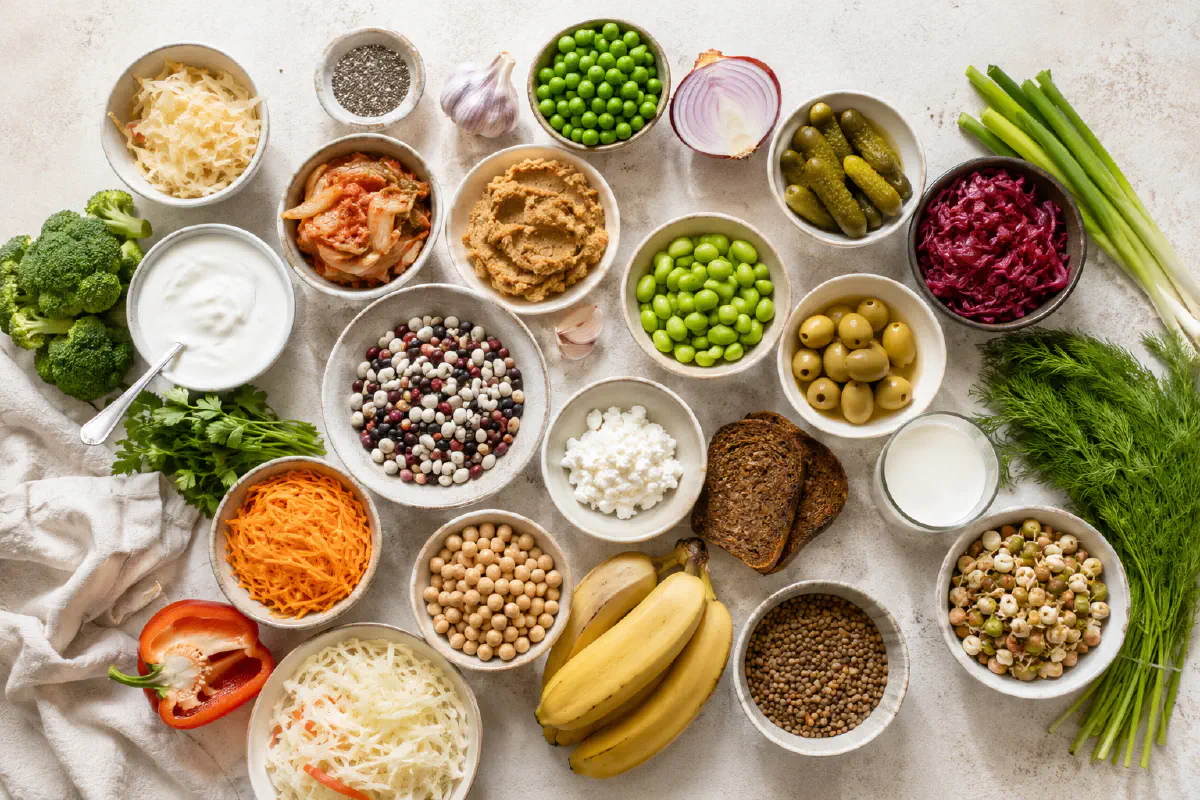
- Fiber diversity — a wider variety of plant fiber sources feeds a more diverse gut microbiome, which is the foundation the rest of this mechanism depends on
- Fermented foods — yogurt, kefir, kimchi, and sauerkraut introduce beneficial bacteria strains; distinct from topical fermented skincare, but a reasonable dietary complement to it
- A specific probiotic strain, if supplementing — Lacticaseibacillus rhamnosus has the most direct trial evidence for acne specifically among the options studied so far
- Reducing chronic stress — stress affects gut permeability directly, adding a second pathway (on top of diet) by which it can influence skin
- Patience — the trial above ran 12 weeks before showing results; this isn’t a same-week fix
A Practical 12-Week Starting Point
Since the trial evidence above is built on a 12-week window, it’s worth structuring expectations around that same timeframe rather than a quick trial-and-error approach:
Weeks 1–2: Add, don’t restrict. Introduce one fermented food daily (yogurt, kefir, or kimchi) and increase plant fiber variety — aim for a wider range of vegetables and legumes rather than just eating more of the same ones. Avoid the temptation to eliminate entire food groups at this stage.
Weeks 3–6: Address the stress pathway. Layer in consistent sleep and a stress-management habit (even something as simple as a daily 10-minute walk), since this pathway works independently of diet.
Weeks 7–12: Evaluate and adjust. This is the point where the referenced clinical trial saw measurable results. If you haven’t noticed any change in overall skin severity by now, gut-focused changes alone likely aren’t your primary driver, and it’s worth focusing more directly on topical care or a dermatologist visit.

What to Skip: Wellness-Trend Noise
A few popular “gut health for skin” ideas don’t hold up to the same scrutiny as the research above:
- “Detox” teas and colon cleanses — no credible evidence they improve gut microbiome diversity or skin outcomes; some laxative-based versions can cause dehydration and electrolyte imbalance
- Extreme elimination diets without guidance — cutting entire food groups can reduce fiber diversity, which may work against the actual mechanism you’re trying to support
- “Candida cleanse” protocols — candida overgrowth as a driver of skin issues is a popular wellness claim without strong supporting evidence in most people without a diagnosed condition
Frequently Asked Questions
How long before gut changes show up on skin?
The clinical trial referenced above ran 12 weeks before measuring results, which is a reasonable minimum expectation — this isn’t a fast intervention.
Should I take a probiotic supplement or just eat more fermented foods?
Both have merit; supplements let you target a specific studied strain (like L. rhamnosus for acne), while whole fermented foods offer broader, less targeted diversity. Neither replaces direct skincare or, if needed, a dermatologist.
Is “leaky gut” a real diagnosis?
Increased intestinal permeability is a real, measurable phenomenon in research contexts, but “leaky gut syndrome” as marketed by some wellness sources — as a catch-all diagnosis and cure-all target — oversimplifies a genuinely complex, still-developing area of research.
Can gut health alone clear acne?
Unlikely on its own, based on the meta-analysis above — it’s more supportive/complementary than a standalone fix, particularly for reducing overall severity rather than eliminating visible lesions.
Does this mean dairy or sugar directly cause acne through the gut?
Not exactly — that’s a related but distinct question about specific foods and glycemic load rather than overall microbiome diversity, and it’s worth treating separately rather than folding it into the gut-microbiome mechanism described here. See The Diet-Skin Connection: What the Science Actually Says for the dairy/IGF-1 and glycemic-load research specifically.
Are prebiotics different from probiotics for this purpose?
Yes — probiotics introduce live beneficial bacteria directly (via supplements or fermented foods), while prebiotics are the fiber that feeds the beneficial bacteria you already have. Both matter for the diversity this mechanism depends on, and they work together rather than substituting for each other.
Is the skin’s Malassezia yeast part of this same gut-skin mechanism?
No — Malassezia lives directly on the skin, not the gut, so it’s a separate (though conceptually similar) “normal resident organism that only causes problems on overgrowth” story. See Acne vs. Fungal Acne: How to Tell the Difference in Monsoon/Humid Weather for that specific mechanism.
Final Thoughts
The gut-skin axis is one of the more legitimately interesting areas of current skin research — real mechanism, real trial data, real (if modest) effect sizes. The honest takeaway is to treat it as a supportive layer alongside your actual skincare routine, not a replacement for it, and to be skeptical of anything promising a fast or total fix through “gut health” alone.