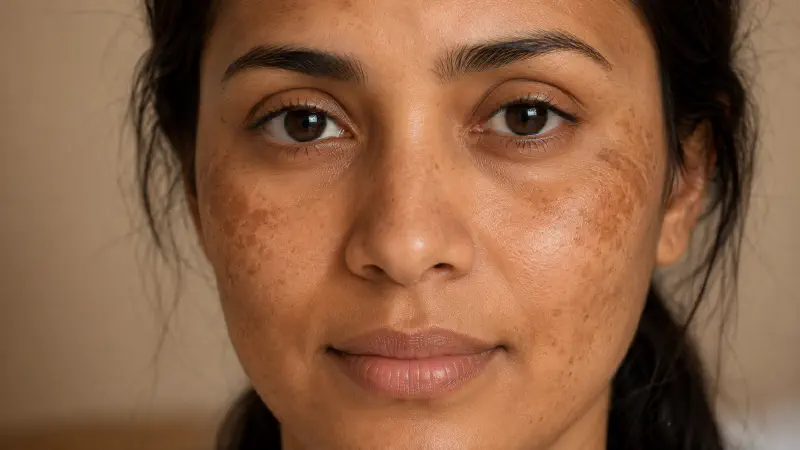
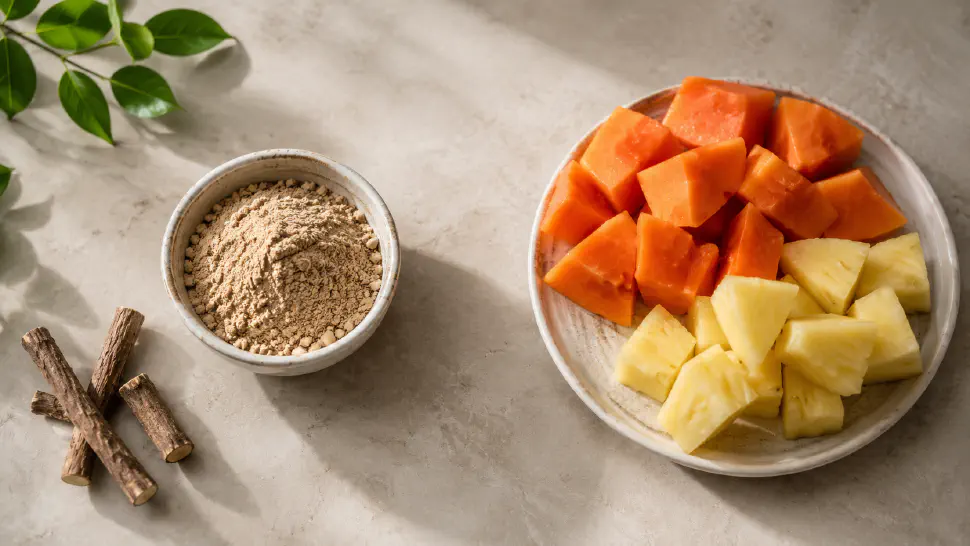

Not every pigmentation DIY mask works the same way, and knowing the difference matters for which one to reach for. This covers two genuinely evidence-backed options — a licorice root mask that works by slowing new pigment production, and a fruit enzyme mask that works by exfoliating existing surface discoloration — plus an honest note on the kind of pigmentation these can realistically help with versus the kind that needs more than a mask.
Licorice Root Mask: Slowing New Pigment Production
Licorice root’s active compound, glabridin, works differently from most DIY brightening ingredients — it’s a documented tyrosinase inhibitor, meaning it interferes with the enzyme skin uses to produce melanin in the first place, rather than just exfoliating pigment that’s already there. In isolated cell studies, glabridin has shown a skin-lightening effect notably stronger than hydroquinone — though that’s a lab-dish result, not a claim about what a face mask does on real skin.
The more relevant evidence: a randomized, double-blind clinical trial tested a formulated cream combining licorice, emblica (amla), and daisy extract (belides) against 2% hydroquinone in 56 women with melasma over 60 days, and found comparable pigmentation improvement — with fewer skin reactions in the licorice-based group (Costa et al., Anais Brasileiros de Dermatologia, 2010). Worth being precise about what this does and doesn’t prove: it tested a specific formulated combination cream in a clinical setting, not raw licorice powder mixed at home — a DIY version is a cruder, less concentrated approximation of what was actually studied, not a guaranteed match for those results.
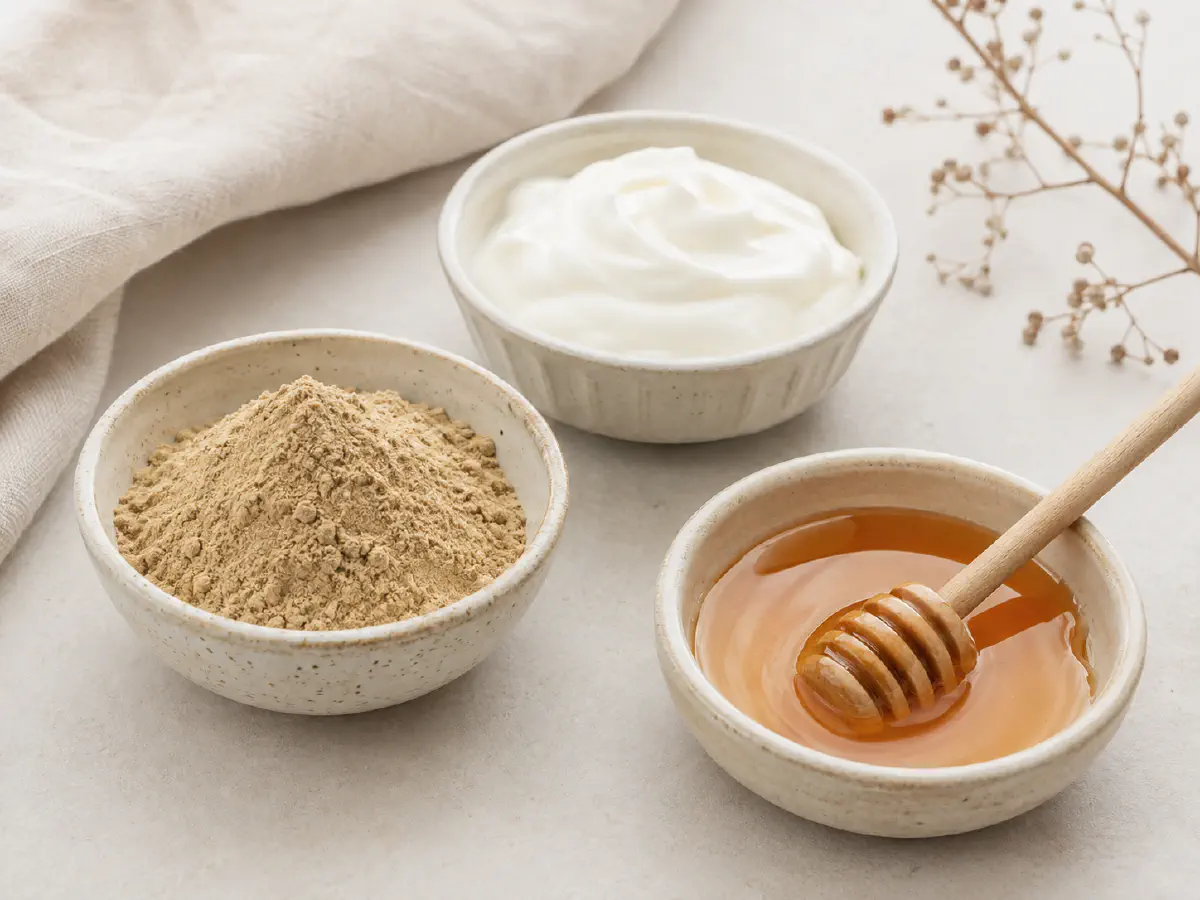
The mask:
- 1 tablespoon licorice root powder (available at Ayurvedic/herbal stores)
- 1 tablespoon plain yogurt or aloe vera gel
- 1 teaspoon honey
Mix into a smooth paste, apply to clean skin, leave for 15-20 minutes, then rinse with lukewarm water. Use 2-3 times a week.
Fruit Enzyme Mask: Exfoliating Existing Discoloration
Papaya and pineapple contain papain and bromelain — enzymes that break down the protein bonds holding dead, discolored surface cells in place, a mechanism called enzymatic exfoliation. This is a genuinely different pathway from licorice’s: rather than slowing new melanin production, it speeds up the removal of skin cells that are already pigmented, gradually revealing less-discolored skin underneath.
This mechanism is reasonably well documented in pharmaceutical literature for papain’s keratolytic (skin-softening/exfoliating) properties, though most of that documentation comes from general wound-healing and exfoliation research rather than pigmentation-specific clinical trials. It’s a real, plausible mechanism with a genuine evidence base — just a less rigorously pigmentation-tested one than licorice’s tyrosinase pathway above.
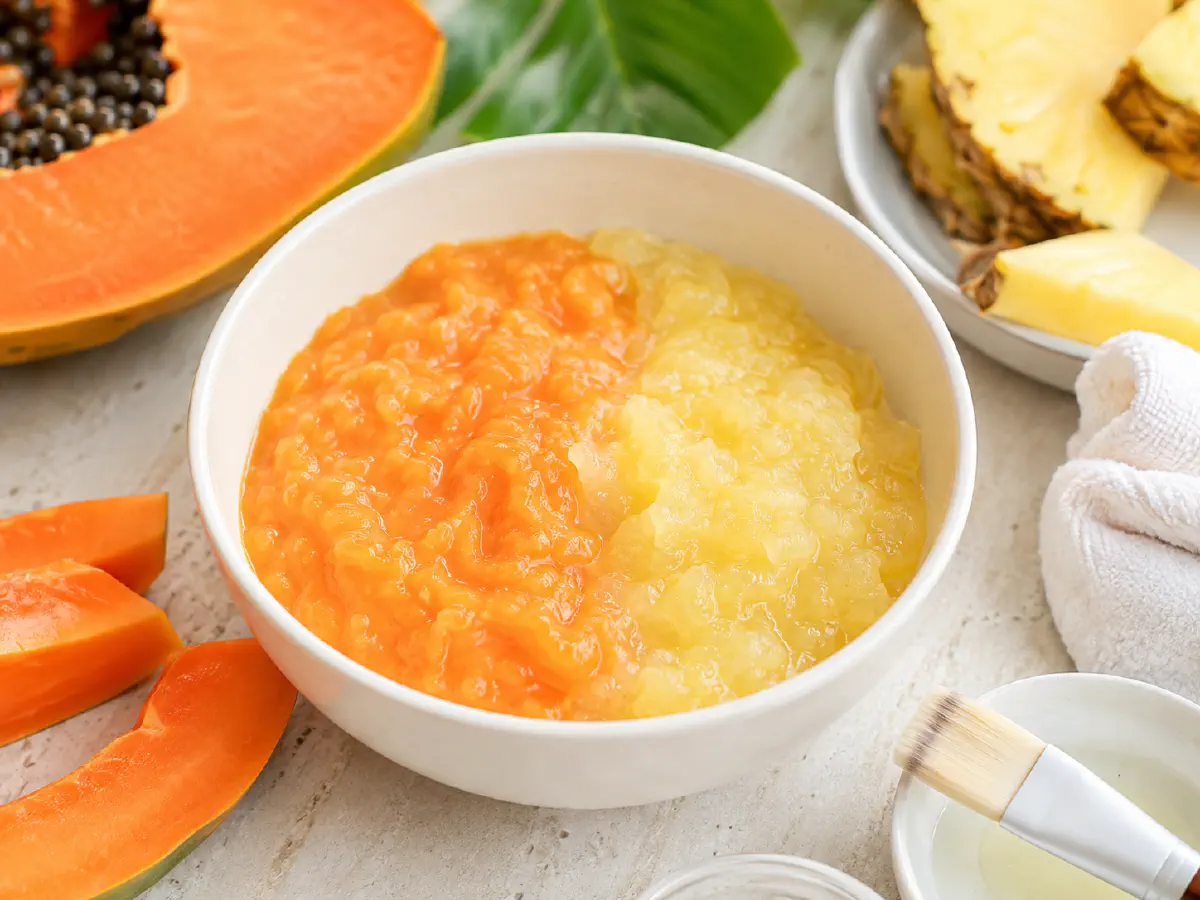
The mask:
- 2 tablespoons ripe papaya, mashed
- 1 tablespoon fresh pineapple, crushed
- 1 teaspoon honey (optional, for texture and its own mild antibacterial benefit)
Mash and mix into a chunky paste, apply to clean skin avoiding the eye area, leave for 10-15 minutes, then rinse. Because this is enzymatic exfoliation, 2-3 times a week is enough — more frequent use doesn’t speed up results and increases irritation risk.
Choosing Between Them (or Using Both)
Since the two masks work through different mechanisms, they’re not competing for the same slot in a routine — some people alternate them on different mask days rather than picking one permanently:
| Licorice Root Mask | Fruit Enzyme Mask | |
|---|---|---|
| Mechanism | Slows new melanin production (tyrosinase inhibition) | Exfoliates existing pigmented surface cells |
| Best suited for | Preventing pigmentation from deepening further | Fading marks that are already sitting on the surface |
| Skin sensitivity | Generally gentle, low irritation in the cited trial | Enzymatic exfoliation — avoid stacking with other exfoliating actives same day |
What These Masks Won’t Fix
This is the honest caveat worth sitting with before expecting either mask to solve significant pigmentation on its own. Ordinary sunspots and post-inflammatory marks left after acne are the kind of surface-level pigmentation these masks are actually suited for. Melasma is different — it’s a chronic, multi-trigger condition involving hormones, genetics, and visible light exposure, not just surface discoloration, and it doesn’t respond reliably to a mask alone. See Melasma: Why It Happens, Why It’s So Stubborn, and What Actually Helps for the full picture, including why sunscreen — not a mask — is the actual non-negotiable foundation of treating it.
Regardless of which type of pigmentation you’re dealing with, using either mask without consistent sun protection is close to pointless — new UV exposure re-triggers the same pigment production these masks are trying to calm down. See our sunscreen guide for what actually matters in choosing and applying one.
Safety Notes
- Patch test both before full-face use, especially the fruit mask — papain and bromelain can cause mild stinging or irritation on sensitive skin, more so than the licorice mask typically does
- Sun sensitivity: fruit acids and enzymes can temporarily increase photosensitivity — apply sunscreen the next day, not just when you remember to
- Avoid on broken or actively irritated skin — both masks are for maintenance and gradual fading, not for skin that’s currently inflamed or has open blemishes
- Realistic timeline: enzymatic exfoliation and tyrosinase inhibition both work gradually — expect weeks of consistent use before noticing a visible difference, not days
Frequently Asked Questions
Can I use both masks on the same day?
It’s better to alternate them on different days rather than layering both at once — combining two exfoliating/active mechanisms in one session increases irritation risk without necessarily speeding up results.
Will a licorice mask lighten my overall skin tone, not just dark spots?
No — glabridin’s tyrosinase-inhibiting effect targets areas of excess melanin production, not baseline skin tone. It’s formulated (and studied) as a targeted pigmentation treatment, not a general skin-lightening product.
How long before I see results?
Based on the cited clinical trial’s timeline, meaningful change took around 60 days of consistent use for a formulated product — a DIY version, being less concentrated, likely needs at least that long, if not longer, of consistent 2-3x weekly use.
Is this a substitute for a dermatologist if I have stubborn pigmentation?
Not for anything beyond mild, surface-level discoloration. If pigmentation is extensive, symmetrical, or not improving after consistent use, that’s the signal to see a dermatologist rather than escalating a DIY routine further.
Final Thoughts
Licorice root and fruit enzymes are two of the more genuinely evidence-backed ingredients available for a DIY pigmentation routine — one slows new pigment formation, the other exfoliates what’s already there, and neither depends on unproven folklore to make its case. What they’re not is a substitute for sun protection or, for anything beyond surface-level marks, a substitute for professional guidance — used consistently and paired with actual sunscreen, they’re a reasonable, low-risk way to support fading rather than a standalone fix.