
Combination skin gets treated as an awkward in-between category — not oily enough for oil-control products, not dry enough for rich creams, so people end up picking one and living with the other half of their face being wrong. The actual fix isn’t picking a side; it’s treating your T-zone and cheeks as two different skin types on one face, because anatomically, that’s close to what they are.
👉 If barrier damage is part of what you’re dealing with on the drier zones, see Understanding Your Skin Barrier: What It Is and How to Repair It first.
The Anatomy Behind Combination Skin
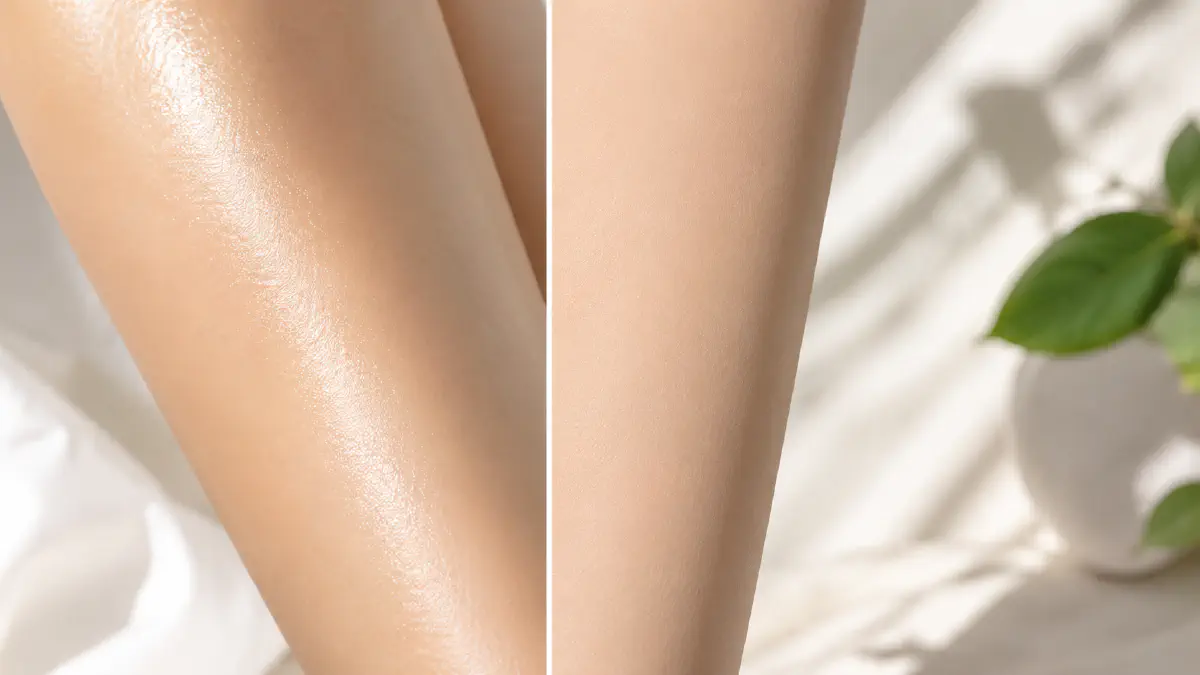
This isn’t just a feeling — it’s measurable. Sebaceous gland density on the forehead reaches roughly 400–900 glands per square centimeter, far denser than the cheeks (source: Influence of the sebaceous gland density on the stratum corneum lipidome, PMC). That difference in gland density translates directly to sebum output: one study measured forehead sebum at roughly 96 μg/cm² compared to about 38 μg/cm² on the cheek — the T-zone produces close to 2.5 times more oil than your cheeks (source: Sebum and Hydration Levels in Specific Regions of the Human Face, PMC).
That’s why a single product applied uniformly across your whole face is fighting two different physiological environments at once — and usually loses to at least one of them.
Confirming You Actually Have Combination Skin
A quick, low-effort self-test: wash your face, apply nothing, and wait an hour. Then press a blotting paper (or a clean tissue) against your forehead/nose, and separately against your cheeks.
- Noticeably more oil on the T-zone paper, minimal on the cheek paper → combination skin
- Oil on both → likely oily skin overall
- Minimal oil on both, tightness on both → likely dry skin overall
The Core Principle: Zone-Specific, Not Face-Wide
Everything below follows from one idea: apply lighter, oil-controlling ingredients to the T-zone, and richer, barrier-supporting ingredients to the cheeks — in the same routine, at the same time, rather than choosing one philosophy for your whole face.
| Zone | What It Needs | Ingredients to Prioritize |
|---|---|---|
| T-zone (forehead, nose, chin) | Oil control, pore care | Niacinamide, salicylic acid (BHA), lightweight gel moisturizer |
| Cheeks (U-zone) | Barrier support, hydration | Ceramides, hyaluronic acid, richer cream |
Morning Routine
- Cleanse with a gentle, low-foaming cleanser across the whole face — avoid a harsh sulfate cleanser that strips the already oil-scarce cheeks; see our SLS vs. SLES breakdown if you’re choosing a cleanser.
- Apply a niacinamide serum to the T-zone only, focusing on the forehead, nose, and chin.
- Apply a hydrating serum (hyaluronic acid) to the cheeks, and lightly over the rest of the face. See Skin Hydration Explained for why this humectant step needs a sealing layer afterward to actually work.
- Moisturize by zone: a lightweight gel on the T-zone, a richer cream on the cheeks — applying both at once is fine, just apply less of the heavier one where you don’t need it.
- Sunscreen, applied evenly across the whole face — this one doesn’t need zone-splitting.
Evening Routine
- Double cleanse if wearing sunscreen/makeup, but only if your cheeks can tolerate it — if they’re prone to tightness, a single gentle cleanse is often enough.
- Apply exfoliating actives (salicylic acid or a gentle AHA) to the T-zone 2–3 nights a week, not the whole face — this is one of the most common combination-skin mistakes, over-exfoliating cheeks that were never oily to begin with.
- Apply a richer, ceramide-containing night cream to the cheeks, and a lighter gel-cream to the T-zone.
- Reserve retinoids, if you use them, for nights without T-zone acid exfoliation, to avoid over-processing the whole face at once.
Weekly: Multi-Masking
This is the single most effective combination-skin-specific technique, and it’s exactly what it sounds like — applying two different masks to two different zones in the same session:
- T-zone: a clay or charcoal mask, left on 10–15 minutes, to draw out excess oil
- Cheeks: a hydrating sheet mask or cream mask, applied at the same time
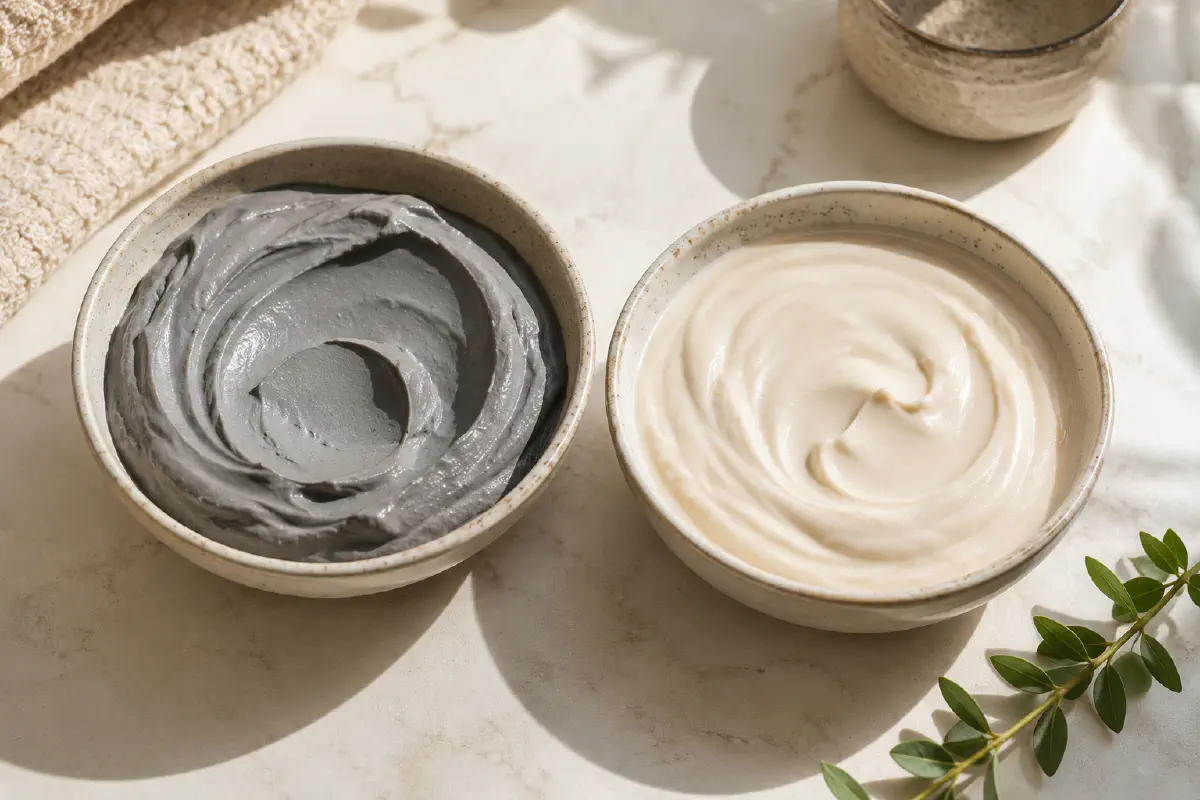
Rinse both off together. Doing this once a week treats each zone according to what it actually needs instead of compromising on a single mask for the whole face. The two DIY recipes in this article’s recipe cards are sized for exactly this: a clay mask for the T-zone and a hydrating mask for the cheeks, meant to be applied at the same time and rinsed off together.
The Two DIY Masks, Side by Side
| Mask | Zone | Key Ingredient | What It Does |
|---|---|---|---|
| Clay Mask | T-zone only | Bentonite/kaolin clay | Draws out excess surface oil |
| Hydrating Mask | Cheeks only | Yogurt or avocado + honey | Replenishes moisture without adding oil-control ingredients where they're not needed |
Applying both in the same session, rinsing at the same time, means neither zone spends extra minutes under a treatment it doesn’t need.
Common Mistakes
- One heavy moisturizer everywhere — clogs the already oil-rich T-zone while barely satisfying the cheeks
- One mattifying/oil-control product everywhere — controls the T-zone but dries out and can damage the barrier on the cheeks over time
- Over-exfoliating the whole face because the T-zone “needs it” — the cheeks usually don’t, and get irritated as collateral damage
- Skipping moisturizer on the T-zone to control oil — under-moisturized skin often responds by producing more oil, not less
Zone-splitting only works if the underlying layering order is correct too — see Glass Skin Routine Order: How to Layer Your Products Correctly for the sequencing rules this routine builds on.
Makeup and Primer, By Zone
The same zone-based logic extends to makeup prep:
- T-zone: a mattifying, oil-controlling primer helps foundation last through the higher sebum output without sliding off by midday
- Cheeks: a hydrating, dewy primer prevents makeup from clinging to dry patches or emphasizing texture
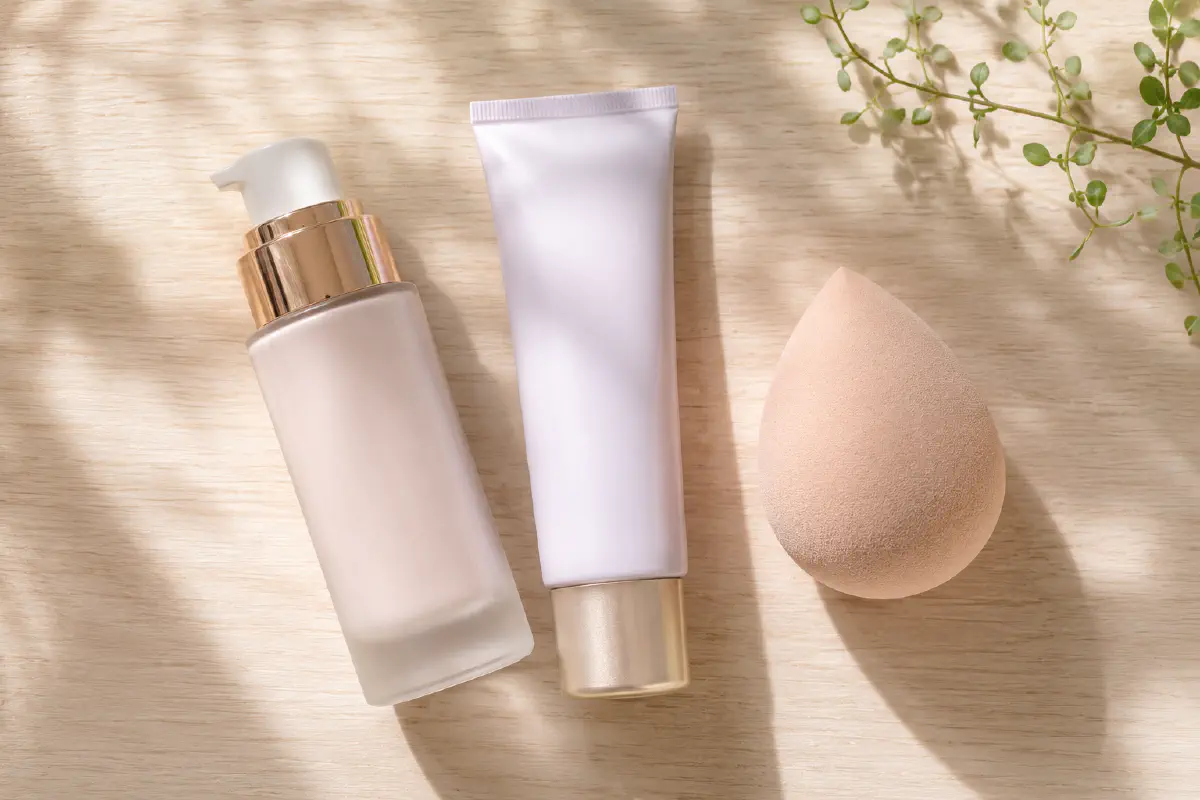
Applying two different primers by zone, the same way you’d apply two different masks, avoids the common problem of foundation looking cakey on the cheeks by midday while sliding off an oily T-zone.
Frequently Asked Questions
Does combination skin change with seasons?
Yes — cooler, drier weather often shrinks the “oily” zone and expands dryness, while heat and humidity can do the opposite. It’s worth reassessing your zone boundaries seasonally rather than assuming they’re fixed year-round.
Can I use the same cleanser on both zones?
Yes — cleansers rinse off and have much less prolonged contact time than serums or moisturizers, so a single gentle, pH-balanced cleanser across the whole face is fine. Zone-splitting matters most for leave-on products.
Will combination skin change as I age?
Often, yes — sebaceous gland activity naturally declines with age, so many people see their combination pattern shift toward overall drier skin over time, which may mean gradually reducing how much T-zone-specific oil control you need.
Is multi-masking really necessary, or is it just a marketing trend?
The zone difference in oil production is real and measurable (see the sebum data above), so treating zones differently has a genuine physiological basis — it’s not purely a marketing concept, even though it’s often marketed as one.
How do I know which ingredients to look for in products for each zone?
Checking the actual ingredient list rather than trusting front-of-package claims matters here — see our guide to reading natural ingredient labels for how to spot what’s actually in a product before assuming a “combination skin” label means it’s formulated any differently.
Final Thoughts
Combination skin isn’t an awkward in-between to compromise around — it’s two genuinely different physiological environments on one face, backed by real differences in sebaceous gland density and sebum output. Treating each zone according to what it actually needs, rather than picking a single approach for your whole face, is the actual fix.