


Most collagen routines start on top of your skin — a mask, a serum, a peptide cream. But collagen isn’t made on the surface. It’s built inside the dermis, by cells called fibroblasts, using raw materials that come from what you actually eat.
That’s the idea behind a collagen-boosting soup: instead of applying collagen, you’re feeding your body the amino acids, minerals, and cofactors it needs to build its own — while also delivering deep hydration in a form that’s easy to absorb.
👉 If you’re focused on the topical side of your routine too, pair this with
Boost Your Collagen Naturally with DIY Face Masks
🥣 From my kitchen: I’ve been making the Vitamin C Power Soup (Recipe 2 below) almost every Sunday for the past couple of months — it’s become my go-to lunch base. The bone broth batch is more of a once-every-two-weeks project, simmered overnight and frozen in ice cube trays so I always have a stash on hand. The texture is the real tell that it worked: a properly gelled broth wobbles like a soft jelly once chilled. If yours stays liquid in the fridge, it usually just needs a longer simmer next time.
What Is a Collagen Soup, Exactly?
There are actually two different things people call “collagen soup,” and mixing them up leads to a lot of misleading claims online:
- Bone broth-based soups — simmered long enough (10–24 hours) to break down collagen from bones, cartilage, and connective tissue into gelatin and collagen peptides. These soups contain actual collagen protein fragments.
- Plant-based “collagen-support” soups — contain no collagen at all, but are built around the specific vitamins and minerals your body needs as cofactors to synthesize its own collagen. These don’t supply collagen; they supply the toolkit your fibroblasts use to make it.
Neither is “fake” or a gimmick — they just work through different mechanisms. This guide covers both, so you can build a routine that fits your diet.
The Science: How Your Body Actually Builds Collagen
Collagen isn’t absorbed and pasted directly into your skin. Whether it comes from bone broth or from your own body’s synthesis, it has to go through the same biological assembly process. Understanding it explains why certain soup ingredients matter more than others.
- Glycine, proline, and lysine — these three amino acids make up the bulk of the collagen molecule. Bone broth is naturally rich in them; plant sources include soy, beans, and seeds.
- Vitamin C — this is the non-negotiable one. Vitamin C is a required cofactor for the enzymes prolyl hydroxylase and lysyl hydroxylase, which stabilize the collagen triple-helix structure. Without enough vitamin C, collagen synthesis stalls even if amino acids are abundant — this mechanism is well documented in the biochemistry literature (see NCBI StatPearls: Biochemistry, Collagen Synthesis); it’s the same pathway that fails in scurvy.
- Zinc and copper — cofactors for the enzymes that cross-link collagen fibers, giving skin its tensile strength.
- Silica — found in some research to support collagen matrix formation; horsetail, oats, and leafy greens are notable dietary sources.
Skin specifically holds a high concentration of vitamin C, and dietary intake plays a direct role in stimulating dermal collagen synthesis — see Pullar, Carr & Vissers, “The Roles of Vitamin C in Skin Health,” Nutrients (2017).
Collagen synthesis works against a headwind, too: excess sugar directly damages existing collagen through a process called glycation — see The Diet-Skin Connection: What the Science Actually Says for how that mechanism works and why moderating sugar supports the same goal as this soup does. Sun exposure is the other major threat to the same collagen — see What Sun Damage Actually Does to Skin for that mechanism and why daily sunscreen matters alongside anything you eat.

| Nutrient | Role in Collagen Synthesis | Soup-Friendly Sources |
|---|---|---|
| Glycine / Proline / Lysine | Raw building blocks of the collagen protein | Bone broth, soy, lentils, pumpkin seeds |
| Vitamin C | Activates the enzymes that stabilize collagen structure | Bell pepper, tomato, citrus zest, parsley (add at the end — heat degrades vitamin C) |
| Zinc & Copper | Cross-link collagen fibers for strength | Mushrooms, pumpkin seeds, shellfish |
| Silica | Supports collagen matrix formation | Kombu/seaweed, oats, leafy greens |
Bone Broth vs Plant-Based Collagen-Support Soup
| Feature | Bone Broth Soup | Plant-Based Soup |
|---|---|---|
| Contains actual collagen/gelatin | Yes | No |
| Supplies synthesis cofactors | Partially | Yes |
| Prep time | 10–24 hours | 30–45 minutes |
| Diet fit | Omnivore | Vegan / vegetarian |
| Texture | Rich, gelatinous when chilled | Light, brothy |
👉 For more on ingestible skin nutrition, see
Unlock Radiant Skin with These Nutrient-Dense Juices
3 Collagen-Boosting Soup Recipes
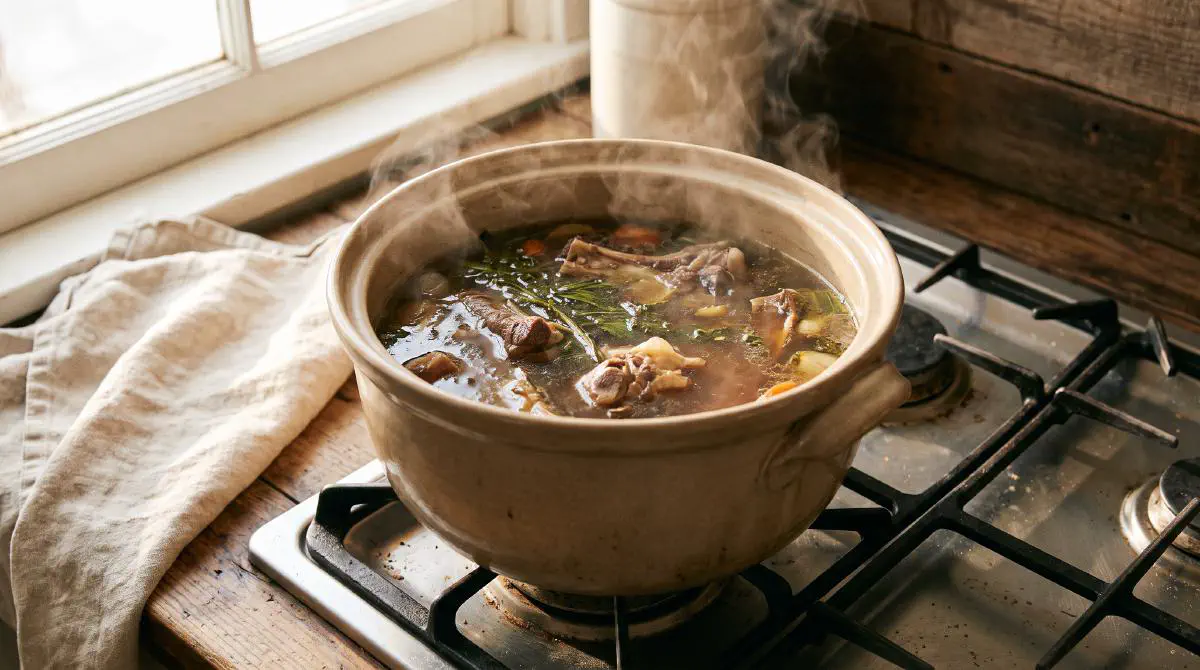
1. Classic 12-Hour Bone Broth Collagen Soup
Best for: Anyone wanting actual gelatin/collagen peptides in the soup itself
Ingredients:
- 1.5 kg mixed bones (chicken feet, beef marrow bones, or oxtail — joints and cartilage matter most)
- 2 tbsp apple cider vinegar (helps draw minerals and collagen out of the bone)
- 1 onion, 2 carrots, 2 celery stalks, roughly chopped
- 2 garlic cloves
- Water to cover
- Salt, to taste (add at the end)
Method:
- Roast the bones at 220°C (425°F) for 30 minutes — this deepens flavor and isn’t optional if you want a rich broth.
- Add bones, vinegar, and water to a large pot or slow cooker. Let it sit for 30 minutes before turning on the heat — the acid needs contact time to start breaking down connective tissue.
- Simmer low for 10–24 hours (stovetop on the lowest setting, or a slow cooker on low). Skim off foam in the first hour.
- Add vegetables in the last 2 hours of cooking.
- Strain, season, and cool. A properly extracted broth will set into a soft gel when refrigerated — that’s the gelatin content confirming the collagen actually broke down.
2. 30-Minute Vitamin C Power Soup
Best for: A fast, synthesis-supporting soup you can make on any weeknight
Ingredients:
- 2 red bell peppers, chopped
- 3 tomatoes, chopped
- 1-inch piece ginger, grated
- 1 tsp turmeric
- 2 cups vegetable or bone broth (from Recipe 1, or store-bought)
- Juice of 1 lemon, added off the heat
- Fresh parsley, added at the end

Method:
- Sauté bell pepper and ginger for 5 minutes.
- Add tomatoes, turmeric, and broth; simmer 20 minutes.
- Blend until smooth (or leave chunky).
- Remove from heat, then stir in lemon juice and parsley — adding vitamin C-rich ingredients after cooking preserves more of the vitamin, since it’s heat-sensitive.
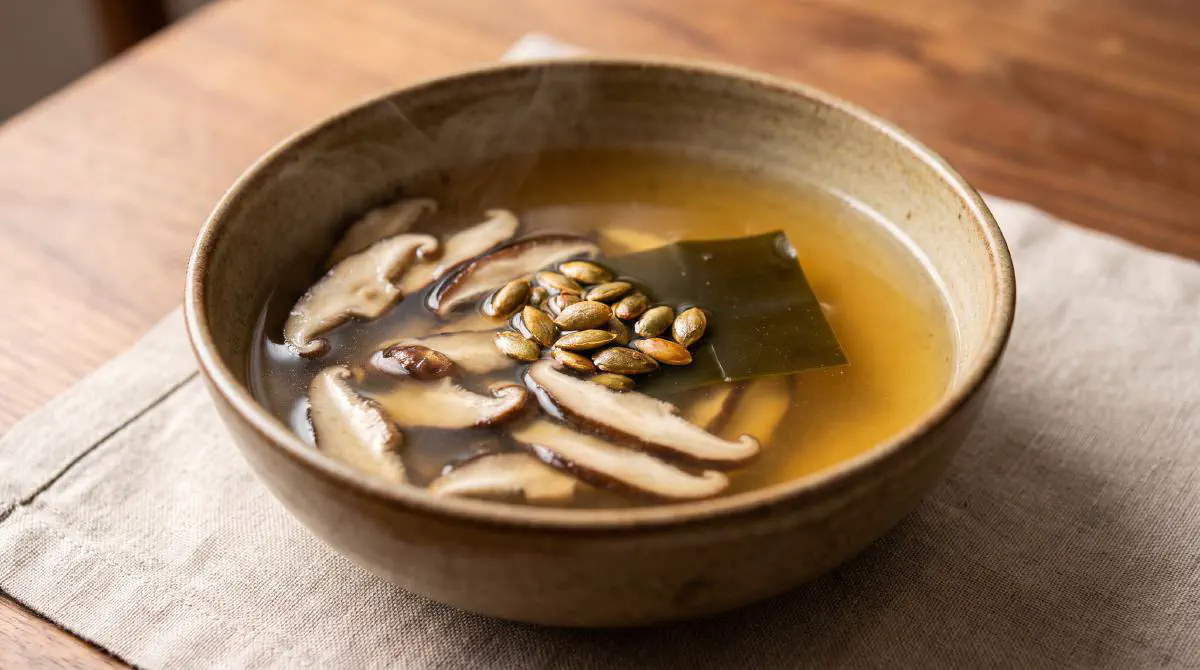
3. Vegan Mushroom-Seaweed Collagen-Support Soup
Best for: Fully plant-based diets
Ingredients:
- 1 strip dried kombu (seaweed) — soaked 15 minutes
- 1 cup shiitake mushrooms, sliced
- 1 tbsp miso paste
- 1 tsp grated ginger
- 2 cups water or vegetable stock
- Pumpkin seeds, to garnish
Method:
- Simmer kombu in water for 15 minutes, then remove (this creates a mineral-rich dashi-style base).
- Add shiitake and ginger; simmer 10 minutes.
- Remove from heat and whisk in miso paste (high heat kills the beneficial live cultures in miso, so add it last).
- Top with pumpkin seeds for a zinc and copper boost.
💡 Note on iodine: kombu and other seaweeds are naturally high in iodine. If you have a thyroid condition, use seaweed sparingly and check with your doctor.
How Often to Drink for Best Results
- Bone broth soup: 1 cup daily, or use as a base for other meals
- Vitamin C soup: 2–3 times per week alongside your regular meals
- Vegan mushroom-seaweed soup: 2–3 times per week, rotating with other collagen-supporting foods
Consistency matters more than quantity — skin collagen turnover is a slow process, so a small daily habit outperforms an occasional large batch.
Storage and Shelf Life
- Refrigerate bone broth for up to 5 days, or freeze in portions for up to 3 months
- Store vegetable-based soups in the fridge for 3–4 days
- Freeze in ice cube trays for easy single-serving portions to add to other cooking
Common Mistakes to Avoid
- Skipping the acid (vinegar) in bone broth — without it, minerals and collagen stay locked in the bone
- Boiling too hard instead of a gentle simmer — this can make broth cloudy and bitter
- Adding vitamin C ingredients too early — heat degrades vitamin C, weakening the synthesis benefit
- Using only muscle meat instead of bones/joints/cartilage — muscle meat contains little collagen
- Expecting soup alone to replace a full skincare routine — diet supports collagen production, it doesn’t replace topical care or sun protection
Who Should Be Cautious
- People with histamine intolerance — long-simmered bone broth is high in histamines and can trigger symptoms
- People managing gout — bone broth is high in purines
- People with thyroid conditions — go easy on seaweed-based soups due to iodine content
- Anyone on a low-sodium diet — season broths lightly and check store-bought stock labels
👉 As always, this is general information, not medical advice — check with a healthcare provider if you have an existing condition.
What Results to Expect
- Week 1–2: Better hydration and a subtle improvement in how skin feels (from improved gut hydration and nutrient intake)
- Week 4–6: This aligns with the skin’s natural collagen turnover cycle — some people report smoother texture around this point
- Week 8+: Continued, gradual support for skin elasticity with consistent use
Results depend heavily on overall diet, sleep, and sun protection — soup is a support tool, not a standalone fix.
Frequently Asked Questions
Does bone broth soup actually contain collagen?
Yes — properly simmered bone broth breaks down collagen from bones and connective tissue into gelatin and smaller collagen peptides, which is why a good batch sets into a soft gel when chilled.
Can vegans get any collagen benefit from soup?
Vegan soups don’t contain collagen itself, but they can supply the amino acids, vitamin C, zinc, copper, and silica your body uses to synthesize its own collagen — which is why the plant-based recipe here focuses on those specific nutrients.
Is collagen soup better than collagen powder?
They’re not competing — a soup delivers whole-food nutrients and hydration together, while powder offers a concentrated, measured dose of hydrolyzed peptides. Many people use both.
How much collagen soup should I drink per day?
One cup of bone broth daily, or 2–3 servings per week of the plant-based versions, is a reasonable, sustainable target.
Final Thoughts
Collagen-boosting soups won’t replace your skincare routine, but they address something topical products can’t reach: the raw materials your skin actually uses to rebuild itself. Whether you go with a slow-simmered bone broth or a 30-minute vitamin C soup, the key is consistency — a small habit repeated over weeks, not a one-time fix.
A Note From Poonam
I test every recipe on Natural Poonam in my own kitchen before it’s published — read more about my approach to natural skincare and haircare. This soup guide is written from that hands-on experience, alongside the cited biochemistry research above; it isn’t medical advice, so check with a doctor or dietitian for anything condition-specific.
Sources & Further Reading
- NCBI StatPearls — Biochemistry, Collagen Synthesis
- Pullar, Carr & Vissers — The Roles of Vitamin C in Skin Health, Nutrients (2017)
Continue Your Routine
👉 Boost Your Collagen Naturally with DIY Face Masks