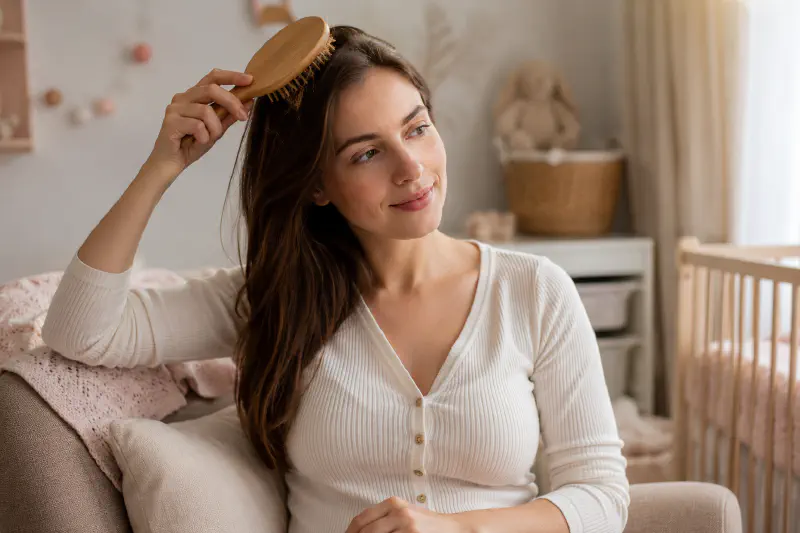
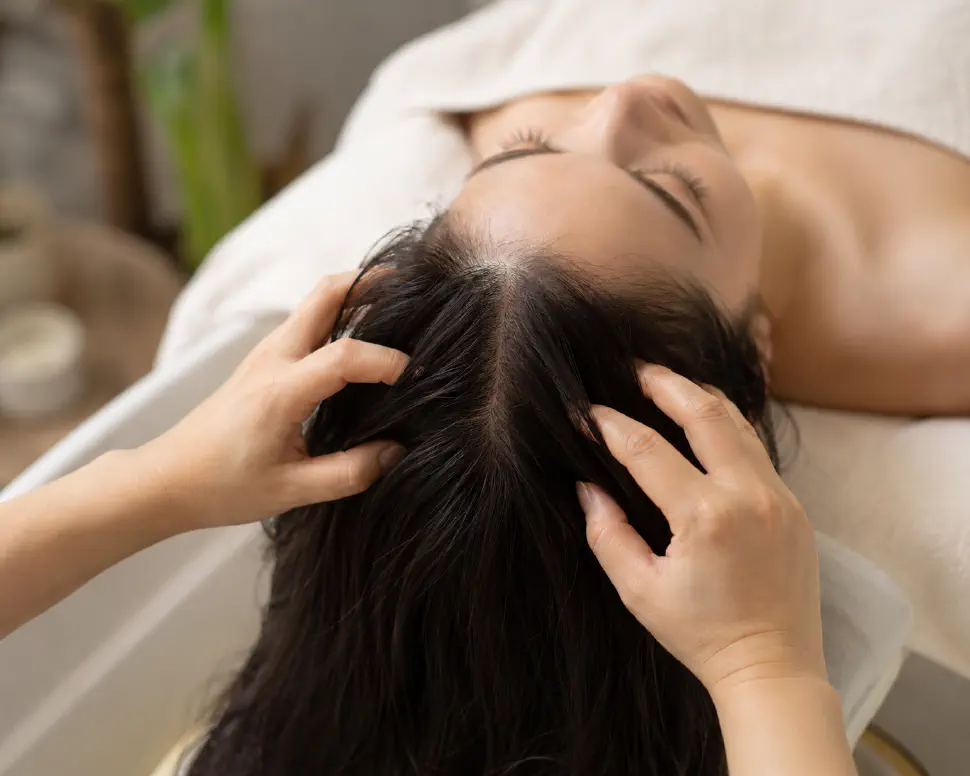

“Head spa” searches have jumped sharply over the past year, part of a broader “skinification of haircare” trend — treating the scalp like the skin it actually is, with its own routine rather than an afterthought to shampoo. The trend is genuinely useful in one sense: the scalp is skin, and neglecting it does affect hair. But “what belongs in a scalp routine” and “what a spa markets as a head spa treatment” aren’t always the same list. Here’s the evidence-checked version.
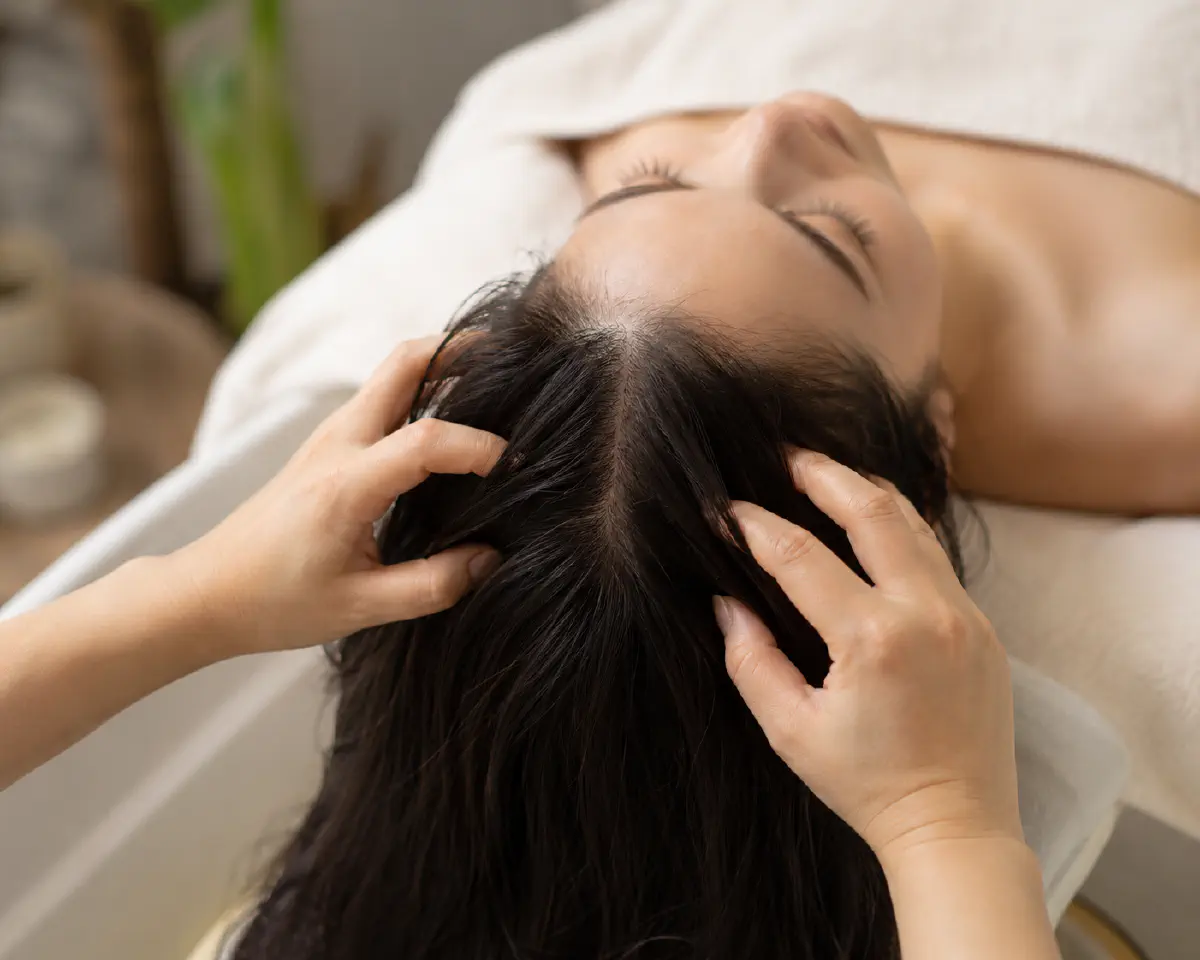
Step 1: Cleansing — The Foundation, Not an Afterthought
Everything else in a scalp routine works better on a scalp that isn’t already coated in product buildup, excess sebum, or residue from styling products. This sounds obvious, but it’s the step most “scalp care” content skips past to get to the more exciting stuff (serums, tools, massage devices).
👉 We’ve covered the cleanser side of this in depth already — see Sulfate-Free Shampoo & Rosemary Oil for the actual tradeoff between gentle daily cleansers and occasional clarifying washes, including why gentler isn’t automatically better if buildup is the actual problem. For the occasional deeper clean specifically, see Clarifying Shampoo: When (and How Often) You Actually Need One for how often that stronger step actually belongs in the routine.
Step 2: Exfoliation — Real Benefit, Easy to Overdo
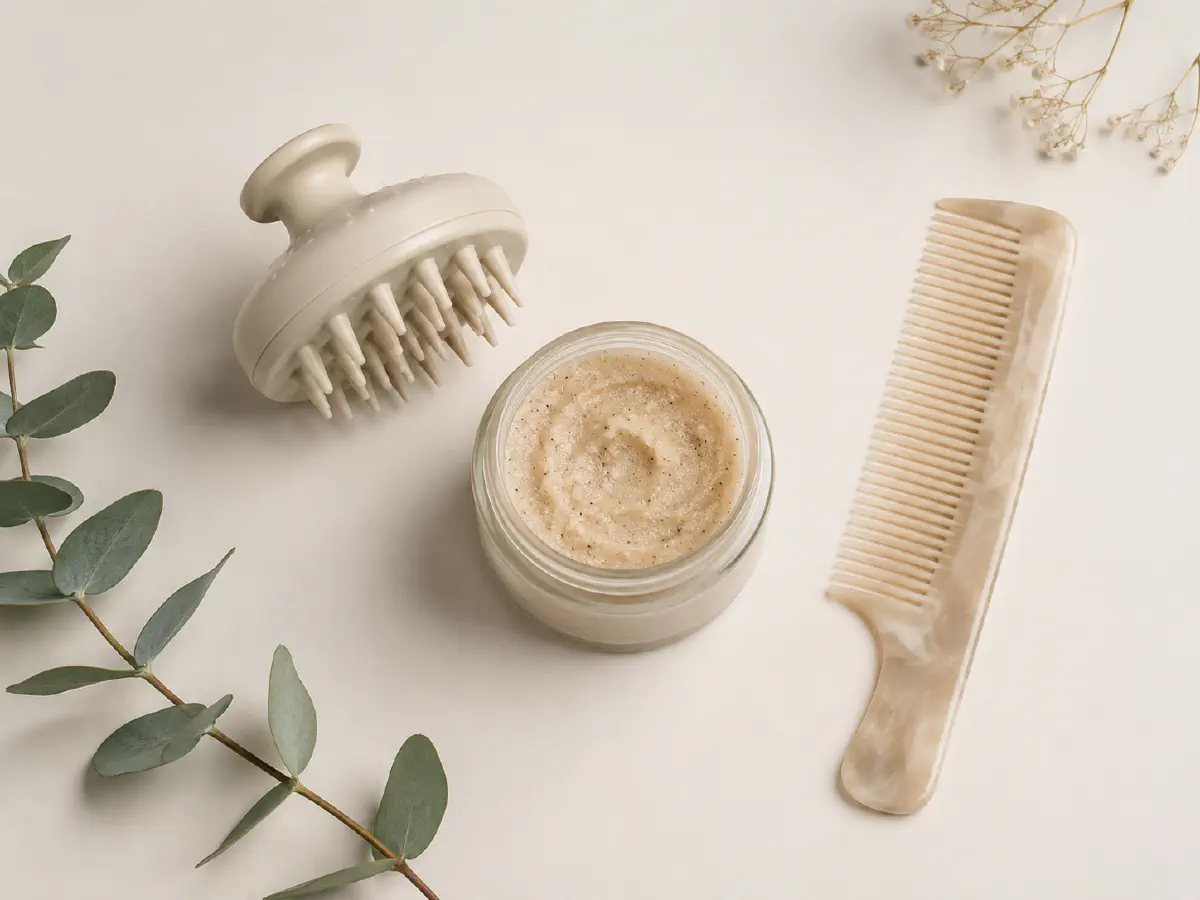
Scalp exfoliation (via a scrub, brush, or chemical exfoliant like salicylic acid) removes dead skin cells and product buildup that can sit on the scalp surface. This is a legitimate, useful step — but “more is better” doesn’t apply here any more than it does on facial skin. Over-exfoliating strips the scalp’s natural oils and can trigger the same irritation and barrier disruption that over-exfoliating facial skin does.
A reasonable starting frequency: once every 1-2 weeks for most scalps, adjusted based on how oily or product-heavy your routine is — daily heat styling or leave-in product use pushes you toward the more frequent end; naturally dry or sensitive scalps toward the less frequent end.
Step 3: Massage — The Step With Actual Clinical Data Behind It
This is the part of “head spa” culture that holds up best under scrutiny. A small clinical study had nine men perform 4 minutes of standardized scalp massage daily for 24 weeks, and measured a real increase in hair thickness by the end, along with favorable changes in hair-cycle-related gene expression in follicle cells (Koyama et al., Eplasty, 2016 — PMC4740347). The proposed mechanism is mechanical: stretching forces on the dermal papilla (the structure at the base of the follicle that regulates hair growth) appear to shift gene expression in a growth-favorable direction.
The honest caveat: this was a 9-person study — real evidence, but a small sample that hasn’t been widely replicated at scale. It’s reasonable evidence for “massage plausibly helps and is essentially risk-free,” not proof that it reliably reverses thinning on its own.
👉 See The Hair Growth Cycle Explained for how the anagen/telogen cycle this massage mechanism is trying to influence actually works.
Step 4: Actives — Where Ingredients Actually Have to Reach the Follicle
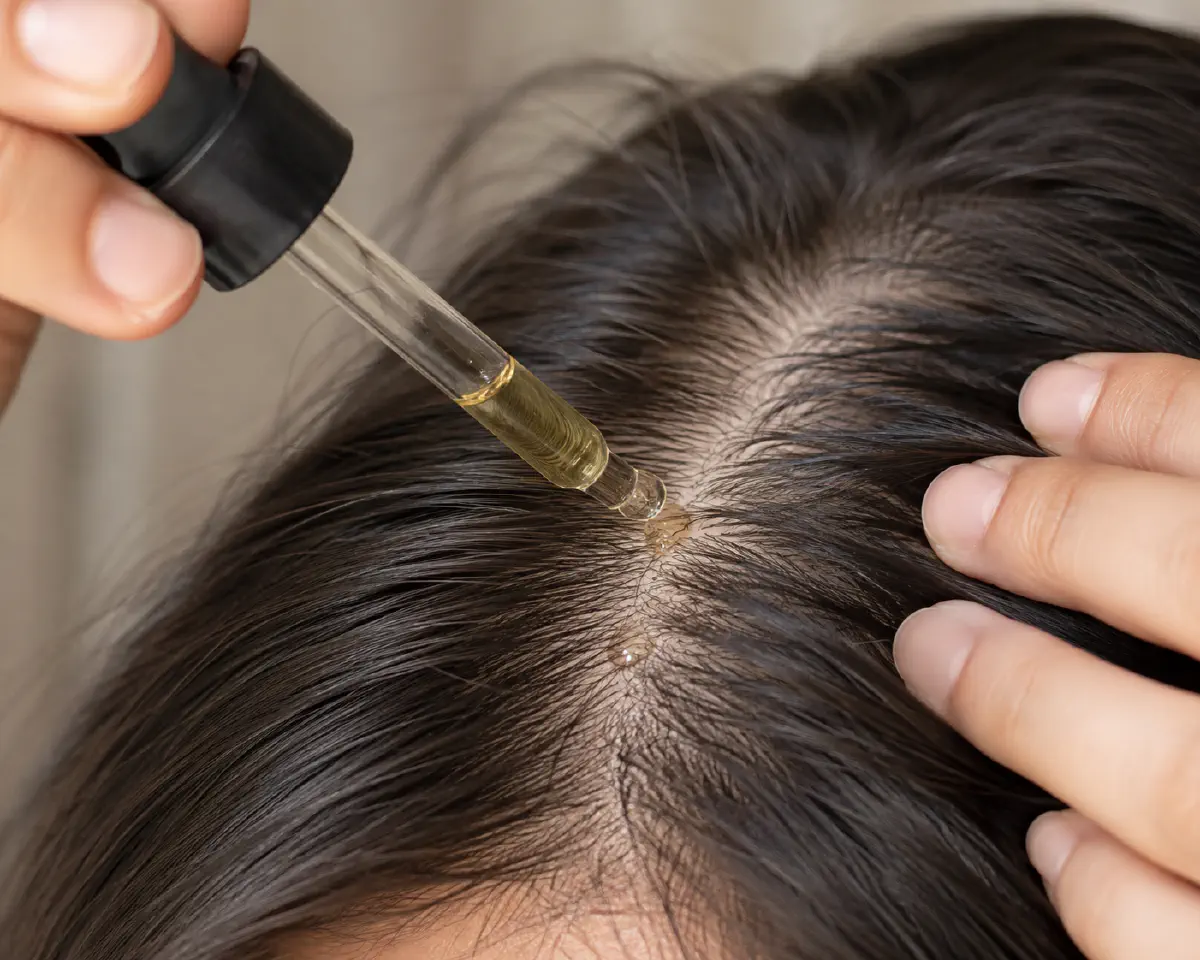
Rosemary oil is the most evidence-backed natural active for this step, with real 5-alpha-reductase-inhibiting (DHT-blocking) properties. But as covered in the sulfate-free shampoo article above, formulation matters — a lot of active ingredients only achieve 1-2% retention on the scalp before being rinsed away, regardless of how good the ingredient itself is.
👉 See Rosemary Water for Hair Growth for how to actually apply it so it has contact time on the scalp rather than being immediately washed out.
Reading Your Scalp: Signs You’re Over- or Under-Doing It
A scalp routine isn’t one-size-fits-all, and the scalp itself usually signals when something’s off:
- Tight, flaky, or itchy after exfoliating → you’re exfoliating too often or too aggressively for that scalp; scale back frequency before adding more actives on top of an already-irritated barrier
- Persistently greasy within a day of washing → buildup or excess sebum is likely the bigger issue, which points toward the cleansing step above rather than more massage or actives
- Flaking that doesn’t respond to gentler exfoliation or a milder cleanser → worth ruling out seborrheic dermatitis or dandruff specifically, which are fungal/inflammatory conditions that respond to targeted anti-fungal treatment rather than general scalp care
- No visible change after weeks of a consistent routine → this is often just realistic; scalp care improves the growth environment gradually, it isn’t designed to produce a fast, dramatic result the way a single treatment might promise
What a Scalp Routine Doesn’t Fix
This is the part most head spa marketing leaves out. A great scalp routine improves the environment hair grows in — circulation, buildup, irritation — but it doesn’t change:
- Genetically-driven thinning (androgenetic alopecia), which follows a hormonal/genetic pattern that scalp care alone doesn’t reverse — see our DHT and hair loss guide for what actually addresses this specifically
- Telogen effluvium from an internal trigger (nutrient deficiency, postpartum hormone shifts, medication, stress) — a scalp routine won’t speed up recovery from these if the underlying cause isn’t addressed; see Eat Your Hair Care for the nutrient side of that
A scalp routine is a genuinely good habit to build regardless — it just isn’t a substitute for figuring out what’s actually causing noticeable hair loss, if that’s what’s prompting the routine in the first place.
A Simple, Realistic Weekly Routine
- Most washes: gentle cleanser matched to how much product/oil you actually use
- 1-2x per week: scalp exfoliation (scrub or chemical exfoliant, not both same day)
- Daily, 4-5 minutes: scalp massage, with or without an oil — the massage itself is the active ingredient, per the mechanism above
- A few times a week: a leave-in active like rosemary oil, applied with enough contact time to actually work
Frequently Asked Questions
Is a professional head spa treatment worth it?
It’s a legitimate way to get a longer, more thorough version of the same steps (cleansing, exfoliation, extended massage) done well — genuinely relaxing and not harmful, but not doing anything a consistent at-home routine can’t approximate over time.
How often should I get a head spa treatment professionally?
Roughly every 4-6 weeks is a commonly recommended cadence, mainly to avoid over-exfoliating between visits rather than because of any specific evidence for that exact interval.
Can scalp massage alone regrow significant hair loss?
Based on the current evidence, it’s supportive at best — plausible for maintaining or modestly improving thickness, not a substitute for addressing an underlying cause like DHT-driven thinning or a nutrient deficiency.
Do I need special tools, or can I just use my hands?
Hands work fine — the clinical study behind the massage benefit used a simple standardized massage technique, not a specific device. Scalp massage tools are a comfort/consistency aid, not a requirement for the mechanism to work.
Final Thoughts
“Head spa” as a trend is really just scalp care getting the attention facial skin has had for years, and most of the individual steps hold up: cleansing matched to your actual buildup, exfoliation in moderation, daily massage (with genuine, if small-scale, clinical support), and actives applied with enough contact time to matter. What it doesn’t do is replace addressing an actual underlying cause if significant hair loss is what brought you here in the first place — for that, the routine is a helpful habit alongside the real fix, not the fix itself.