

Postpartum hair loss affects an estimated 40-50% of people after giving birth — common enough that it’s genuinely normal, but sudden and dramatic enough that it still catches most people off guard. Our hormonal hair fall guide touched on this in a few sentences; this is the full mechanism, an honest look at the breastfeeding question specifically, and a realistic timeline for when it actually stops.

The Actual Mechanism: Delayed Shedding, Not New Damage
During pregnancy, elevated estrogen extends the anagen (growth) phase, keeping a higher-than-usual percentage of hair follicles actively growing rather than cycling into their normal resting phase. This is why many people notice thicker, fuller hair during pregnancy — it’s not that pregnancy grows extra hair, it’s that normal shedding is temporarily paused.
After delivery, estrogen drops rapidly. All the hair that would have shed gradually over the previous 9 months shifts into telogen at once, producing a much more noticeable shed than normal — the same telogen effluvium mechanism behind other sudden hair-loss triggers.
👉 See The Hair Growth Cycle Explained for the full anagen/telogen mechanism this is built on. This is also the same general mechanism behind GLP-1 medication-related hair loss — a different trigger (rapid weight loss vs. childbirth), same underlying telogen shift.
The Realistic Timeline
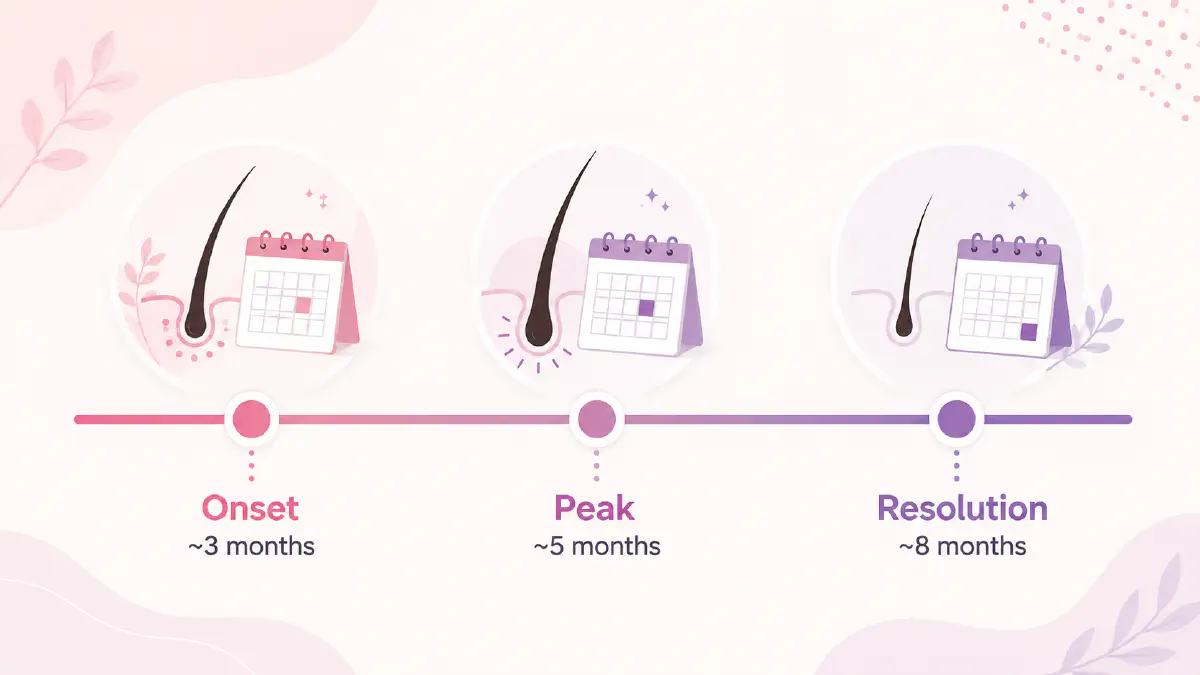
A 2023 questionnaire-based study of postpartum women, published in the International Journal of Women’s Dermatology, put actual numbers on this instead of the usual rough estimates (Kanwar et al., PMC10846762):
- Onset: on average around 2.9 months after delivery, not immediately
- Peak: on average around 5.1 months postpartum — later than most people expect
- Resolution: on average by around 8.1 months, though individual timelines varied
These are averages, not hard cutoffs — some people notice earlier onset or a longer tail before things fully settle, which is normal variation rather than a sign something’s wrong.
Why Severity Varies Between People
The same study found preterm labor and longer breastfeeding duration were independent predictors of more pronounced postpartum hair loss — women who breastfed for 6-12 months had roughly 6 times higher odds of reporting hair loss than those who stopped within 6 months, and the odds were similar for those breastfeeding past 12 months. Beyond those two factors, the degree of shedding also roughly tracks how much the anagen phase was extended during pregnancy — people who noticed especially thick hair during pregnancy often experience a more noticeable shed afterward, since there’s simply more “delayed” hair being released at once. Multiple pregnancies, twin/multiple births (associated with higher pregnancy hormone levels), and pre-existing thinning that pregnancy hormones had been masking can all make postpartum shedding feel more dramatic than a first-time, single pregnancy experience.
The Breastfeeding Question: A Genuinely Mixed Picture
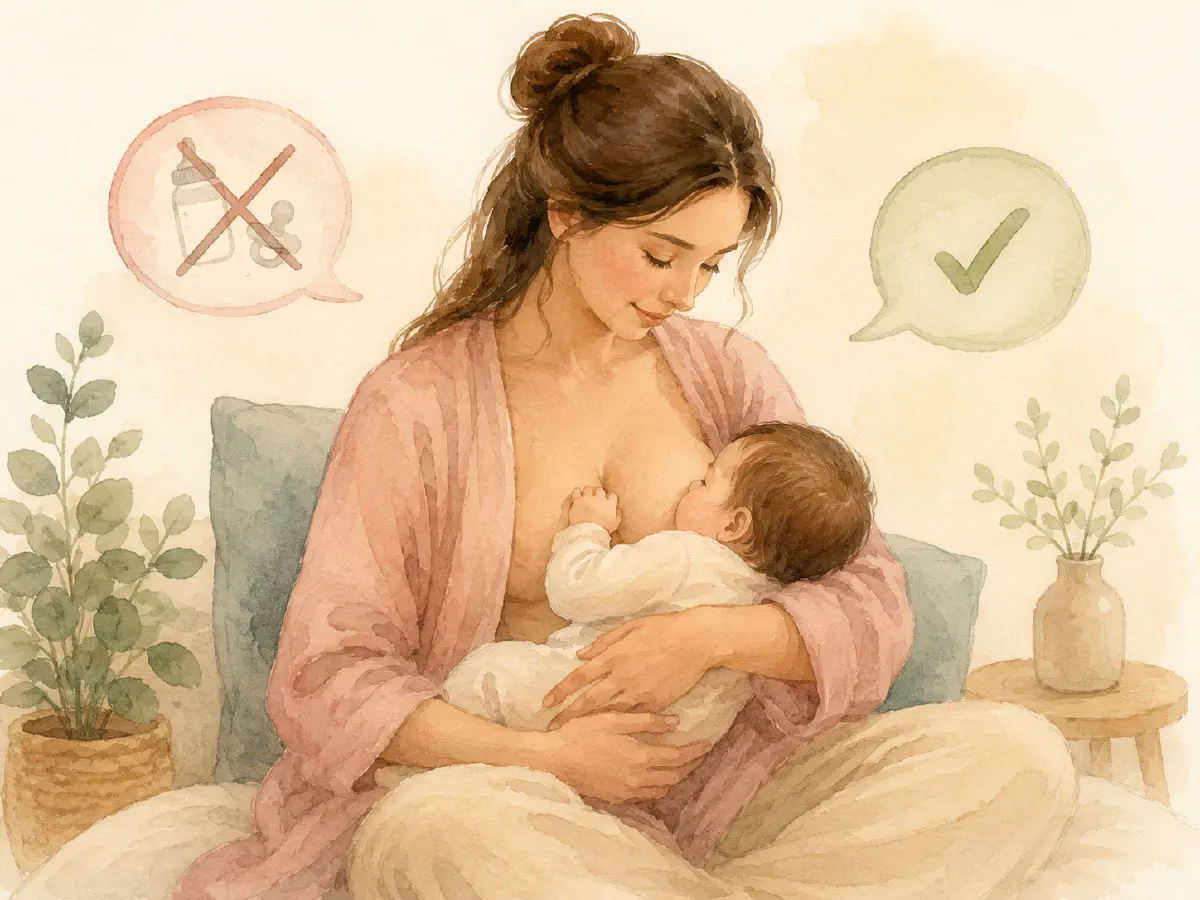
This is worth being precise about rather than repeating either the common folklore or a flat dismissal of it. Controlled research has found no correlation between prolactin levels (the hormone driving milk production) and the actual duration of postpartum shedding — directly contradicting the common belief that breastfeeding itself, via prolactin, extends hair loss.
However, the same 2023 study cited above did identify breastfeeding duration specifically as an independent predictor of postpartum hair loss — through a different pathway than prolactin directly: breastfeeding can delay the return of normal ovarian cycling, which in turn delays estrogen levels returning to their pre-pregnancy baseline. So the honest version isn’t “breastfeeding causes hair loss” or “breastfeeding has nothing to do with it” — it’s that longer breastfeeding duration can indirectly extend the low-estrogen window through a hormonal pathway that’s separate from the folklore explanation usually given. Some researchers have also pushed back on how firmly established postpartum telogen effluvium is as a distinct clinical entity, given how few dedicated studies exist on it — worth knowing if a claim online sounds more definitive than the underlying research actually is.
When It’s More Than “Just Postpartum”
- Shedding that continues well past 12-15 months without improvement
- Patchy hair loss rather than diffuse, all-over thinning — patchiness points away from typical postpartum telogen effluvium
- Accompanying fatigue, cold intolerance, or mood changes — postpartum thyroiditis is a real, reasonably common condition that can mimic or compound postpartum hair shedding, and is worth ruling out with bloodwork rather than assumed away
- Heavy blood loss during delivery — this can contribute to iron deficiency specifically, which independently affects hair growth on top of the estrogen mechanism
👉 See Eat Your Hair Care for the ferritin/iron connection specifically — genuinely relevant here given the blood loss involved in childbirth.
What Actually Helps
- Gentle handling — the shedding phase is already stressing the hair; minimizing additional breakage from tight hairstyles, harsh brushing, or heat styling reduces compounding hair loss on top of the hormonal shed
- Iron-rich nutrition, especially if blood loss during delivery was significant — worth a ferritin check rather than assuming
- Patience over intervention — since this resolves on its own in the large majority of cases, the most evidence-based approach is often simply riding it out rather than aggressively treating what’s a temporary, self-resolving hormonal shift
Frequently Asked Questions
Is postpartum hair loss the same thing as normal telogen effluvium?
Yes — it’s a specific, well-recognized trigger of the same telogen effluvium mechanism, just tied to the pregnancy estrogen surge and subsequent crash rather than stress, illness, or other triggers.
Should I stop breastfeeding to fix my hair loss?
Given that prolactin itself isn’t correlated with shedding duration, this isn’t well-supported as a fix, and breastfeeding decisions should be made based on feeding goals and medical guidance, not hair concerns.
Will my hair return to its pre-pregnancy thickness?
Generally yes, once the cycle completes — the “extra” hair retained during pregnancy sheds, and new growth cycles resume normally, typically restoring pre-pregnancy density by around a year postpartum.
Is it normal for postpartum hair loss to look worse around the hairline?
Yes — many people notice thinning concentrated at the temples and hairline specifically, sometimes described as postpartum “baby hairs” as regrowth begins in that same area a few months later.
Final Thoughts
Postpartum hair loss is a delayed bill for hair that pregnancy hormones let you keep longer than usual — not new damage, and not, in most cases, something breastfeeding is single-handedly causing. For the large majority of people, patience and basic iron-conscious nutrition get you through a temporary, self-resolving shed; persistent shedding well past a year, or a pattern that looks patchy rather than diffuse, is the signal to loop in a doctor rather than wait it out further.