
Marshmallow root has been all over hair-care content lately, usually framed as a “growth secret.” Before you order a bag, it’s worth separating what this plant is actually good at — which is real and genuinely useful — from the growth claim, which is much weaker than the framing suggests.
👉 If you’re comparing it against other viral haircare shortcuts, see Do Hair Growth Gummies Actually Work? for the same kind of evidence check.
What Marshmallow Root Actually Is
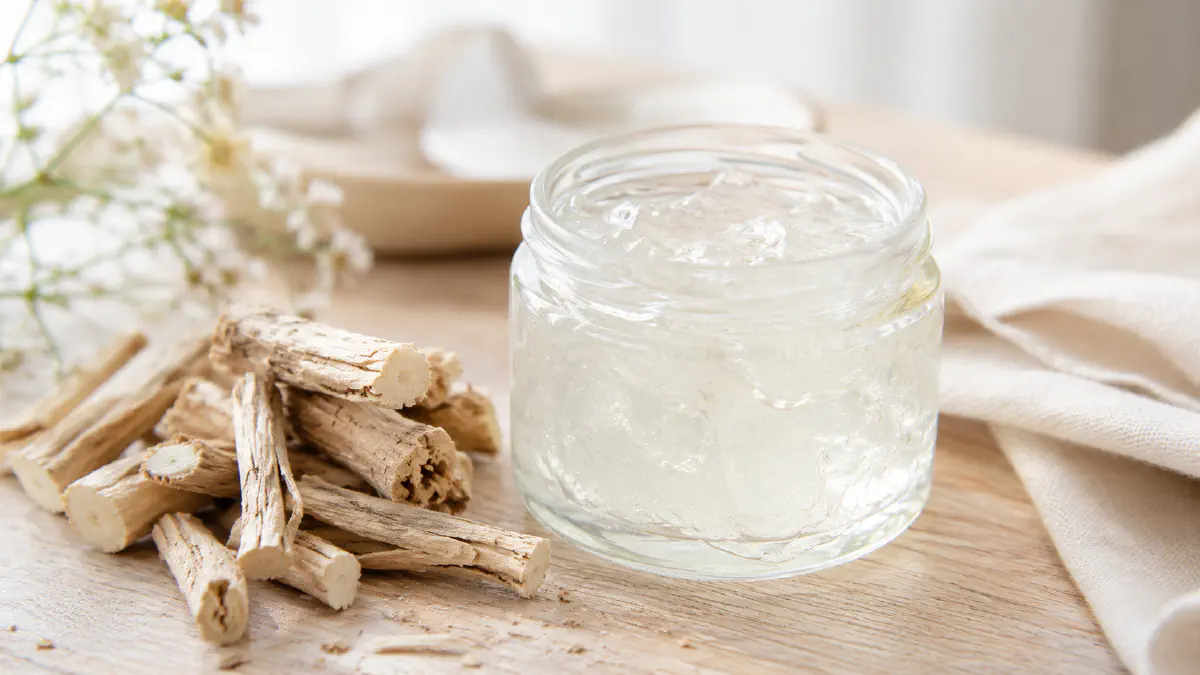
Marshmallow root comes from Althaea officinalis, a plant that’s been used in traditional medicine for centuries — mostly for soothing irritated tissue, not for hair growth specifically. Its defining feature is mucilage: when the dried root is soaked in cool water, it releases a slippery, gel-like polysaccharide that’s genuinely excellent at holding moisture and reducing friction. This mucilage content isn’t a marketing claim — it’s basic, well-documented plant chemistry, the same category of compound found in aloe vera gel and okra.
What’s Actually Well-Supported: Slip, Detangling, and Scalp Soothing
This is where marshmallow root earns its reputation, and it doesn’t need a growth claim to be worth using:
- Detangling — the mucilage coats the hair shaft and reduces friction between strands, which is why it’s popular in curly and textured hair routines specifically for reducing breakage during detangling.
- Moisture retention — as a humectant, the gel helps draw and hold moisture in the hair, useful for dry or brittle strands.
- Scalp soothing — traditional use for irritated skin and mucous membranes translates reasonably well to a dry, itchy, or irritated scalp, similar to how aloe vera is used.
None of this requires the “grows hair faster” framing to be a legitimate reason to use it.
The Growth Claim: What the Actual Research Shows
Here’s where it’s worth slowing down. A 2015 in-vitro study published in the Annals of Dermatology tested a blend of six herbal extracts — including avocado, chamomile, thyme, rosemary, stinging nettle, and marshmallow flower (not root) — on human dermal papilla cells (the cells at the base of hair follicles that drive hair growth) in a lab dish. The blend significantly increased proliferation of these cells at certain concentrations (source: Herbal Extracts Induce Dermal Papilla Cell Proliferation of Human Hair Follicles, Annals of Dermatology, PMC).
Three important caveats before you read too much into this:
- It tested the flower, not the root — most commercial “marshmallow root for hair” products and DIY recipes use the root, which wasn’t the part tested.
- It was one ingredient in a 6-herb blend, not tested in isolation, so this study can’t tell you how much of the effect (if any) came from marshmallow specifically.
- It’s an in-vitro (lab dish) study, not a clinical trial on real scalps — a much earlier and weaker stage of evidence than something like the randomized, placebo-controlled Sandalore trial we cover in our epigenetics and hair growth guide.
So: there’s a real, published data point suggesting something in this plant family may interact with hair follicle cells — but it doesn’t support the specific, confident “marshmallow root grows hair” claim circulating in social content.
A DIY Marshmallow Root Mucilage Rinse
Given the strongest evidence is for slip and moisture, not growth, this recipe is framed around what marshmallow root actually does well: a simple cold-water infusion that extracts the mucilage without needing any special equipment. Use it as a pre-shampoo detangling treatment or a leave-in rinse.
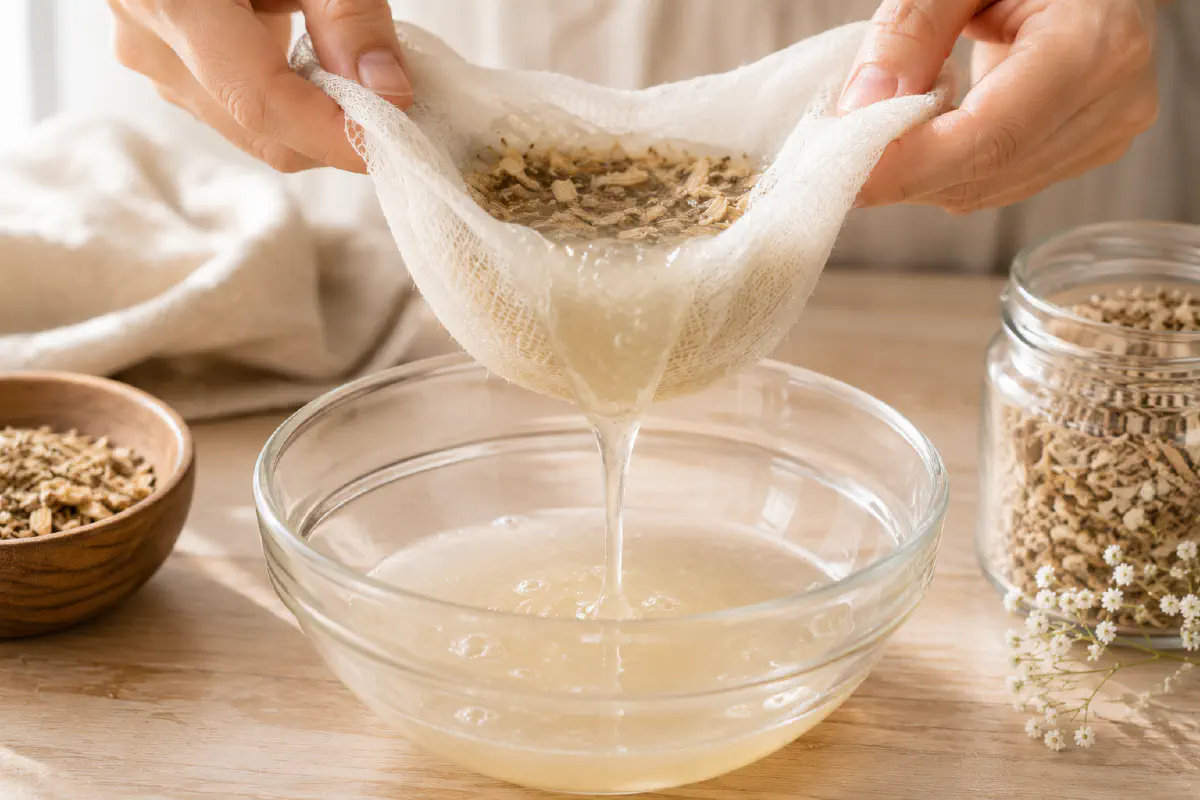
💡 Cool water only — hot water can break down the mucilage structure and reduce the slip effect you’re going for.
Other Ways to Work It Into Your Routine
- Pre-poo treatment — apply the mucilage to dry or damp hair 15–30 minutes before shampooing to reduce friction and breakage during washing, a common technique for curly and textured hair.
- Curl definition booster — mix the mucilage with flaxseed gel for extra hold and slip; see our rice water and flaxseed gel guide for the flaxseed gel base recipe (that one’s built for skin, but the flaxseed gel itself works the same way for hair).
- Scalp mask — leave the mucilage on the scalp for 15–20 minutes before rinsing if irritation or dryness, rather than growth, is the actual concern you’re addressing.
- Diluted leave-in spray — thin the mucilage further with extra water and apply to damp hair for lightweight, all-day slip without a heavy, greasy feel.
What Results to Actually Expect
Because the well-supported use case here is mechanical (mucilage coating the hair shaft) rather than biological (stimulating follicles), the timeline looks different from a growth-focused treatment:
- Immediately — noticeably easier detangling and reduced friction during the same session
- First few uses — improved moisture retention and softness, especially for dry or textured hair
- Ongoing use — potentially less breakage over time simply from reduced mechanical damage during detangling and styling, which can look like faster growth (less breakage means hair holds its length better) without actually accelerating the growth rate itself
That last point matters: a lot of “this grew my hair!” anecdotal reports for slip-focused ingredients are really about retained length from less breakage, not a faster growth cycle. Both are genuinely useful outcomes — they’re just not the same mechanism, and it’s worth knowing which one you’re actually getting.
Who Should Be Cautious
Marshmallow root has a genuinely low risk profile compared to a lot of viral haircare ingredients, but a few things are worth knowing:
- People with allergies to related plants in the mallow family (hibiscus, okra, cotton) should patch test first
- The mucilage can occasionally cause mild scalp buildup if not rinsed thoroughly, especially with infrequent washing
- As with anything applied to the scalp, discontinue if you notice irritation
If You Want Something With Stronger Growth Evidence
Marshmallow root’s real strength is detangling and moisture, not growth. If growth specifically is your goal, a few options have more direct evidence behind them:
- Rosemary — the same 2015 study that included marshmallow flower also tested rosemary, and rosemary has additional research behind it separately; see our full DIY rosemary water for hair growth guide.
- Sandalore (OR2AT4 activation) — backed by an actual randomized, placebo-controlled clinical trial; covered in our epigenetics and hair growth breakdown.
- Addressing DHT or nutritional deficiencies directly — see our natural DHT blockers guide for what has evidence there.
Frequently Asked Questions
Does marshmallow root actually grow hair?
There’s no strong, direct evidence for this specific claim. What’s well-supported is its use as a detangler and moisturizer via its mucilage content; the growth claim rests on one in-vitro study that tested the flower (not root) as part of a 6-herb blend, not marshmallow alone.
Is marshmallow root safe to use on the scalp?
Generally yes, for most people — it has a long history of traditional use and a low allergy risk outside the mallow plant family. Patch test if you have known plant allergies.
How is marshmallow root different from other hair growth herbs like rosemary?
Rosemary has more research behind it specifically, including its own dedicated studies beyond the shared 2015 blend study. Marshmallow root’s strongest, most supported use case is different — detangling and moisture, not growth.
Can I use marshmallow root and rosemary water together?
Yes — they solve different problems (marshmallow for slip/moisture, rosemary for scalp stimulation) and are commonly layered in the same routine.
Final Thoughts
Marshmallow root is worth using — just not for the reason it’s usually marketed. The mucilage-driven detangling and moisture benefits are real and don’t need an exaggerated growth claim to justify a place in your routine. If hair growth specifically is the goal, pair it with something that has more direct evidence, like rosemary or an evidence-backed approach to any underlying cause of thinning.