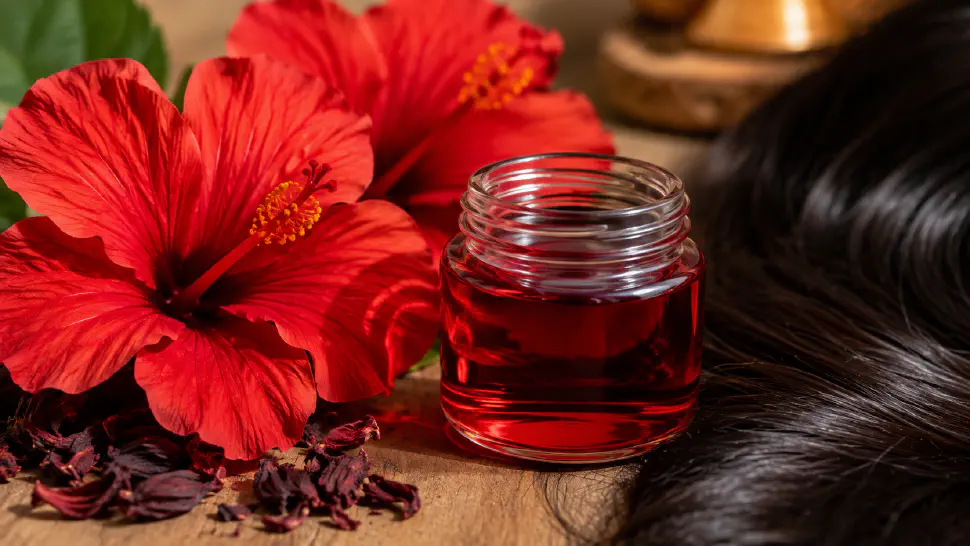

Hibiscus shows up constantly across this site’s DIY hair content — in the rosemary-amla growth oil, in the shine-boosting rinse — but always as one ingredient in a larger recipe, never examined on its own. This is the dedicated version: what does the actual published research say about hibiscus specifically for hair growth (not just shine or softness), and how strong is that evidence really, compared to the confident claims made about it online.
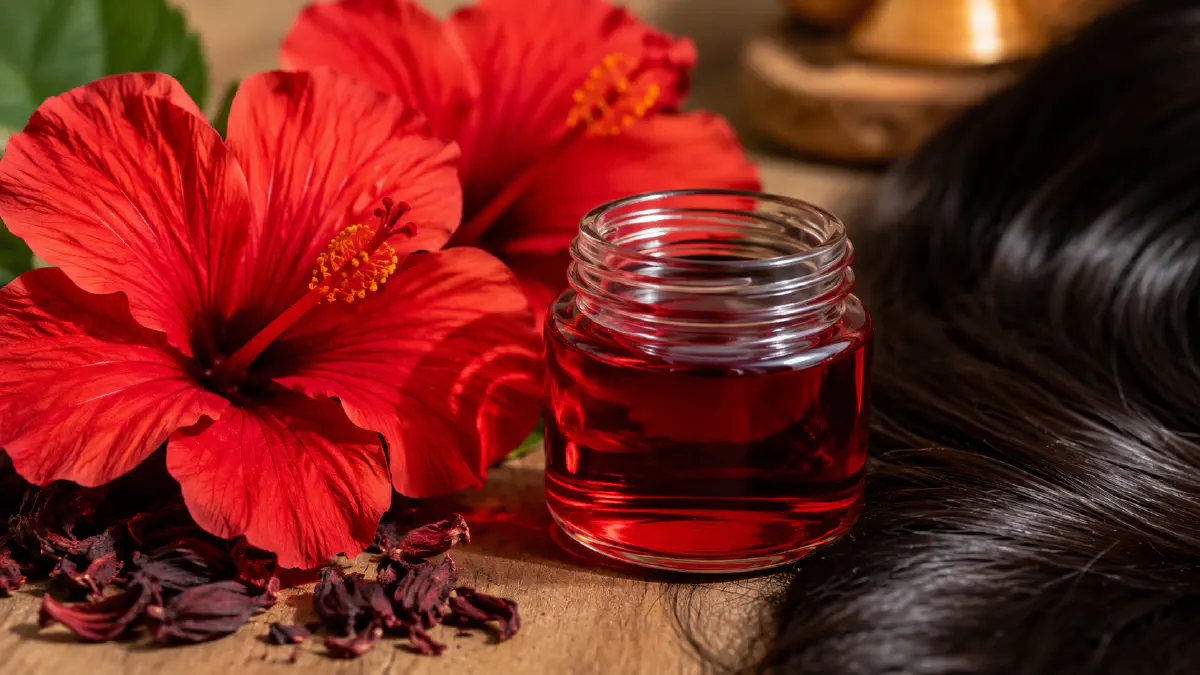
The Actual Evidence: Two Real Studies, One Important Caveat
Hibiscus rosa-sinensis does have genuine, peer-reviewed research behind it — more than most trending “natural hair growth” ingredients. Two studies stand out:
- Adhirajan et al., Journal of Ethnopharmacology, 2003 (PubMed 12963149) — applied hibiscus leaf and flower extracts topically to shaved rats for 30 days, measuring hair length and follicle cycle phase. The leaf extract outperformed the flower extract, and both accelerated the shift from telogen (resting) into anagen (active growth) phase.
- Agrawal & Singh, Indian Journal of Drugs, 2017 — applied a 2% aqueous flower extract to rats for 30 days and found significant hair growth activity compared to both an untreated control group and a 2% minoxidil group.
The important caveat: both studies were conducted in rats, not humans. This is real, legitimate preclinical evidence — not nothing — but it’s a meaningfully weaker evidence tier than a human clinical trial. Animal-model results for topical hair treatments don’t always translate directly to human scalps, and as of now, there’s no published human clinical trial isolating hibiscus specifically as the active ingredient. Any claim that hibiscus is “clinically proven” to regrow human hair is overstating what currently exists.
👉 For comparison, rosemary oil has a similar preclinical-heavy evidence profile but with at least one small human comparative trial behind it — worth knowing if you’re weighing which natural ingredient to prioritize.
The Proposed Mechanism
Researchers point to a few compounds as the likely drivers behind the animal-study results:
- Flavonoids and anthocyanins — antioxidant compounds that may support a healthier follicle environment
- Mucilage — the gel-like polysaccharide hibiscus is known for, which conditions and coats the hair shaft (this is the mechanism behind the shine and softness benefits, distinct from any growth-stimulating effect)
- Preliminary 5-alpha-reductase inhibition — a small number of in-vitro/preclinical studies suggest hibiscus leaf extract may inhibit the enzyme that converts testosterone to DHT, the hormone implicated in androgenetic alopecia. This is described in the research itself as preliminary, and hasn’t been tested in a human trial the way finasteride or even rosemary oil has.
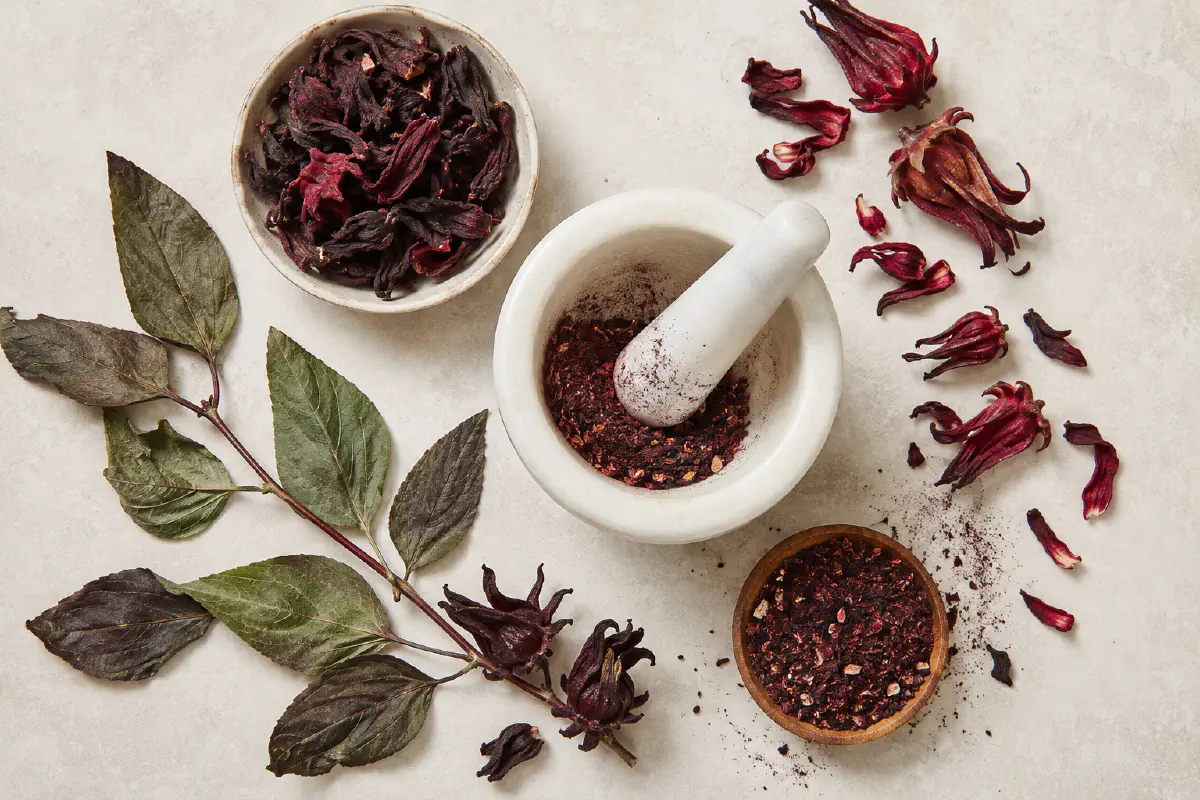
Worth separating clearly: the amino acid and mucilage content is well-documented and genuinely supports strand strength and shine — a real, low-evidence-bar benefit. The follicle-stimulating, growth-promoting claim is the one resting on animal-only evidence, and it’s the one most DIY content quietly blurs together with the shine benefit as if they were equally proven.
Hibiscus vs. Rosemary vs. Minoxidil: An Honest Comparison
| Ingredient | Evidence Level | What It's Actually Shown to Do |
|---|---|---|
| Minoxidil | Multiple human RCTs, FDA-approved | Clinically proven to regrow hair in androgenetic alopecia |
| Rosemary oil | Small human comparative trial + preclinical | Comparable to low-dose minoxidil in one small trial; real 5-alpha-reductase inhibition evidence |
| Hibiscus | Animal studies only | Accelerated hair growth phase in rats; preliminary DHT-related mechanism; no human trial yet |
This doesn’t mean hibiscus isn’t worth using — it’s low-risk, genuinely well-studied at the preclinical level, and the strand-strength benefits are real regardless of the growth question. It means the honest claim is “promising, biologically plausible, unproven in humans” — not “clinically proven” or “as good as minoxidil.”
How to Actually Use It
Rather than duplicating full recipes already covered elsewhere on this site:
- For a growth-oil-style routine combining hibiscus with rosemary and amla, see the full DIY Hair Growth Oil recipe
- For a rinse-style routine focused more on shine and buildup removal, see the Hibiscus & Rose rinse recipe
Safety Notes Worth Knowing
- Malvaceae family allergy: hibiscus is related to okra, cotton, and marshmallow — anyone with a known sensitivity to related plants should patch test first, the same caution covered in our marshmallow root guide and in the skin-side companion piece, Hibiscus for Skin Elasticity
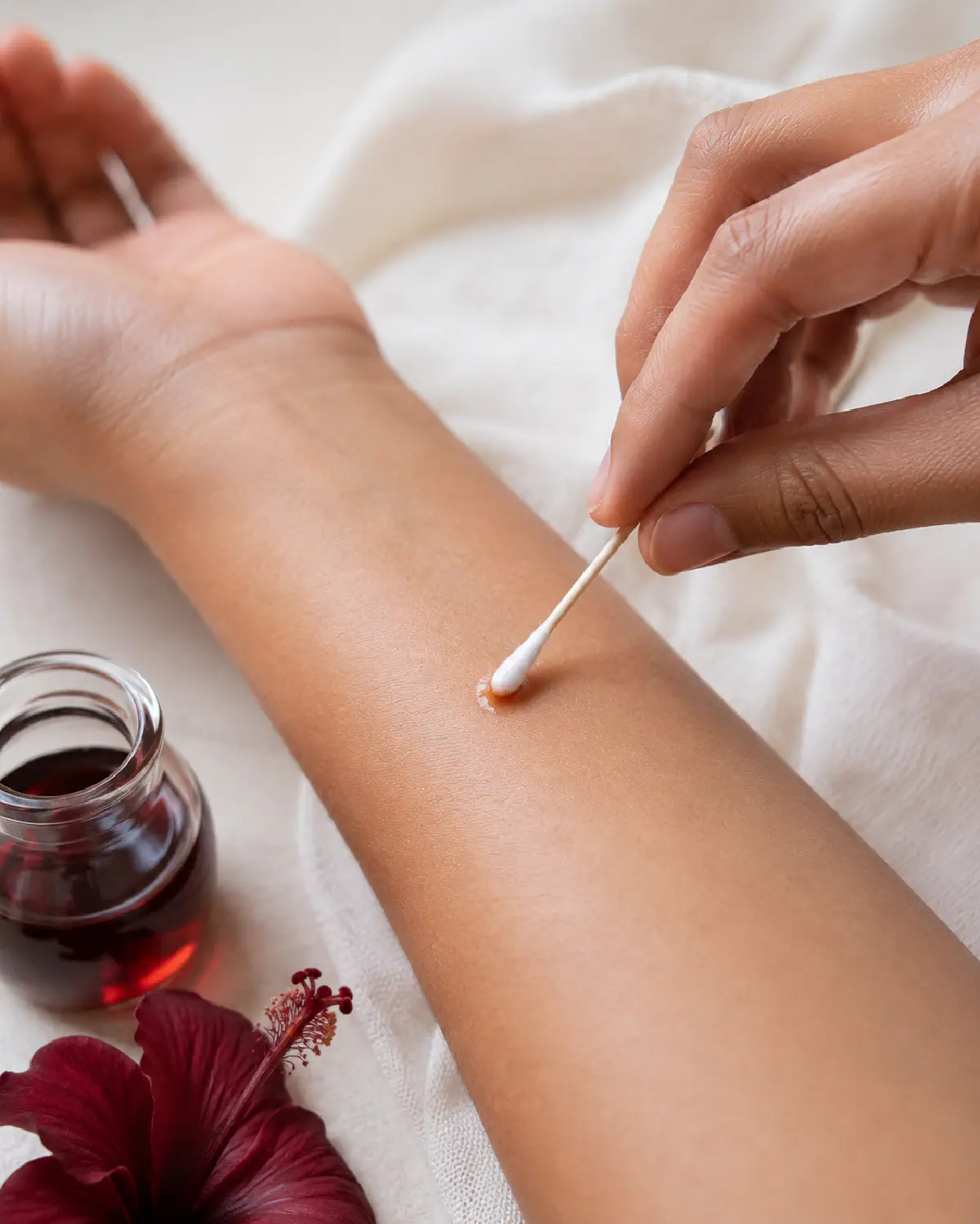
- Staining risk: hibiscus is pigment-rich and can temporarily tint very light or blonde hair; a strand test is worth doing before a full application
- Realistic timeline: even in the animal studies, measurable changes took the full 30-day study period — there’s no reasonable basis for expecting faster results on a human scalp
What Hibiscus Doesn’t Do
Consistent with every natural ingredient covered on this site: hibiscus is a supportive addition, not a replacement for addressing an underlying cause of hair loss. It doesn’t reverse hair loss driven by genetic DHT sensitivity on its own, and it won’t speed up recovery from telogen effluvium triggered by an internal cause like stress, illness, or nutrient deficiency — those need their own specific fix, with hibiscus (if used) working alongside rather than instead of it.
Frequently Asked Questions
Is hibiscus proven to regrow hair in humans?
No — the growth-promoting evidence is limited to rat studies. It’s genuinely promising, peer-reviewed preclinical research, not proof of efficacy in humans, which no published trial has tested yet.
How long before I’d see results from a hibiscus hair routine?
There’s no human data to base a timeline on. Using the animal studies as a rough proxy (30 days for measurable change) combined with the general 3+ month timeline for any hair treatment to show through a full growth cycle, patience of at least a few months is the reasonable expectation.
Is hibiscus a natural DHT blocker like rosemary?
There’s preliminary evidence pointing that direction, but it’s earlier-stage and less studied than rosemary’s — treat it as a plausible bonus mechanism, not a primary reason to choose hibiscus over better-evidenced options.
Can I use hibiscus and rosemary together?
Yes — this is exactly what the site’s existing DIY growth oil recipe does, and there’s no known interaction risk between the two; if anything, it combines rosemary’s stronger evidence base with hibiscus’s strand-strengthening and shine benefits.
Final Thoughts
Hibiscus has more real, peer-reviewed research behind it than most trending “natural hair growth” ingredients — two separate animal studies showing accelerated hair growth phases, plus preliminary work on a DHT-related mechanism. What it doesn’t have yet is a human clinical trial, which is the honest asterisk missing from most content that treats “science-backed” and “proven in humans” as the same thing. Used for what it’s actually shown to do well — strand strength, shine, and a biologically plausible (if unproven-in-humans) growth assist — it’s a reasonable, low-risk addition to a routine, not a standalone fix for significant hair loss.