
Search “DIY shampoo” and you’ll get baking soda, castile soap, and shikakai powder all recommended in the same breath, as if “natural” automatically means “safe for hair.” The actual chemistry says otherwise — pH is the dividing line between a DIY wash that genuinely works and one that quietly roughens your cuticle with every use. Here’s the recipe that holds up, and the popular ones that don’t.
The pH Problem: Why Some “Natural” Shampoos Damage Hair
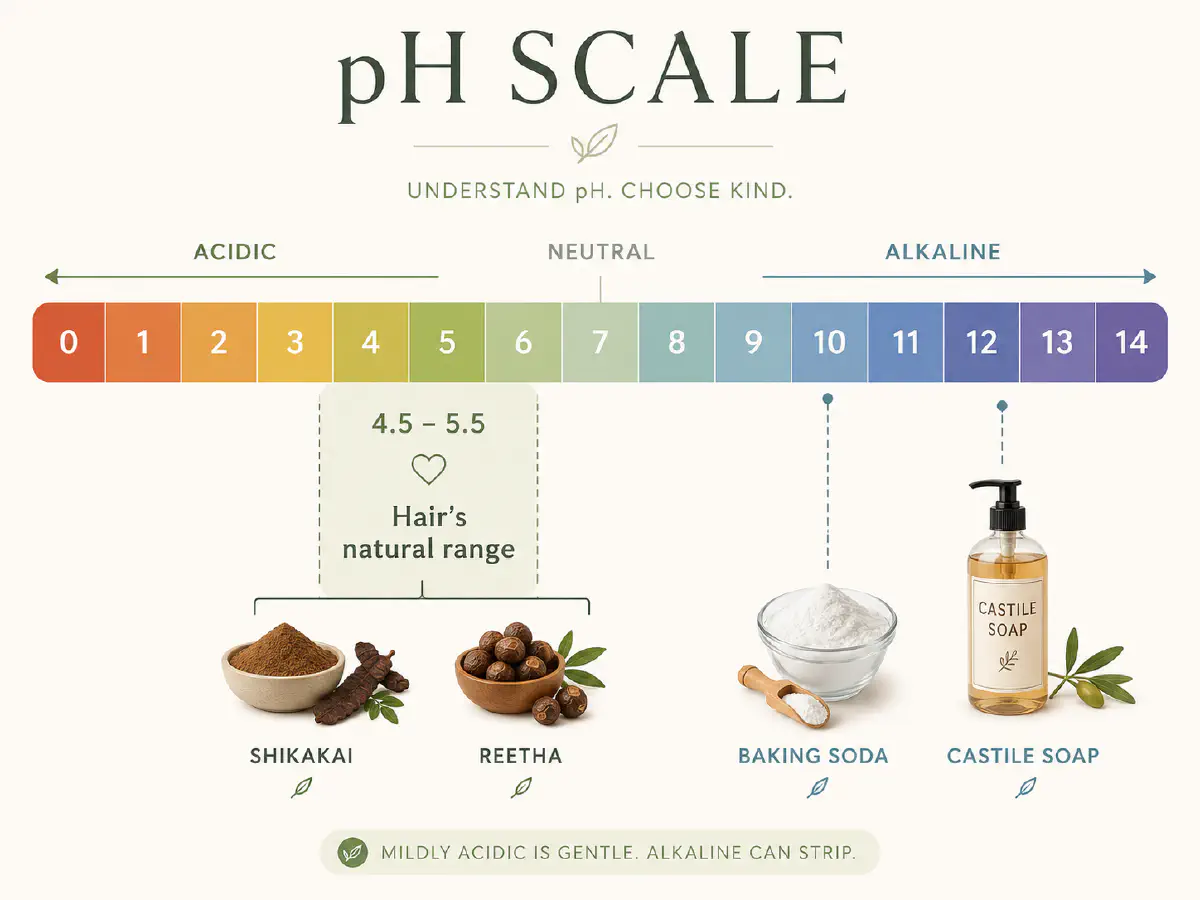
Hair’s natural pH sits around 4.5-5.5, mildly acidic. A 2014 review in the International Journal of Trichology analyzing 123 shampoo formulas found that alkaline pH increases the hair fiber’s negative surface charge and friction between strands, contributing to cuticle damage, breakage, and frizz — while lower-pH formulas kept the cuticle smoother and reduced static (International Journal of Trichology, 2014).
This is exactly why not every “natural” DIY shampoo is actually gentler than a commercial one. Two of the most commonly recommended DIY bases — baking soda and plain castile soap — are both meaningfully alkaline, putting them on the wrong side of that pH line despite the natural-ingredients reputation.
👉 We’ve covered the baking soda specifically before, in the context of DIY clarifying washes — see Clarifying Shampoo for the full pH breakdown (baking soda sits around pH 9, versus hair’s natural 4.5-5.5).
What to Skip: Baking Soda and Plain Castile Soap
- Baking soda roughens the cuticle with regular use, the same mechanism covered in our clarifying shampoo guide — reasonable as an occasional deep-clean, not a everyday shampoo base
- Plain castile soap, despite its “natural” branding, is a true soap and alkaline (commonly pH 8-10) — and on hard water specifically, soap reacts with calcium and magnesium to form an insoluble residue (“soap scum”) that coats hair, leaving it feeling dull, waxy, or straw-like
👉 If you’re in a hard-water area, this soap-scum issue is the same category of problem covered in our clarifying shampoo guide’s hard water and chelating section — worth reading before choosing any DIY base.
The Recipe That Actually Works: Shikakai & Reetha (Soapnut) Wash
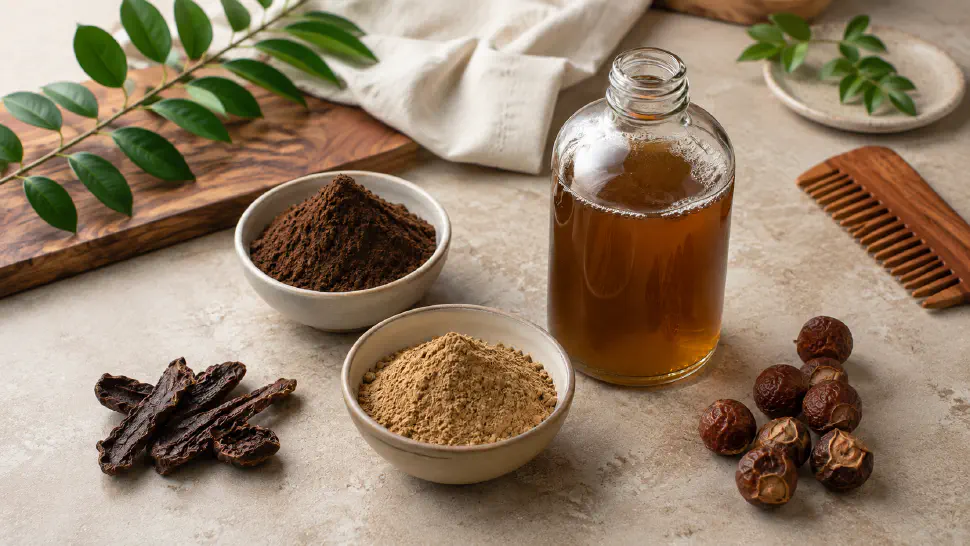
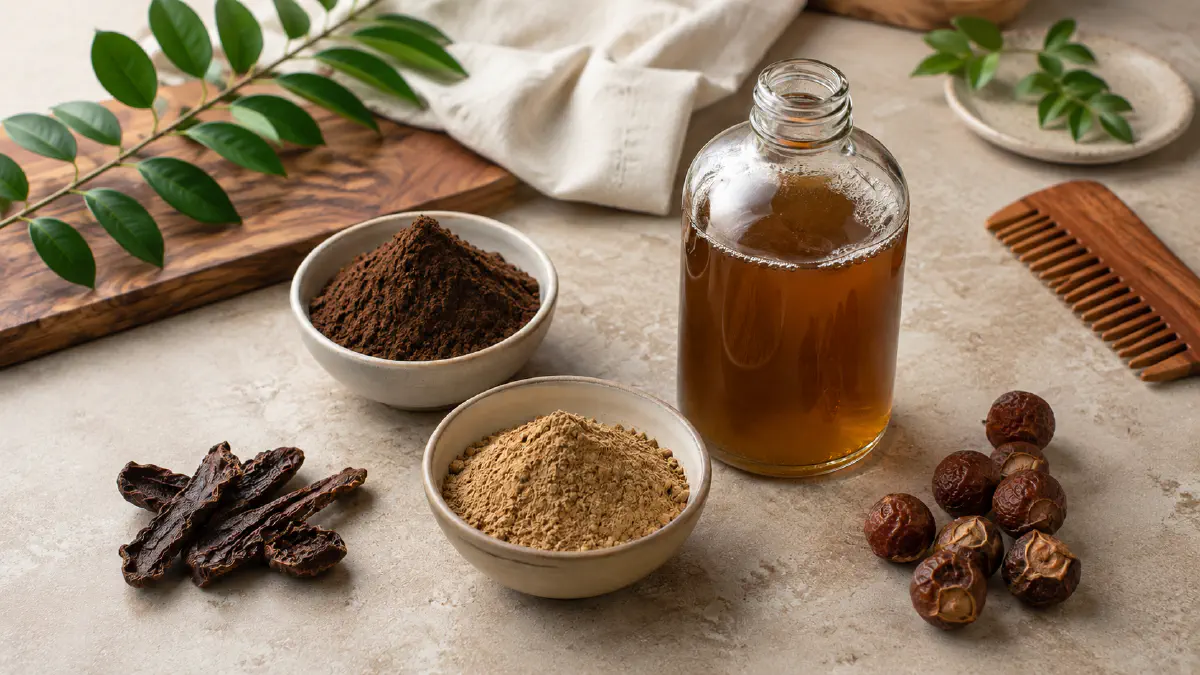
Shikakai (Acacia concinna) and reetha/soapnut (Sapindus mukorossi) are the two traditional Ayurvedic cleansers that hold up under this same pH scrutiny — genuinely, not just by natural-ingredient reputation. Shikakai’s natural pH runs around 4.5-5.5, close to hair’s own baseline, while reetha sits a bit higher (roughly pH 5-7) but still well below soap or baking soda. Both contain natural saponins — plant-based surfactant compounds capable of real cleansing and mild foaming, structurally different from soap’s fattier alkaline chemistry.
👉 Shikakai gets a brief mention in our Ayurvedic herbs roundup — this is the dedicated recipe.
The wash:
- 2 tablespoons shikakai powder
- 1 tablespoon reetha (soapnut) powder
- 2 cups water
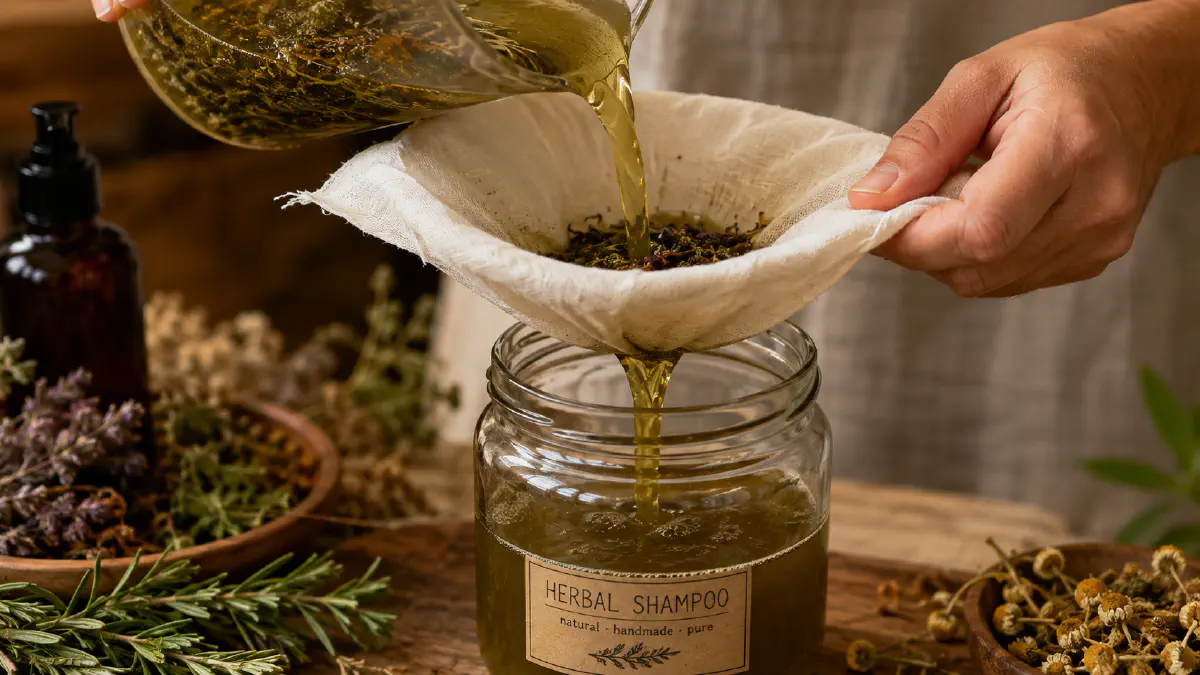
Simmer the powders in water for 10-15 minutes, let cool, then strain through a cloth to remove sediment. Use the strained liquid as you would a liquid shampoo, massaging into a wet scalp, then rinsing thoroughly. Store leftover liquid in the refrigerator and use within 3-4 days — this has no preservative system, so it doesn’t keep like a commercial product.
A Semi-DIY Option: Herbal Infusion + a Mild Store-Bought Surfactant
For people who want more reliable lather and cleansing power than a pure herbal wash provides, a reasonable middle ground: combine a small amount of a genuinely mild, low-pH surfactant (like decyl glucoside, sold on its own at soap-making suppliers) with a cooled shikakai or rosemary infusion, rather than relying on saponins alone. This isn’t as “purely natural” as the recipe above, but it solves the main real-world complaint people have with fully herbal washes — thinner lather and less cleansing power on heavier product buildup — without going back to the sulfate/pH problems this article opened with.
👉 See Sulfate-Free Shampoo & Rosemary Oil for more on where mild surfactants like this sit on the overall cleansing-strength spectrum.
Realistic Expectations
- Less lather isn’t the same as less clean — saponins foam less than sulfates by design, not because they’re failing to cleanse; judging a natural wash by lather volume is a common, misleading habit carried over from commercial shampoo
- A transition period is real — scalps used to stronger surfactants often go through 1-3 weeks of adjustment (sometimes feeling greasier before it improves) as sebum production recalibrates to a gentler wash; this is commonly called the “no-poo transition” and isn’t unique to this recipe
- Hard water will blunt results — the same mineral-buildup issue covered in our clarifying shampoo guide applies here too, so an occasional chelating rinse may still be worth keeping in rotation
Who Should Be More Cautious
Color-treated and chemically relaxed or permed hair has already had its cuticle altered, and reacts more noticeably to pH swings than untreated hair — a mismatched wash won’t undo a color treatment, but it can accelerate fading or roughen texture faster than expected. Very oily scalps may also find a pure saponin wash under-cleanses on heavier product days, which is exactly the case the semi-DIY surfactant option above is meant to cover, rather than pushing through with a wash that isn’t cutting it.
Frequently Asked Questions
Is a shikakai and reetha wash strong enough to remove oil-based hair treatments?
Not as effectively as a stronger surfactant — if you’re using a heavier rosemary or amla oil treatment, plan for a double wash, or use the semi-DIY surfactant version above on those specific wash days.
Can I add rosemary or amla to this DIY shampoo?
Yes — adding a rosemary or amla infusion to the simmering water is a common variation, though it’s worth remembering that a rinse-off shampoo has limited contact time, so a separate leave-in treatment still matters more for those ingredients’ benefits.
Why do people recommend baking soda for DIY shampoo if it’s bad for hair?
Mostly inherited advice that predates the pH research above, plus a genuine short-term effect — baking soda does strip oil and buildup effectively, which reads as “clean” immediately, even though the cuticle-roughening cost shows up with repeated use rather than the first wash.
How long does homemade shikakai shampoo last?
Without a preservative system, 3-4 days refrigerated is a reasonable safe window — make small batches rather than trying to stock up, since it will spoil like any other unpreserved plant-based liquid.
Final Thoughts
The honest version of “DIY shampoo” isn’t one universal recipe — it’s a pH question first. Shikakai and reetha genuinely hold up as gentle, low-pH cleansers with real saponin-based cleansing power, while baking soda and plain castile soap carry the same alkaline cuticle-damage risk this site has already flagged elsewhere, just in a shampoo instead of a clarifying wash. Made fresh, used within a few days, and paired with realistic lather expectations, a shikakai-reetha wash is a genuinely defensible natural shampoo — not just a natural-sounding one.