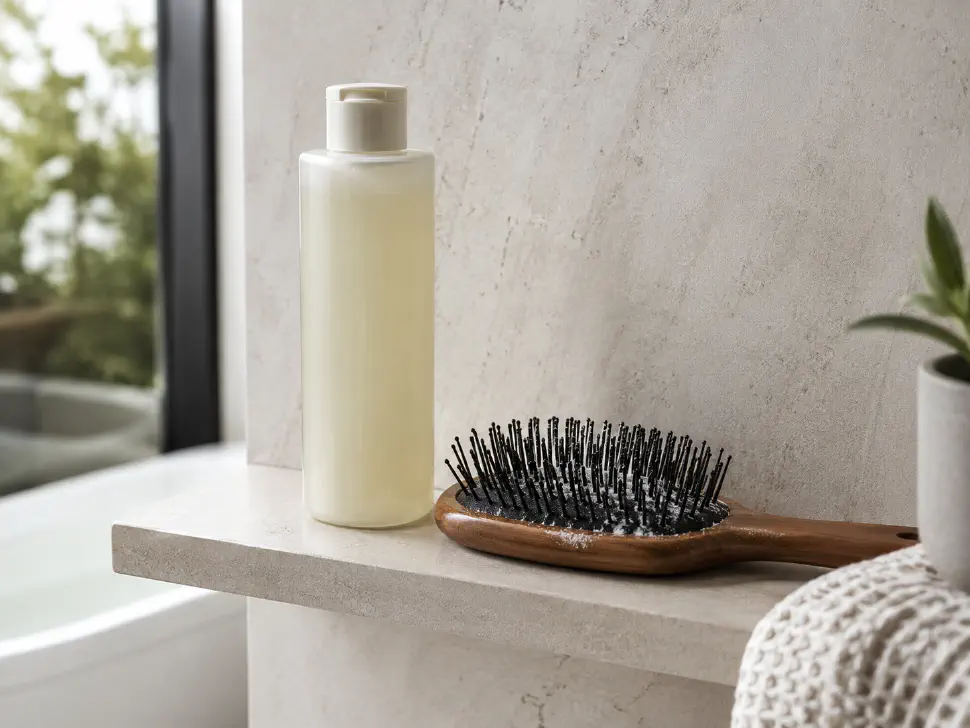

Clarifying shampoo searches have been climbing steadily, largely as an extension of the “skinification of haircare” trend — treating scalp and hair buildup the way skincare treats pore-clogging residue. Most of the content answering it, though, jumps straight to product recommendations without covering the actual question: what is a clarifying shampoo removing that your regular shampoo isn’t, how is it different from a chelating shampoo (a related but distinct product), and how often can you actually use one before it starts working against you.
What Clarifying Shampoo Actually Removes
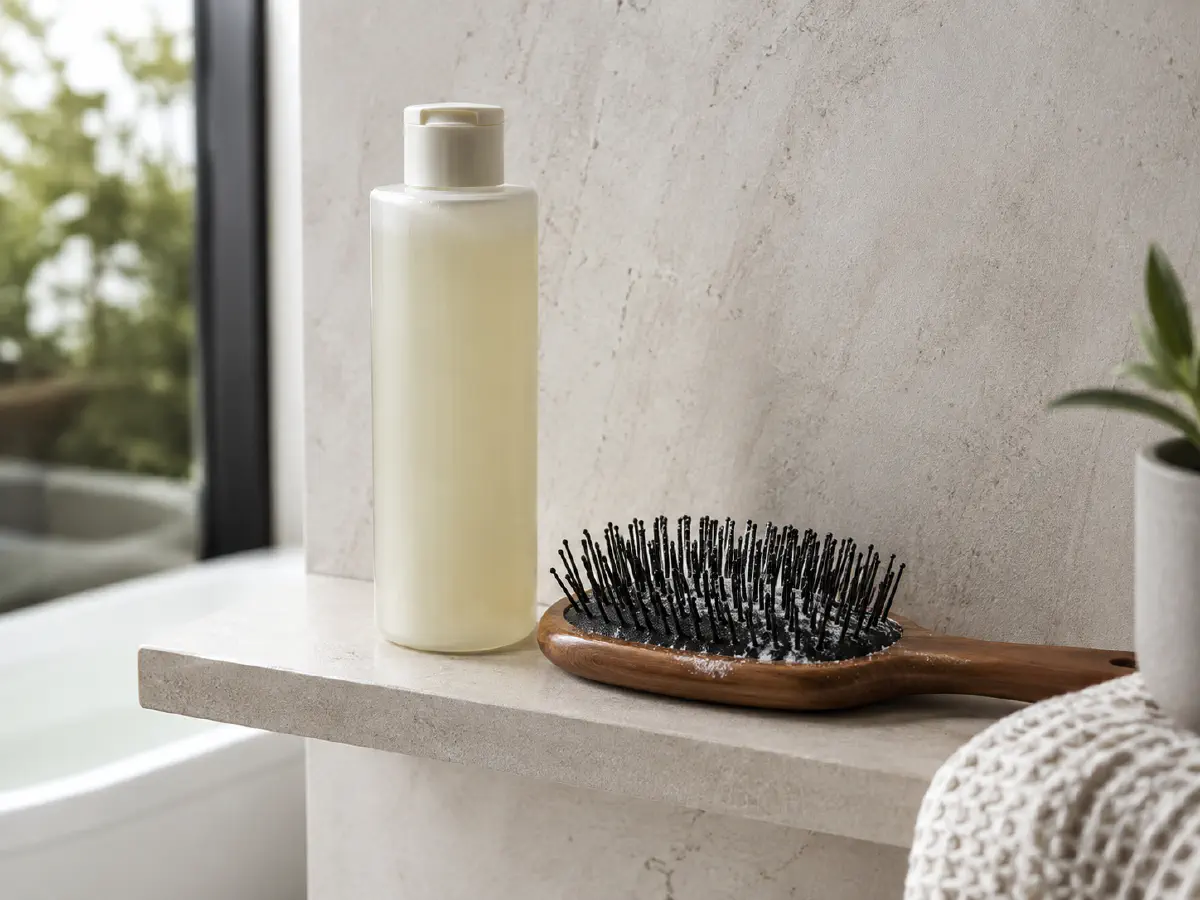
Clarifying shampoo uses stronger surfactants — typically sulfates or other high-cleaning agents — specifically to break down buildup that regular, gentler shampoo formulas leave behind:
- Silicone residue from styling products and conditioners, particularly non-water-soluble silicones (like dimethicone) that coat the hair shaft rather than rinsing away with a normal wash
- Product buildup from dry shampoo, styling gel, and heavier oils or leave-in treatments used repeatedly between washes
- Excess sebum that accumulates faster than a gentle cleanser can fully remove, especially with infrequent washing
👉 This connects directly to the surfactant-strength spectrum covered in Sulfate-Free Shampoo & Rosemary Oil — clarifying shampoo sits at the strong end of that same spectrum, built for occasional deep-cleaning rather than daily use.
Clarifying vs. Chelating Shampoo: Different Problems, Different Fixes
This distinction gets blurred constantly, and it’s worth separating clearly:
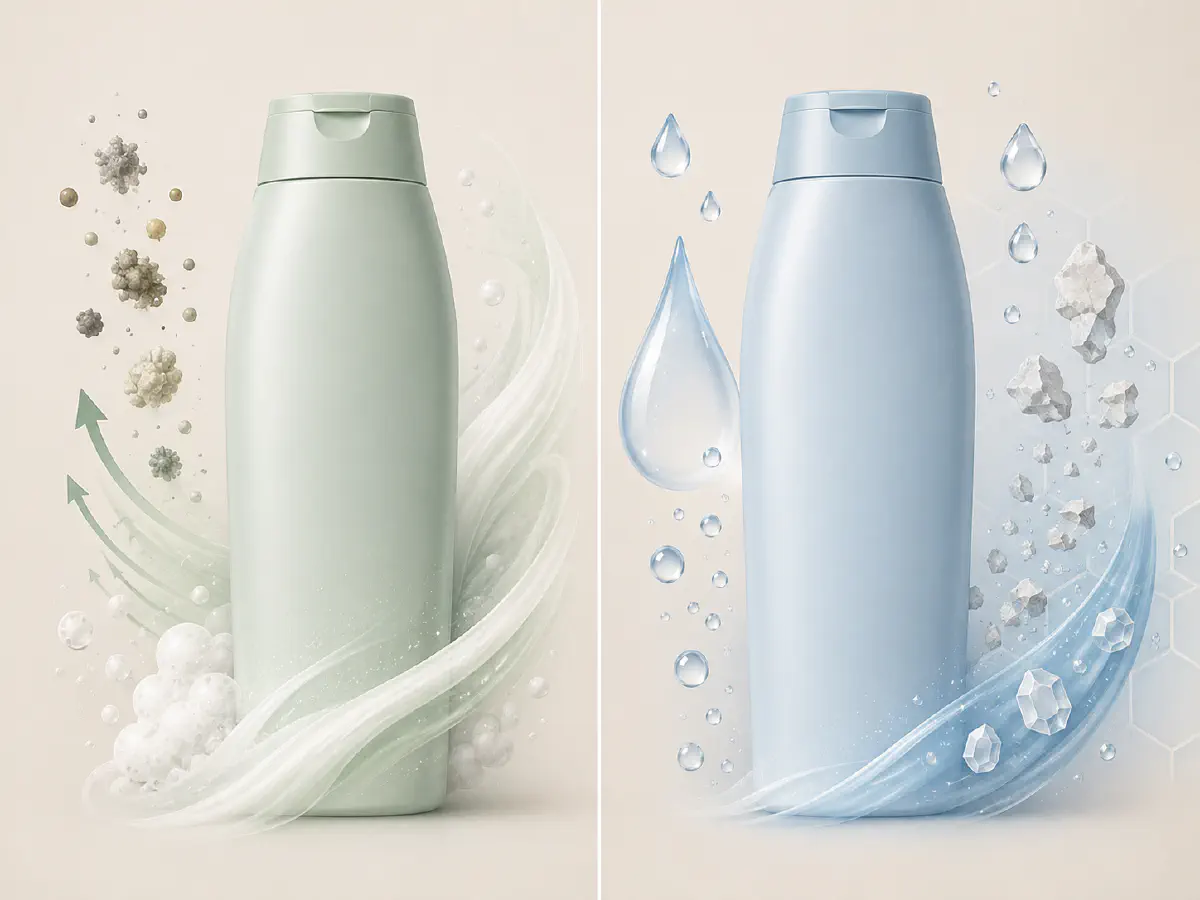
- Clarifying shampoo uses strong surfactants to break down organic buildup — product residue, silicones, excess oil.
- Chelating shampoo uses chelating agents (commonly EDTA or citric acid) that specifically bind to and lift mineral buildup — calcium, magnesium, and iron deposited from hard water, chlorine, or well water.
Hard water minerals coat the hair shaft in a way that blocks moisture absorption, leaving hair drier and less elastic even with a good conditioner — and can shift color-treated hair toward brassy or off-tones as metals interact with the dye. If you’re in a hard-water area and clarifying shampoo alone hasn’t fixed persistent dullness or dryness, the actual problem may be mineral buildup a standard clarifying formula isn’t designed to remove — a chelating shampoo, not a stronger clarifying one, is the more targeted fix.
👉 If it’s not just dullness but visible breakage or fall you’re trying to trace back to your water, see Hard Water and Hair Fall for the actual mechanism, a home TDS test, and a DIY chelating-rinse alternative if you’d rather not add another shampoo to your routine.
Signs You Actually Need One
- Hair looks dull or feels coated no matter how much you wash with your regular shampoo
- Styling products stop lathering or working as well as they used to
- Hair feels heavier or greasier faster than normal after washing
- Color-treated hair looks brassy, faded, or slightly off-tone despite a good color-care routine
- You use dry shampoo, heavy styling products, or leave-in oils frequently between washes
If none of these apply, you likely don’t need one regularly — clarifying shampoo solves a specific buildup problem, not a general “healthier hair” upgrade.
How Often: The Actual Guidance
Once every 2-4 weeks is a reasonable baseline for most people, adjusted based on product use and water hardness:
- Heavy product users (daily styling products, frequent dry shampoo) → toward the more frequent end, every 2 weeks
- Minimal product users with soft water → every 4-6 weeks, or only when buildup signs actually show up
- Hard water areas → a dedicated chelating shampoo used alongside, rather than instead of, occasional clarifying
The Overuse Risk: Why More Isn’t Better Here
Clarifying shampoo’s strong surfactants are effective precisely because they’re aggressive — which means using one too frequently strips natural oils and disrupts the scalp barrier, the same barrier-stripping mechanism covered in our scalp care routine guide. Overuse commonly shows up as dryness, itching, or, counterintuitively, increased oil production as the scalp overcompensates for being stripped too often. Daily or even weekly clarifying use is a common overcorrection — it treats an occasional deep-clean tool like a everyday maintenance step, which works against the hair and scalp rather than for them.
How to Use It Properly
- Use on freshly wet hair, focusing on the scalp where buildup concentrates, rather than just running it through the lengths
- Follow immediately with a deep conditioner or hair mask — clarifying strips some natural moisture along with the buildup, and skipping this step is the main reason people report post-clarifying dryness
- Time it before, not after, a leave-in treatment (like a rosemary oil routine) so the treatment is applied to a clean scalp rather than sitting on top of existing buildup
👉 See Rosemary Water for Hair Growth for a treatment that specifically benefits from this kind of clean-scalp timing.
The Baking Soda Myth Worth Retiring
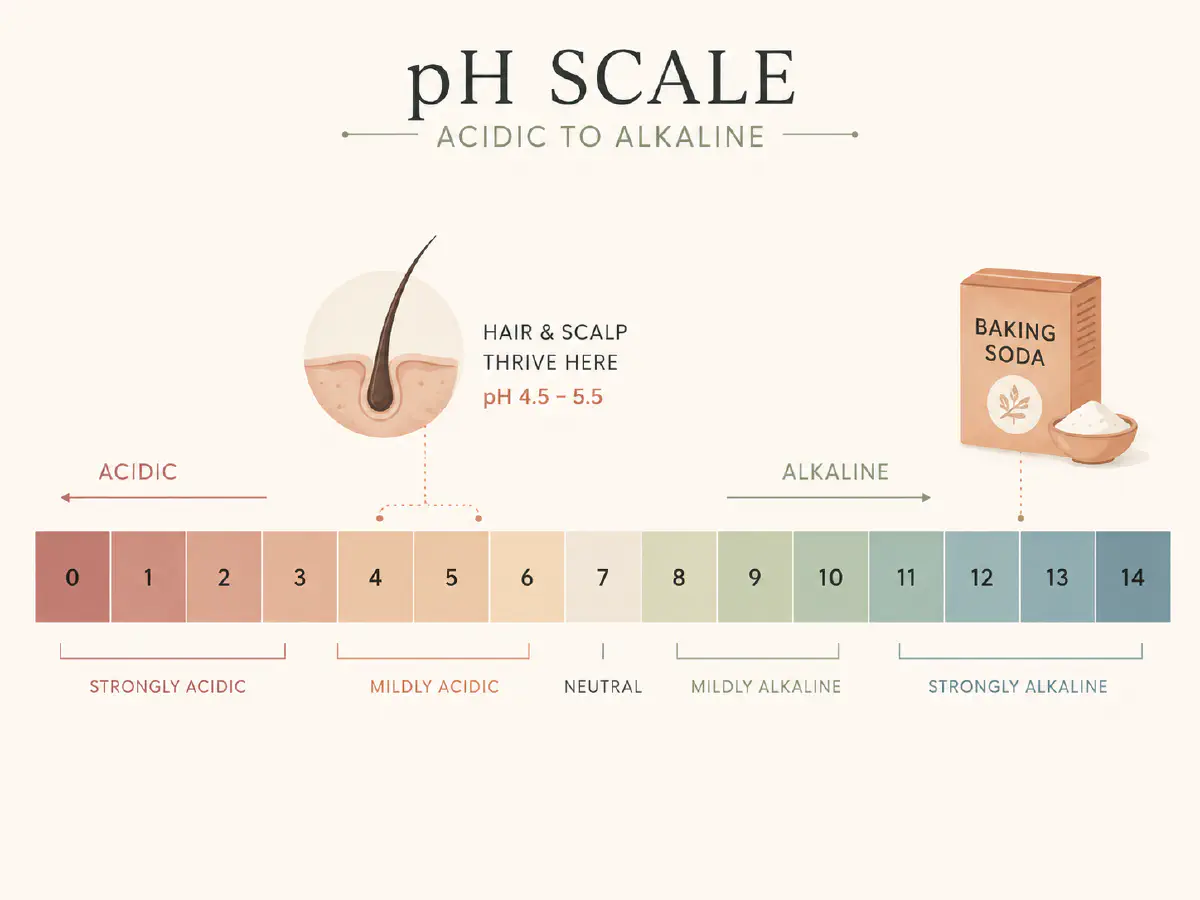
A common DIY substitute worth specifically debunking: using baking soda as a homemade clarifying wash. Baking soda has a high alkaline pH (around 9), while hair’s natural pH sits closer to 4.5-5.5 (mildly acidic) — using it regularly forces the hair cuticle into an alkaline state that raises and roughens the cuticle layer rather than smoothing it, the opposite of what a properly formulated clarifying shampoo (balanced closer to hair’s natural pH) is designed to do. Occasional use isn’t necessarily harmful, but “baking soda is a natural, gentler clarifying alternative” isn’t accurate — a real clarifying shampoo formulated with a hair-appropriate pH does the job without the cuticle-roughening tradeoff.
👉 This same pH principle is why not every DIY everyday shampoo is a good idea either — see DIY Shampoo: The Recipes That Actually Work for which natural bases actually hold up.
Frequently Asked Questions
Can clarifying shampoo cause hair loss?
Not directly — but overuse can irritate the scalp and cause dryness/breakage that looks like increased shedding. It doesn’t affect the follicle or hair growth cycle itself; the risk is cosmetic damage from over-stripping, not actual hair loss.
Is clarifying shampoo the same as a sulfate shampoo?
Related but not identical — most clarifying shampoos do use sulfates for their strong cleaning power, but “clarifying” refers to the buildup-removal purpose and formulation intensity, while “sulfate” refers to a specific surfactant ingredient category.
Do I need a clarifying shampoo if I already use sulfate-free shampoo daily?
Often yes — sulfate-free formulas are gentler by design, which means buildup that a sulfate-based daily shampoo might have kept in check can accumulate faster, making an occasional clarifying wash more useful, not less.
Will clarifying shampoo fix hard-water dryness?
Only partially — it removes organic buildup, which helps, but mineral deposits specifically need a chelating shampoo formulated with EDTA or a similar chelating agent to fully address.
Final Thoughts
Clarifying shampoo is a genuinely useful tool for a specific, occasional problem — product and oil buildup that a regular or gentle shampoo isn’t strong enough to remove — not a general hair-health upgrade to use as often as possible. Matching frequency to your actual product use and water type, following it with real moisture, and knowing when the real culprit is mineral buildup rather than product buildup (calling for a chelating formula instead) is the difference between clarifying shampoo helping your routine and quietly working against it.